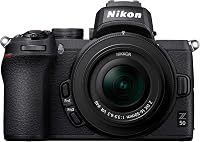
Canon EOS R50 vs Sony ZV-E10: Which to Buy? (November 2026)
For most first-time buyers the Canon EOS R50 wins this comparison, with 24.2MP photos and Dual Pixel autofocus that tracks faces and eyes. Pick the Sony ZV-E10 instead only if your plans center on vlogging and you want Sony's E-mount lens path.
On this page (9 sections)
- The two cameras side by side
- Autofocus: which camera locks onto people faster?
- Video: which one suits vlogging and social clips?
- Controls and screen: which is easier to learn on?
- Lenses: which mount gives you more room to grow?
- Flash and accessories: what you can add to each
- Who should buy the Canon EOS R50?
- Who should buy the Sony ZV-E10?
- Verdict: which camera should you buy?
For most first-time buyers the Canon EOS R50 wins this comparison. It pairs a 24.2MP APS-C sensor with Dual Pixel autofocus that finds faces and eyes, oversampled 4K video and a vari-angle touchscreen, and the kit includes an 18-45mm lens.
The Sony ZV-E10 is a capable vlogging camera in its own right. This canon eos r50 vs sony zv e10 breakdown focuses on what actually changes the buying decision: autofocus behavior, video tools, controls and the lens system you'll grow into.
The R50 carries the higher score in our comparison, 9.7 against 9.6 for the R50 kit and 9.4 for the Godox flash. Below, each section gives you a winner for a specific need, then a single overall verdict for most readers.
 Best for most first-time buyers
Canon EOS R50 Mirrorless Camera with 18-45mm
 Best for creators who need the extras
Canon EOS R50 Mirrorless Camera Kit
The two cameras side by side
The R50 is the more complete first camera, while the ZV-E10 is tuned for vlogging. Both are compact mirrorless bodies built around an APS-C sensor, so image quality starts from a similar base.
The table below lines up the facts that decide the choice. The Sony column fills in only what its product data confirms, so you can see where the R50's kit is more fully described.
| Feature | Canon EOS R50 (18-45mm kit) | Sony ZV-E10 |
|---|---|---|
| Sensor | 24.2MP APS-C | APS-C, vlogging-focused body |
| Autofocus | Dual Pixel, hybrid, 99 points | Sony autofocus system |
| Video | Oversampled 4K | 4K video, vlog-oriented |
| Screen | Vari-angle touchscreen | Vari-angle screen |
| Lens mount | Canon RF (RF-S lenses) | Sony E-mount |
| Kit lens | RF-S 18-45mm IS STM included | Depends on the kit you buy |
| Flash | None built in | None built in |
The R50 kit bundles the RF-S 18-45mm f/4.5-6.3 IS STM lens. That zoom covers wide to standard focal lengths, with image stabilization for steadier handheld shots and an STM motor for smooth, quiet autofocus.
Sony's camera is sold in several configurations. If you buy the body only, budget for a lens before you can shoot.
One number worth knowing on the R50: the sensor's 1.6x crop factor. It means the 18-45mm kit lens behaves like roughly a 29-72mm lens in full-frame terms, so the wide end frames a room or a group shot and the long end is a natural portrait length.
Autofocus: which camera locks onto people faster?
The R50's autofocus is the easier system for a beginner to trust. Canon's Dual Pixel system uses 99 autofocus points and hybrid focus, and it detects faces and eyes without you steering a focus point across the frame.
The camera can recognize and follow subjects as they move. That matters for portraits, pets and kids who won't hold still, and it keeps your hit rate up while you learn.
Sony's autofocus has a strong reputation of its own. The difference for a first-time buyer is less about raw capability and more about how quickly you can set it up and trust it.
What subject detection means in practice
On the R50, subject detection is part of the autofocus flow rather than a separate menu you must master. Point the camera at a person and it finds the face, then the eye.
That takes one decision off your plate when you're also thinking about exposure and framing. For a beginner juggling several settings at once, fewer autofocus decisions means more keepers.
The 99-point coverage gives you room to compose off-center and still hold focus. It also helps when a subject moves across the frame during a burst.
The R50's focus modes cover both ends of the job. There is Automatic AF for point-and-shoot ease, and Continuous-Servo AF for subjects that keep moving, like a pet trotting toward you.
Video: which one suits vlogging and social clips?
The R50 records oversampled 4K with face and eye detection, and its vertical video support makes it the simpler choice for social content. Oversampling means the camera gathers more detail than the final 4K frame needs, which helps edge sharpness.
The R50's 4K comes from 6K oversampling, and it records at up to 3840 x 2160 with a 16:9 frame. It captures 10-bit files and can output RAW stills, which gives you more room to recover highlights and shadows in editing than phone footage allows.
The R50 also offers Creative Assist, in-camera guides that adjust the look of your photos without a deep menu dive. For a creator publishing to TikTok, Instagram Reels or YouTube Shorts, vertical shooting support saves a step.
The ZV-E10 is designed around vlogging. If your output is almost entirely talking-head and handheld video, Sony's camera puts those controls front and center.
Where the R50's kit helps a new creator
The bundled RF-S 18-45mm lens covers the wide end you want for self-recording at arm's length and the standard end for portraits and product shots. Its image stabilization reduces handheld shake.
The kit version with the shoulder bag and two 64GB SDXC cards means you can shoot and carry your gear from day one. The 64GB cards set a real storage limit, so plan to offload footage regularly.
Controls and screen: which is easier to learn on?
The R50's vari-angle touchscreen and guided menus make it the friendlier camera for a beginner. You can flip the screen forward for selfies and vertical video, or tilt it for high and low angles.
A touchscreen also lets you tap to focus and change settings without hunting for buttons. That shortens the learning curve when you're shooting one-handed or on the move.
The R50's Creative Assist guides you through look adjustments in plain language. For someone stepping up from a phone, that in-camera coaching is worth more than an extra dial.
The body keeps exposure control in automatic mode by default, so the camera picks settings while you learn. Its plastic and metal enclosure keeps the weight down, which matters if you plan to carry it all day on a trip.
Who benefits from Sony's vlogging layout?
The ZV-E10's controls are arranged for video creators. If you already know you'll shoot vlogs weekly, Sony's dedicated approach can feel more direct than a camera built for stills first.
If you're still deciding between photos and video, the R50's broader balance serves you longer. You can learn stills on it and add video without fighting a layout built for one job.
Lenses: which mount gives you more room to grow?
The mount you choose decides what you can add later, so treat it as part of the purchase. The R50 uses the Canon RF mount and takes RF-S lenses built for its APS-C sensor, plus full-frame RF lenses.
Canon's RF-S 18-45mm kit lens is compact and stabilized. It's a good everyday zoom, though its f/4.5-6.3 maximum aperture limits low-light shooting compared with a faster prime.
Sony's E-mount is one of the broadest mirrorless lens systems, with options at many focal lengths. If you plan to build a lens collection over several years, that range matters.
What the R50 kit lens covers
The 18-45mm range runs from wide-angle to standard. That covers vlogging, group shots, street photography and portraits without changing lenses.
For tighter portraits or low light, add a fast prime later. The kit zoom is the practical starting point, not the final word on what the camera can do.
Flash and accessories: what you can add to each
Neither camera has a built-in flash, so you'll add light separately, and compatibility differs sharply between the two. The Godox Mini Flash Speedlite works with the Sony ZV-E10 but not the Canon R50.
The Godox iM30 has a guide number of 15 and seven power levels from 1/64 to 1/1. It runs on two AAA batteries and delivers about 230 flashes on a set.
Its 2.7 oz body is easy to carry. The catch is that it's manual only, with no TTL and no high-speed sync, so you set power by hand.
The flash recycles in about 3.6 seconds at full power, so a fast sequence of shots will wait on the light. It also ships with a diffuser, which softens the bare output for closer portraits.
Why the Godox flash fits Sony but not Canon here
Godox lists the iM30 as not compatible with the Canon R50. It connects through a single-contact hot shoe and works with the Sony ZV-E10.
For R50 owners there is a second limitation to clear. Canon's own EOS RP, EOS R and R5 appear on the Godox compatibility list, but the R50 does not, so don't assume an RF-mount Canon will work with this flash.
If you choose the R50 and want a flash, look for a unit Canon lists as compatible. For Sony owners, this Godox is a small, affordable way to add light indoors or at dusk.
Who should buy the Canon EOS R50?
Buy the R50 if you want one camera for photos and video and you're learning as you go. Its 24.2MP sensor, Dual Pixel autofocus and oversampled 4K cover the basics well, and the kit lens means you can shoot immediately.
The guided Creative Assist menus and vari-angle touchscreen shorten the ramp-up. Autofocus subject detection handles people and pets without constant fiddling.
Choose the base kit with the 18-45mm lens if you already own a bag and memory cards. Choose the kit with the shoulder bag and two 64GB cards if you're starting from nothing.
Both R50 listings describe the same 24.2MP camera and the same RF-S 18-45mm lens. The decision between them is about accessories, not image quality, so pick the bundle that fills the gaps in what you already own.
Skip the R50 if your work is almost entirely vlogging and you already know you want Sony's lens system. In that case the ZV-E10's vlog-focused design is the better fit.
Who should buy the Sony ZV-E10?
Buy the ZV-E10 if vlogging is the main job and you want Sony's E-mount lens options. It's built for creators who shoot themselves and publish to social platforms, and Sony's lens range gives you room to grow.
It's also the camera to pick if you want to use the Godox iM30 flash, since that unit is not compatible with the R50. A small manual flash like this one adds light cheaply for indoor vlogs and evening shots.
The flash's color temperature sits at 6500K plus or minus 200K, close to daylight, so it won't tint your footage heavily orange in a dark room. Its single-contact hot shoe setup means plug and play rather than menu pairing.
Skip the ZV-E10 if you want a single camera that handles stills learning and video equally. The R50's broader kit and guided menus make it the easier first purchase for most people.
Verdict: which camera should you buy?
The Canon EOS R50 is the better buy for most readers, and the kit with the 18-45mm lens is the version to get. It scores 9.7 in our comparison for its balance of 24.2MP stills, Dual Pixel autofocus and oversampled 4K.
Our score weighs specs, features and how well each camera fits what a first-time buyer wants. The R50's guided menus and vari-angle touchscreen lower the entry barrier, and the kit lens removes a separate purchase.
The Sony ZV-E10 remains the right camera for dedicated vloggers who value Sony's lens path. If your channel is the priority and you'll add the Godox flash for light, the Sony makes sense.
For everyone else stepping up from a phone, the canon eos r50 vs sony zv e10 choice lands on the R50 kit. It's the camera you can learn on and keep using as your skills grow.
If you're still weighing brands overall, our Nikon vs Canon camera comparison for beginners covers the wider field. Readers on a tighter budget can also read our Canon EOS Rebel T7 review and our Canon Rebel T7 vs R100 comparison to see how older entry-level bodies stack up.
Frequently asked questions
Does the Canon EOS R50 have better autofocus than the Sony ZV-E10?
The R50's Dual Pixel autofocus with 99 points and subject detection is the more beginner-friendly system on paper. The ZV-E10 uses Sony's Real-time Tracking, so both track faces and eyes, but the R50's in-camera guides make subject detection easier to set up.
Can I use the Godox Mini Flash on the Canon EOS R50?
No. Godox lists the iM30 as not compatible with the Canon R50, along with several other Canon bodies.
It works with the Sony ZV-E10 through its single-contact hot shoe.
Which camera is better for video, the R50 or the ZV-E10?
The R50 records oversampled 4K with face and eye detection and supports vertical video for social apps. The ZV-E10 is built around Sony's E-mount lens range for vloggers.
For a first camera doing both photos and video, the R50 is the easier all-rounder.
Do both cameras come with a lens?
Both Canon kits here include the RF-S 18-45mm f/4.5-6.3 IS STM zoom, which covers wide to standard focal lengths. Sony sells the ZV-E10 as a body or in kits; check which version you are buying so you know whether a lens is in the box.
Is the Canon R50 kit worth it over the base kit?
The kit adds a shoulder bag and two 64GB SDXC cards to the same camera and lens. If you would buy a bag and cards anyway, the bundle saves you shopping for them separately.
If you already own both, the base R50 kit covers the same shooting.
Which camera is easier for a complete beginner?
The R50's Creative Assist and in-camera guides are designed for new photographers, and its vari-angle touchscreen makes framing simple. The ZV-E10 leans toward vlogging controls.
A beginner who wants to learn photos and video together will find the R50 friendlier.