Sigma 16mm vs 30mm f1.4: Sony E Primes (November 2026)
Choose the Sigma 16mm f/1.4 for Sony E wide-angle shooting and low light. Its f/1.4 prime design, Sony E compatibility and portable build make it the stronger overall choice here.
On this page (10 sections)
- Sigma 16mm vs 30mm f1.4: what is the quick answer?
- How do the two products compare side by side?
- Why does focal length matter more than the product names?
- Which product is better in low light?
- Which one gives you better video flexibility?
- How do autofocus and stabilization affect the choice?
- What should you know about size and portability?
- Who should buy the Sigma 16mm f/1.4?
- Who should choose the Nikon COOLPIX B700?
- What is the final Sigma 16mm vs 30mm f1.4 verdict?
Choose the Sigma 16mm f/1.4 for Sony E wide-angle shooting and low light. In this Sigma 16mm vs 30mm f1.4 comparison, the Sigma is the higher-scored overall pick, while the Nikon COOLPIX B700 makes more sense when built-in zoom matters most.
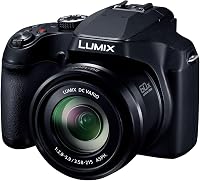
The Sigma is a bright 16mm prime lens for Sony E-mount mirrorless cameras. The Nikon is a complete digital camera with a 60x optical zoom covering a 24–1440mm equivalent range.
Those are different ways to build a kit. One gives you a wide fixed view with a large aperture, while the other gives you a camera and a huge focal-length range in one body.
Sigma 16mm vs 30mm f1.4: what is the quick answer?
The Sigma wins for Sony E owners, wide views and low-light work. Its f/1.4 aperture and 16mm focal length fit landscapes, nature, events and video framing.
The Nikon wins for distant subjects and flexible framing. Its NIKKOR 60x optical zoom moves from a 24mm equivalent wide view to a 1440mm equivalent telephoto view without a lens change.
The choice is therefore less about a small difference in prime focal length and more about whether you want a Sony E lens or a complete zoom camera. The Sigma requires a compatible Sony E-mount camera, while the Nikon already includes its camera body and lens.
The Sigma also gives you a more defined shooting role. Its fixed view and wide aperture are easy to understand, while the Nikon asks you to manage a much wider range of framing choices across one camera.
For broader system context, our guide to bridge camera vs DSLR explains why a built-in zoom camera and an interchangeable-lens setup feel so different in daily use.
How do the two products compare side by side?
The Sigma is the specialist choice, while the Nikon is the all-in-one choice. The table shows the main differences that shape the buying decision.
| Product | Best for | Focal length | Maximum aperture | Mount | Our score |
|---|---|---|---|---|---|
| Sigma 16mm f/1.4 DC DN (Sony E) | Sony E wide-angle work | 16mm | f/1.4 | Sony E | 8.6 |
| Nikon COOLPIX B700 | built-in zoom range | 7.0 |
The Sigma has a 16mm fixed focal length and f/1.4 aperture. The Nikon has a 4.3–258mm actual focal length, a 24–1440mm equivalent range and an f/3.3–6.5 maximum aperture range.
The Sigma works with Sony E-mount mirrorless cameras and supports Fast Hybrid AF. The Nikon uses its built-in NIKKOR lens, with contrast-detection autofocus and 19 autofocus points.
The products also differ in image-making workflow. With the Sigma, you choose a Sony camera body and mount the lens.
With the Nikon, the camera, viewfinder, screen and zoom lens are already part of one unit.
The listed accessories reinforce that difference. The Sigma includes front and rear caps and a lens hood, while the Nikon includes a strap, lens cap, rechargeable battery, adapter and USB cable.
One is an added lens for an existing system, and the other is a self-contained camera package.
Why does focal length matter more than the product names?
Focal length controls how much of a scene fits in the frame and how close you need to stand. The Sigma's 16mm view is made for broad scenes, while the Nikon's range covers both wide and distant subjects.
A fixed 16mm lens suits a photographer who wants a predictable wide-angle perspective. That is useful for landscapes, nature scenes, event spaces and video where the camera stays close to the subject.
The Nikon begins at a 24mm equivalent view, which is also useful for general wide scenes. It then reaches 1440mm equivalent, giving it a much stronger role for faraway subjects.
Sigma 16mm for wide scenes
The Sigma's 16mm focal length gives you a broad frame without changing the lens. You can move closer to include more of an interior, landscape or group, then keep the same framing style throughout the shoot.
A fixed focal length also makes your choices simple. Instead of zooming, you change your position, which can help you learn how distance changes the look of a scene.
The trade-off is clear: the Sigma does not provide telephoto reach. If your subject is far away, walking closer or changing lenses becomes part of the plan.
The wide view can also be useful when the subject and its surroundings both matter. That makes the Sigma better suited to showing the setting around an event or nature subject, rather than isolating something far in the distance.
Nikon B700 for changing distances
The Nikon's 60x optical zoom is the better fit for trips, wildlife viewing and subjects that change distance. Its 24–1440mm equivalent range covers far more framing options than a fixed 16mm lens.
That range also reduces the need to carry or change lenses. You can start with a wide view, then zoom toward a distant subject using the same camera.
The Nikon's zoom strength does not replace the Sigma's bright aperture. The two products solve different problems, so choose the focal-length flexibility you will use most often.
Which product is better in low light?
The Sigma is the clear low-light pick because it has an f/1.4 aperture. The Nikon's f/3.3–6.5 aperture range is slower, especially as the zoom reaches longer focal lengths.
A bright f/1.4 setting gives the Sigma a strong position for evening scenes, indoor events and other situations where light is limited. Its 16mm view also suits close, wide compositions.
The Nikon can still record UHD 4K video at 30p and capture photographs with its 20.2MP BSI CMOS sensor. Its design prioritizes range and convenience, not the same bright prime-lens approach.
The difference is especially relevant when you want to keep a wide scene in view without relying on the Nikon's longer zoom range. The Sigma's aperture and 16mm focal length work together as one focused option for broad scenes in limited light.
Think about the kind of light you usually face. If you photograph rooms, events or landscapes after sunset with a Sony E camera, the Sigma is the sensible choice.
If you need to follow a distant subject across changing distances, the Nikon's zoom remains more useful.
Which one gives you better video flexibility?
The Nikon gives you more built-in video reach, while the Sigma gives Sony E users a bright wide-angle lens for video. Choose based on whether framing or zoom range matters more.
The Sigma has a stepping motor for smooth autofocus during video shooting and fully accommodates Fast Hybrid AF. Its 16mm focal length works well when the camera needs to show a person and their surroundings.
The Nikon records UHD 4K video at 30p. Its 24–1440mm equivalent range lets you move from a broad scene to a distant subject without changing lenses.
The screen design also differs. The Nikon has a 3.0 in 921k-dot vari-angle LCD monitor and a 921k-dot electronic viewfinder.
Those built-in viewing options make it a practical standalone video camera.
The Sigma is more dependent on the Sony camera body that receives it. That can be an advantage when you already use a Sony E setup, because the lens adds a defined wide-angle role without replacing the rest of the system.
For a Sony system owner, the Sigma keeps the workflow inside the camera body and lens setup already in use. For someone who wants one camera with broad framing options, the Nikon is easier to understand as a complete package.
How do autofocus and stabilization affect the choice?
The Sigma is the better match for Sony E autofocus workflows, while the Nikon combines contrast detection with Dual Detect Vibration Reduction. Each product places its useful controls in a different part of the system.
The Sigma supports Fast Hybrid AF and has automatic and manual exposure control types. Its stepping motor supports smooth autofocus during video shooting, which fits wide-angle filming and event work.
The Nikon uses contrast-detection autofocus with 19 autofocus points. Its lens includes Dual Detect Vibration Reduction, a feature suited to a camera that reaches from wide views to a very long equivalent focal length.
The Sigma's optical stabilization is also part of its listed lens data. Even with stabilization, the fixed focal length remains the main creative choice because it does not change from 16mm.
Autofocus is not only about the number of points. Your camera body, subject movement and framing style all shape the result.
The Sigma fits a Sony E setup, while the Nikon keeps the camera and lens functions together.
What should you know about size and portability?
The Sigma is a compact, portable prime lens, while the Nikon reduces the need to carry extra lenses. Portability depends on whether you already own a Sony E camera and how much reach you need.
The Sigma weighs 14.3 oz and includes front and rear caps plus a lens hood. Its compact size supports a light Sony E kit for nature, events and wide-angle video.
The Nikon is a standalone digital camera with a built-in lens, electronic viewfinder and vari-angle LCD. It also includes an AN-CP21 strap, LC-CP29 lens cap, EN-EL23 rechargeable Li-ion battery, EH-73 adapter and UC-E21 USB cable.
That supplied set makes the Nikon ready to function as a complete camera system. The Sigma is more portable as a lens, but it still needs a compatible Sony E-mount camera body.
Use the Sigma when your existing Sony kit already covers the body requirement. Choose the Nikon when one camera with a large zoom range is easier than planning a lens kit.
Who should buy the Sigma 16mm f/1.4?
Buy the Sigma if you own a Sony E-mount mirrorless camera and want a bright wide-angle prime. It is the overall winner for the search intent because its 16mm f/1.4 design directly serves wide-angle and low-light work.
The lens suits nature photography, event photography, landscapes and video. Its black finish, compact size and 14.3 oz weight support a portable setup, while the front and rear caps and lens hood help with routine storage.
The 16mm focal length rewards photographers who are comfortable changing position instead of zooming. Stand closer for a stronger foreground, step back for a wider scene, and keep the same lens throughout the shoot.
It also suits Sony users who want Fast Hybrid AF support and a stepping motor for video autofocus. The main trade-off is the fixed focal length.
This is a focused tool, not an all-purpose zoom.
The Sigma is also the more direct fit when your camera system already has a Sony E mount and your main need is a bright lens rather than a new camera body. Its value comes from how clearly it fills that wide-angle role.
Sigma 16mm f/1.4 DC DN (Sony E): Best for Sony E wide-angle work

- 16mm F1.4
- Sony E mount
- Fast Hybrid AF support
- Front and rear caps
The Sigma is the clear pick for Sony E mirrorless owners who want a bright wide-angle prime. Its 16mm focal length suits landscapes, nature, events and video framing.
Pros
- Bright f/1.4 aperture
- Wide 16mm prime view
- Sony E compatibility
- Fast Hybrid AF support
Cons
- Requires a Sony E-mount camera
- Prime focal length does not zoom
- Heavier than a small compact camera
Who should choose the Nikon COOLPIX B700?
Choose the Nikon COOLPIX B700 when built-in zoom matters more than a bright prime aperture. Its 60x optical zoom and 24–1440mm equivalent range make it the better option for distant subjects and changing compositions.
The camera combines a 20.2MP 1/2.3 in BSI CMOS sensor with UHD 4K video at 30p. Its 3.0 in vari-angle LCD, 921k-dot electronic viewfinder and built-in flash give you several ways to compose and capture.
The Nikon also offers built-in Wi-Fi with NFC and Bluetooth BLE, HDMI and USB connectivity, and SD, SDHC and SDXC memory-card support. These features suit a self-contained camera workflow.
Its aperture range is f/3.3–6.5, so it is not the low-light choice in this comparison. It is the practical choice for travel, distant subjects and anyone who wants one camera with a broad optical range.
The built-in design also avoids the Sigma's system requirement. You do not need to pair the Nikon with a separate Sony E-mount body, but you also do not get the Sigma's interchangeable-lens relationship with a Sony camera.
Nikon COOLPIX B700: Best for built-in zoom range

- 20.2MP BSI CMOS sensor
- 60x optical zoom
- 4K video at 30p
- Electronic viewfinder
The Nikon suits someone who wants one camera with a built-in 60x optical zoom. Its 24–1440mm equivalent range covers wide views through distant subjects without changing lenses.
Pros
- Very broad built-in zoom range
- 4K video recording
- Vari-angle LCD monitor
- Electronic viewfinder
Cons
- Slower f/3.3–6.5 aperture range
- Not a Sony E-mount lens
- Larger optical range means a different shooting approach
What is the final Sigma 16mm vs 30mm f1.4 verdict?
The Sigma 16mm f/1.4 DC DN (Sony E) is the best overall pick for Sony E photographers. Choose it for a bright wide-angle prime, low-light scenes, event work, landscapes and video framing.
Choose the Nikon COOLPIX B700 when your priority is a complete camera with a 60x optical zoom. Its 24–1440mm equivalent range covers distant subjects that the fixed Sigma 16mm cannot reach.
The decision rule is simple: pick the Sigma for the lens and aperture, and pick the Nikon for the built-in camera and zoom range. The Sigma scores higher because it fits the stated Sony E prime intent more closely.
The final choice depends on which limitation you can accept. With the Sigma, you accept a fixed 16mm view and the need for a Sony E body.
With the Nikon, you accept the slower f/3.3–6.5 aperture in exchange for a complete camera and unusually broad optical reach.
If you're comparing camera systems as well as lenses, our Canon EOS R10 vs Sony A6400 comparison can help frame the body decision. For a different entry-level camera perspective, see our Canon EOS Rebel T7 review, and compare another mirrorless choice in Canon R10 vs Nikon Z50 II.
Frequently asked questions
Is the Sigma 16mm compatible with Sony E cameras?
Yes. The Sigma 16mm f/1.4 DC DN (Sony E) is designed for Sony E-mount mirrorless cameras.
It uses a fixed 16mm focal length, so framing changes come from your position rather than from zooming.
What does f/1.4 mean for the Sigma lens?
The f/1.4 aperture is a bright setting that gives the Sigma an advantage for low-light photography compared with the Nikon COOLPIX B700's f/3.3–6.5 aperture range. It also supports the lens's wide-angle prime use.
Can the Nikon B700 replace a Sony E prime lens?
The Nikon B700 is a complete digital camera with its own NIKKOR 60x optical zoom, while the Sigma is a Sony E-mount lens. They suit different systems, so the Nikon is a camera choice rather than a direct interchangeable-lens replacement.
Does the Sigma 16mm lens zoom?
No. The Sigma is a 16mm prime lens with a fixed focal length.
Its strength is the consistent wide-angle view and f/1.4 aperture, while the Nikon B700 is built around a 60x optical zoom.
Which camera is better for distant subjects?
The Nikon COOLPIX B700 is the better choice for distant subjects because its NIKKOR lens offers a 24–1440mm equivalent range and 60x optical zoom. The Sigma is designed for a fixed wide-angle 16mm view.