Nikon vs Canon Cameras for Beginners: Which Is Better? (November 2026)
For a Nikon vs Canon camera choice, pick the Canon EOS R50 for subject tracking and a vari-angle screen, or the Nikon Z50 for Nikon F lens adapter support and a flip-down screen. Both kits include a zoom lens and wireless phone connections.
On this page (10 sections)
- Nikon vs Canon camera: which is easier for a beginner?
- What are the biggest differences between the Z50 and R50?
- Which camera has the better screen for beginners?
- Which kit makes more sense for video?
- Which brand fits your future lens choices?
- How should you set up either camera for the first day?
- What common buying mistakes should you avoid?
- Which camera should you pick for your kind of photography?
- What is the final Nikon vs Canon camera decision?
- Sources
For a Nikon vs Canon camera choice, pick the Canon EOS R50 for subject tracking and a vari-angle screen, or the Nikon Z50 for Nikon lens options and a flip-down touch screen. Both kits include a zoom lens, 4K video features and wireless connections to a smartphone.
The Canon has a 24.2 MP APS-C sensor and can track people, animals and vehicles. The Nikon has a 20.9 MP sensor, a flip-down touch LCD and support for Nikon F mount NIKKOR lenses with a separately sold FTZ adapter.

Nikon vs Canon camera: which is easier for a beginner?
The Canon EOS R50 offers more clearly described automatic focus tools, while both cameras provide a screen and wireless phone connections. Your best first camera depends on what you photograph and how you want to frame a shot.
Canon describes the R50 as an entry-level camera with automatic photo functions and auto-compatible scenes. Its subject detection can track people, animals and vehicles, which can reduce the need to move a focus point yourself.
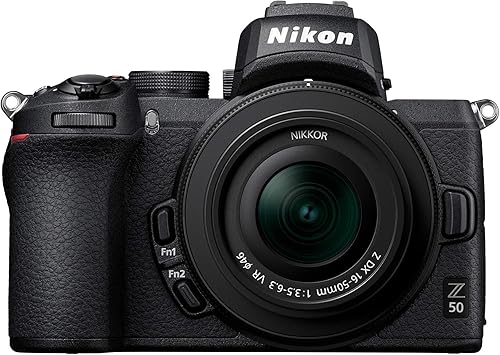
The Nikon Z50 offers a touch LCD that flips down for self-portraits and blogging. Both cameras have Wi-Fi and Bluetooth for connecting to a compatible smartphone.
A beginner can learn on either camera. The difference is which shortcuts and screen position match your habits: automated tracking for moving subjects, flexible viewing angles, or Nikon lens compatibility.
Is the Canon EOS R50 a good first camera?
The R50 suits beginners who want automatic help with focus and exposure. Its subject detection tracks people, animals and vehicles, while Advanced A+ Assist adds auto-compatible scenes.
The vari-angle touchscreen turns to help you compose from different positions. It can be especially useful when you record yourself, set the camera on a desk, or frame a low or high angle.
Skip the R50 if its Canon RF lens system doesn't fit the lenses you already own or want to buy. A camera body is only one part of the system, so compare likely lenses before committing to a mount.
Is the Nikon Z50 a good first camera?
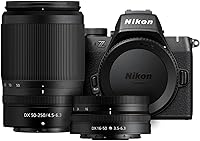
The Z50 suits beginners who want a touch screen and plan to use Nikon lenses. It comes with a 16-50mm zoom lens and works with Nikkor Z lenses.
If you own Nikon F mount NIKKOR lenses, the separately sold FTZ adapter gives you another lens option. Check the compatibility of each lens and the functions you need before relying on an adapter.
Skip the Z50 if you need a screen that stays visible while the camera is mounted on a tripod beneath it. The screen flips down, so a support plate or tripod position may obstruct your view.
What are the biggest differences between the Z50 and R50?
The R50 pairs a higher stated sensor resolution with specified subject tracking, while the Z50 offers Nikon F lens support through an adapter. Their included zoom lenses also cover different ranges.
The R50 sensor is 24.2 MP and the Z50 sensor is 20.9 MP. More megapixels describe image resolution, but they don't decide which camera will make better photos for your subjects or shooting conditions.
Canon specifies tracking for people, animals and vehicles. Nikon highlights its screen, wireless pairing and compatibility with Nikon Z and adapted Nikon F lenses.
The Canon kit includes an RF-S 18-45mm lens, while the Nikon kit includes a 16-50mm zoom lens. Since they belong to different systems, treat the ranges as a starting point and consider the views you need for everyday photos.
A wide view helps fit more of a room or landscape into the frame. A longer view can help fill the frame with a distant subject.
Before you buy, consider whether you mostly take family photos, travel scenes, portraits or wildlife.
Which camera has the better screen for beginners?
Choose the Canon R50 for a screen that angles out in different directions, or the Nikon Z50 for a flip-down touch screen. Both designs can help with self-portraits, but they behave differently on a tripod.
The R50's vari-angle touchscreen can turn to face you or help compose shots at unusual angles. That makes it a practical match for a desk setup, solo video or low-angle framing.
The Z50's screen flips down, a layout that works for self-portraits and blogging when you hold the camera. A tripod or support below the camera may block the screen, so check your planned camera position before choosing this layout.
Think through where you will put the camera. If you often use a tripod, place your phone or a small stand where the camera would sit and see whether you can frame yourself comfortably.
If you're comparing other starting options, our guide to best cameras for beginners explains how DSLR, mirrorless and zoom cameras differ.
Which kit makes more sense for video?
The Canon EOS R50 has more specifically described video modes, including uncropped 4K recording up to 30 fps. Nikon lists 4K UHD and a kit lens with quiet operation for video as well as still images.
Canon also lists Full HD high-frame-rate recording up to 120 fps and Movie for Close-up Demo Mode, which switches focus to the closest subject. These options can suit creator videos, demonstrations and clips that need focus to move to a nearby item.
The Nikon Z50's flip-down touch LCD can help you check framing, while its kit lens has built-in vibration reduction and quiet operation. Wi-Fi and Bluetooth on both cameras can help with smartphone pairing and file sharing.
For video of yourself, the R50's vari-angle screen offers more flexible viewing positions. If your clips are casual and you want a compact kit with an included zoom lens, the Z50 may cover your needs.
Don't choose only by resolution or frame-rate numbers. Decide whether you need subject tracking, a screen you can see while facing the camera, or a close-up demo mode, then check that the kit lens covers the subjects you plan to film.
Which brand fits your future lens choices?
Choose by the lenses you own or expect to buy, since Nikon Z and Canon RF are different systems. The Nikon Z50 can also use Nikon F mount NIKKOR lenses with an FTZ adapter.
The Z50 kit is compatible with Nikkor Z lenses. Its adapter option may help if Nikon F lenses are already part of your kit, though the adapter is a separate purchase.
The Canon kit uses an RF-S lens and the camera is compatible with Canon RF mount lenses. If you already own or plan to buy RF lenses, that system may make the R50 a simpler fit.
Make a short list of lenses you would actually use for travel, portraits, family photos or wildlife. Check the mount and focal length of each one, then compare what a future lens purchase would add to your kit.
Our best Canon cameras for beginners and best Nikon cameras for beginners guides can help you compare more options within each brand.
How should you set up either camera for the first day?
Start with a compatible SD card, the included lens, a charged battery and a few practice frames before changing advanced settings. A simple setup helps you learn the camera without adding unnecessary gear.
For the Nikon Z50, insert an SD card and mount the included 16-50mm lens according to the camera's instructions. If you plan to use an older Nikon F lens, first confirm that it is compatible with the FTZ adapter and that you have the adapter.
For the Canon R50, start with the included RF-S 18-45mm lens and a compatible memory card. Pair the camera with a compatible smartphone over Bluetooth or Wi-Fi only after you are comfortable taking and reviewing photos.
Choose a familiar subject, such as a person or pet, and take pictures from the same spot with different framing. Try the camera's automatic mode first, then change one setting at a time so you can see what each control does.
Keep the lens cap on when the camera is stored, and use a clean, dry cloth for the body. For lens care, follow our guide to cleaning a camera lens, since wiping dust across the glass can scratch it.
What common buying mistakes should you avoid?
The biggest mistake is buying for a brand name before checking the lens mount, screen layout and subjects you photograph. A camera that fits your routine is more useful than one with a spec you rarely use.
Don't assume the included lenses are identical because both are zooms. Compare the 16-50mm Nikon lens and 18-45mm Canon lens against your usual subjects, and make sure the kit gives you the range you need to start.
Don't count on a flip-down screen working in every tripod position. If you record yourself with a mounted camera, the R50's vari-angle screen is the easier fit between these two designs.
Don't assume that an adapter makes every older lens behave exactly as it did on its original camera. Confirm compatibility for each Nikon F lens and the functions you want before choosing the Z50 for that reason.
Finally, don't treat megapixels as a full measure of image quality. Resolution is one factor; focus tools, lens choice and how you frame the subject also shape the result.
Which camera should you pick for your kind of photography?
Pick the R50 for automatic tracking and flexible video framing, or the Z50 when Nikon lens compatibility is a priority. For a first camera, the included lens and controls matter more than choosing a brand for life.
For family, pet and travel photos, the R50's tracking for people, animals and vehicles makes it a strong fit for changing subjects. Its vari-angle screen also suits creators who want to frame themselves.
The Z50 can make more sense if you own Nikon F mount NIKKOR lenses, want Nikon Z lenses, or prefer its flip-down screen. Its compact, lightweight body and included zoom lens also make it a straightforward kit to start learning with.
If you're still unsure about camera type, start with our beginner camera guide and compare the layouts that fit how you shoot. You can also read our Canon R10 vs Nikon Z50 II comparison for another look at the two brands.
What is the final Nikon vs Canon camera decision?
Choose the Canon EOS R50 if you want specified tracking for people, animals and vehicles, plus a vari-angle screen and detailed video modes. Choose the Nikon Z50 if you value Nikon Z lenses, Nikon F lens support through an adapter, or its flip-down touch screen.
For a first camera, buy the kit whose lens range and screen fit your routine. If you're leaning Canon, see our Canon camera guide for beginners; if you're leaning Nikon, compare our Nikon beginner camera guide.
Sources
Frequently asked questions
Is Nikon or Canon better for beginners?
Neither brand is automatically better for beginners. The Canon EOS R50 kit offers subject tracking for people, animals and vehicles, plus a vari-angle screen.
The Nikon Z50 kit offers a flip-down touch screen and compatibility with Nikon Z lenses, with support for Nikon F NIKKOR lenses through a separately sold FTZ adapter.
Which camera has a better screen for video?
The Canon EOS R50 has a vari-angle touchscreen that can face different directions, which is useful when framing yourself. The Nikon Z50 has a flip-down touch LCD, which may be blocked by a tripod placed below the camera.
Choose based on where you plan to position the camera while recording.
Can I use my old Nikon lenses on the Z50?
The Nikon Z50 supports Nikon F mount NIKKOR lenses with an FTZ mount adapter, sold separately. Check compatibility for the specific lens and the functions you need before buying an adapter.
The kit also works with Nikkor Z lenses.
Which camera is better for action?
The Canon EOS R50 is the clearer fit if automatic subject tracking is a priority: it can detect and track people, animals and vehicles. The Nikon Z50 kit lists continuous shooting at up to 11 frames per second, but its feature details don't describe matching subject tracking.
Are both camera kits ready to use?
Each option includes a camera and a zoom lens, so you can start with the included lens. The Nikon Z50 uses SD memory cards.
Before buying, check that you have a compatible card and decide whether you need an adapter, spare battery or other accessories for your plans.