8 Best Bridge Cameras With a Big Zoom (November 2026)
The best bridge cameras with big zoom include the Nikon COOLPIX P950 for wildlife and birds, the Panasonic Lumix FZ80D for wide-to-telephoto travel, and the Kodak PIXPRO AZ528 for action on a budget.
On this page (12 sections)
- Best bridge cameras for long zoom
- 1. Nikon COOLPIX P950: best for wildlife and birds
- 2. Kodak PIXPRO AZ528: best for action on a budget
- 3. Nikon COOLPIX P1100: best for maximum optical reach
- 4. Nikon COOLPIX P1000: best for moon photography
- 5. Nikon COOLPIX B700: best for a 60x Nikon zoom
- 6. Kodak PIXPRO AZ405: best for AA battery convenience
- 7. Kodak PIXPRO AZ653: best for RAW shooting at 65x
- 8. Panasonic Lumix FZ80D: best for wide-to-telephoto travel
- What should you compare before choosing a bridge camera?
- Is a bridge camera better than a DSLR for zoom?
- Which bridge camera should you choose?
The Nikon COOLPIX P950 is the best bridge camera for most long-zoom buyers, with 83x optical zoom, stabilization and 4K UHD video. The Nikon P1100 reaches farther, while the Panasonic Lumix FZ80D gives you a wider 20mm starting view.
Bridge cameras combine a fixed lens with a wide zoom range, so you can frame landscapes and distant subjects without swapping lenses. If you're still deciding whether this style fits your needs, read our guide to what a bridge camera is and the comparison of a bridge camera vs DSLR.
Our picks at a glance
-
1

-
2
-
3

Best bridge cameras for long zoom
The Nikon COOLPIX P950 is the best balance of extreme reach and useful shooting features in this group. The picks below are ordered by their scores, with each one aimed at a different kind of zoom buyer.
We compared the stated zoom ranges, stabilization, video features, framing aids and power options against what long-zoom shoppers need. Our score weighs specs and features against the needs of someone choosing a bridge camera.
| Product | Best for | Optical zoom | Equivalent reach | Video | Our score |
|---|---|---|---|---|---|
| Nikon COOLPIX P950 | wildlife and birds | 83x | 24–2000mm | 4K UHD | 8.3 |
| Panasonic Lumix FZ80D | wide-to-telephoto travel | 60x | 20–1200mm | 8.0 | |
| Kodak PIXPRO AZ528 | action on a budget | 52x | 7.9 | ||
| Nikon COOLPIX P1100 | maximum optical reach | 125x | 24–3000mm | 4K UHD | 7.7 |
| Nikon COOLPIX P1000 | moon photography | 125x | 24–3000mm | 4K UHD | 7.2 |
| Nikon COOLPIX B700 | a 60x Nikon zoom | 60x | 24–1440mm | 4K UHD at 30p | 7.0 |
| Kodak PIXPRO AZ405 | AA battery convenience | 40x | 7.1 | ||
| Kodak PIXPRO AZ653 | RAW shooting at 65x | 65x | 24–1560mm | 1080p at 30 fps | 6.9 |
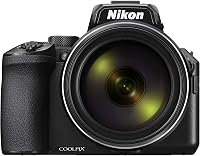
1. Nikon COOLPIX P950: best for wildlife and birds
Nikon COOLPIX P950: Best for wildlife and birds
- 83x optical zoom
- 24–2000mm equivalent range
- Dual Detect Optical VR
- 4K UHD video
- Bird and Moon modes
An 83x optical zoom reaches distant wildlife, aircraft and other subjects, while Bird mode and Dual Detect Optical VR support long-range shooting.
Pros
- 83x optical zoom
- Bird mode on the mode dial
- 4K UHD video
Cons
- 16 MP resolution
- Large zoom range takes practice to frame steadily
The P950 makes sense if distant wildlife is your main subject and you want a zoom that reaches well beyond a standard telephoto lens. Its 83x optical zoom spans 24–2000mm equivalent, covering wide landscape views as well as tight framing of far-off birds.
Nikon includes Bird and Moon modes alongside other scene modes, and Dual Detect Optical VR is designed to reduce blur from camera movement. The camera captures 16 MP stills and 4K UHD video, and the vari-angle display lets you compose from less usual angles.
The reach can make it harder to keep a moving subject in frame, so use a stable stance and start wide before zooming in. For more advice on choosing reach for birds, see our guide to cameras for birding.
2. Kodak PIXPRO AZ528: best for action on a budget
Kodak PIXPRO AZ528: Best for action on a budget
- 52x optical zoom
- 24mm wide angle
- Optical image stabilization
- 6 fps burst mode
- Wi-Fi
The AZ528 pairs a 52x optical zoom with 6 fps burst shooting, useful when a bird or athlete may change position between frames.
Pros
- 6 fps burst mode
- Optical image stabilization
- Wi-Fi transfer
Cons
- 1080p Full HD video
- Fixed LCD
The AZ528 pairs a 52x optical zoom with 6 fps burst shooting, which can help you record several frames as action unfolds. Its 24mm wide end also makes it easier to include context before zooming in on a bird, performer or athlete.
Optical image stabilization is included, and the 16 MP BSI CMOS sensor records 1080p Full HD video. Wi-Fi supports photo transfer and remote live-view control with a phone or tablet.
Choose it if you value burst shooting and wireless sharing more than 4K video or the longest possible reach. The fixed LCD is less flexible than an articulating screen for high or low camera positions.
3. Nikon COOLPIX P1100: best for maximum optical reach
Nikon COOLPIX P1100: Best for maximum optical reach

- 125x optical zoom
- 24–3000mm equivalent range
- Dual Detect Optical VR
- 4K UHD video
- Bird-watching mode
The P1100 reaches farther than any other pick here, with a 125x optical zoom and 24–3000mm equivalent range. It also offers Bird-watching mode and 4K UHD video.
Pros
- Longest optical reach in this group
- Bird-watching mode
- RAW and 4K UHD support
Cons
- 16 MP resolution
- Extreme telephoto framing can be demanding
The P1100 has the longest optical zoom in this roundup: 125x, covering 24–3000mm equivalent. That range can bring the Moon, distant wildlife or faraway details closer without changing lenses.
Dual Detect Optical VR helps steady the view, and the camera records 4K UHD video and RAW photos. A Bird-watching mode is available from the mode dial, while the control ring can adjust manual focus or settings such as exposure compensation and white balance.
Choose it when extreme reach is the main reason you're buying a bridge camera. For more general wildlife use, the P950 reaches 2000mm equivalent and may be easier to match to everyday framing needs.
4. Nikon COOLPIX P1000: best for moon photography
Nikon COOLPIX P1000: Best for moon photography

- 125x optical zoom
- 24–3000mm equivalent range
- Dual Detect image stabilization
- 4K UHD video
- RAW capture
The P1000 offers the same stated 125x optical zoom and 24–3000mm equivalent range as the P1100, with RAW capture and a vari-angle monitor.
Pros
- 125x optical zoom
- Vari-angle monitor
- RAW and 4K UHD support
Cons
- 16 MP resolution
- The extreme zoom range can make handheld framing difficult
The P1000 also offers 125x optical zoom and a 24–3000mm equivalent range, making it a fit for moon and distant-subject photography. It records 4K UHD video and supports RAW, time-lapse and super-lapse shooting.
The 3.2 in vari-angle monitor can be positioned for different viewpoints, and the electronic viewfinder provides another way to compose. Nikon includes Dual Detect image stabilization, along with full manual controls and automatic shooting modes.
The P1000 and P1100 share the same headline zoom reach. Compare their features and availability before choosing between them.
5. Nikon COOLPIX B700: best for a 60x Nikon zoom
Nikon COOLPIX B700: Best for a 60x Nikon zoom

- 60x optical zoom
- 24–1440mm equivalent range
- Dual Detect Vibration Reduction
- 4K video
- RAW capture
The B700 covers a 24–1440mm equivalent range and records UHD 4K video at 30p. Its vari-angle LCD helps with framing from different positions.
Pros
- 60x optical zoom
- Vari-angle LCD
- RAW capture
Cons
- 5 fps continuous shooting
- No 4K video detail beyond 30p is specified
The B700 offers a 60x optical zoom spanning 24–1440mm equivalent, plus UHD 4K video recording at 30p. Its vari-angle LCD and electronic viewfinder give you two framing options, and Dual Detect Vibration Reduction is included.
It also records RAW files and supports up to 5 fps shooting. The reach sits between the Panasonic FZ80D and the P950, so it may suit you if you want a Nikon zoom camera without moving to the largest zoom range here.
The camera's stated features cover stills, video and flexible framing. If you're comparing camera types, our bridge camera vs DSLR guide explains the trade-offs.
6. Kodak PIXPRO AZ405: best for AA battery convenience
Kodak PIXPRO AZ405: Best for AA battery convenience

- 40x optical zoom
- 24mm wide angle
- Optical image stabilization
- 20 MP sensor
- Uses AA batteries
The AZ405 has the shortest zoom here, but its 40x optical range, stabilization and AA battery power suit buyers who want a simpler long-zoom camera.
Pros
- Uses widely available AA batteries
- Optical image stabilization
- 20 MP resolution
Cons
- 1080p Full HD video
- Fixed LCD
The AZ405 is a more modest long-zoom option, with 40x optical zoom and a 24mm wide-angle view. Its optical image stabilization helps counter hand shake, while automatic scene detection is aimed at straightforward point-and-shoot use.
It runs on 4 AA batteries, which can be useful when you don't want to depend on a camera-specific charger. The 20 MP sensor captures stills, and the camera records 1080p Full HD video.
Choose it if replacing batteries on the road matters more to you than reaching the farthest subject. For wildlife or sports across a large field, consider the 52x AZ528 or one of the longer-zoom Nikons.
7. Kodak PIXPRO AZ653: best for RAW shooting at 65x
Kodak PIXPRO AZ653: Best for RAW shooting at 65x

- 65x optical zoom
- 24–1560mm equivalent range
- Optical image stabilization
- RAW support
- Electronic viewfinder
A 65x optical zoom and RAW support give the AZ653 flexible reach and more editing options, while its electronic viewfinder offers an alternative to the LCD.
Pros
- 65x optical zoom
- RAW support
- Electronic viewfinder
Cons
- 1080p video
- Fixed LCD
The AZ653 combines 65x optical zoom with a 24–1560mm equivalent range and RAW support. Its 20 MP sensor, optical image stabilization and 5 fps burst shooting cover a mix of distant still subjects and short action sequences.
A 3 in LCD and diopter-adjustable electronic viewfinder help with composition in different lighting. It records 1080p video at 30 fps and supports wireless transfer or remote shooting through the PIXPRO Remote Viewer app.
Choose the AZ653 if you want more reach than a 52x camera and plan to work with RAW files. The video tops out at Full HD, so consider one of the 4K picks if video resolution is a priority.
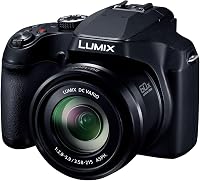
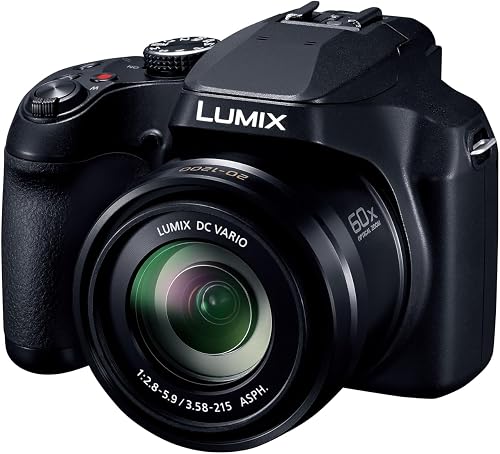
8. Panasonic Lumix FZ80D: best for wide-to-telephoto travel
Panasonic Lumix FZ80D: Best for wide-to-telephoto travel
- 60x optical zoom
- 20–1200mm equivalent range
- Power OIS
- 4K Photo at 30 fps
- USB-C charging
Its 20–1200mm equivalent zoom range starts wider than the other picks, making it easier to move between landscapes and distant subjects without changing lenses.
Pros
- Wide 20mm starting view
- Power OIS
- USB-C charging
Cons
- 18.1 MP resolution
- No built-in flash
The FZ80D is a flexible choice if you need both a wide starting view and long telephoto reach. Its 20–1200mm equivalent lens covers landscapes, everyday scenes and distant wildlife without changing lenses.
Power Optical Image Stabilizer helps reduce blur at long focal lengths, while 4K Photo captures at 30 fps. A viewfinder and touch LCD provide two ways to compose, and USB-C charging can be handy on trips with compatible charging gear.
The maximum reach is shorter than the Nikon 125x models, but the 20mm wide end gives more room for broad scenes. Compare it with other travel zoom cameras if portability and a one-lens setup are your main priorities.
What should you compare before choosing a bridge camera?
A bridge camera's zoom ratio tells you how much the lens can magnify from its widest setting, but the equivalent focal-length range shows the framing reach. For example, the Panasonic starts at a wider 20mm equivalent, while the P1100 and P1000 reach 3000mm equivalent.
Stabilization matters because small hand movements become more visible as you zoom in. Optical stabilization can help reduce blur, but it can't freeze a moving bird or athlete.
Think about how you'll frame and share images, too. A viewfinder can help in bright light, a vari-angle screen supports unusual camera angles, and Wi-Fi can make phone transfers easier on models that include it.
Is a bridge camera better than a DSLR for zoom?
A bridge camera can be simpler when you want a long zoom in one fixed lens, while a DSLR can use interchangeable lenses for different jobs. Your choice depends on whether one built-in range or a system of lenses better matches the subjects you photograph.
For a deeper comparison, read our bridge camera vs DSLR guide. If you want a camera that can follow fast action with room to change lenses, our guide to cameras for sports photography covers another set of options.
Which bridge camera should you choose?
Choose the Nikon COOLPIX P950 for a strong mix of long reach, Bird mode, stabilization and 4K UHD video. Pick the P1100 or P1000 if 125x zoom is your main need, the Panasonic FZ80D for the widest view, or the Kodak AZ405 if AA battery power matters most.
For bird photography, start with our birding camera guide and match its advice to the distance you usually shoot.
Our top 3 picks at a glance
-
1
-
2
-
3
Frequently asked questions
What is the best bridge camera for long zoom?
The Nikon COOLPIX P950 is a strong all-around choice, with 83x optical zoom, Dual Detect Optical VR and 4K UHD video. Choose the P1100 or P1000 if 125x zoom and a 24–3000mm equivalent range matter more than keeping the camera choice simple.
For a wider starting view, the Panasonic FZ80D begins at 20mm equivalent.
Is a 125x zoom better than an 83x zoom?
A 125x zoom can frame more distant subjects, but the bigger number doesn't make it the best choice for every scene. At extreme reach, small camera movement can shift the subject out of frame.
The P950's 83x zoom still reaches 2000mm equivalent, while the P1100 and P1000 extend to 3000mm equivalent.
Can you photograph birds with a bridge camera?
Yes. Bridge cameras with long optical zooms can frame birds from farther away, and the P950 and P1100 both include a bird-focused mode.
Optical image stabilization can help reduce blur from hand movement, but it won't stop a bird from moving.
Use a faster shutter speed when the bird is active.
Are bridge cameras good for travel?
They can suit travel if you want one built-in lens for wide views and distant subjects. The Panasonic FZ80D starts at 20mm equivalent and reaches 1200mm, while the P950 starts at 24mm and reaches 2000mm.
Think about how often you'll carry the camera and how much reach you'll actually use.