8 Best Cameras for Sports Photography (November 2026)
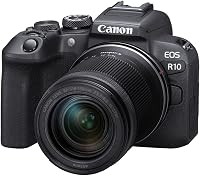
The best cameras for sports photography include the Nikon Z50 II (Two-Lens Kit) for ready-to-shoot reach, the Sony a6700 for subject tracking, and the Canon EOS R10 (Body) for quick bursts.
On this page (7 sections)
- Best cameras for sports photography at a glance
- How we chose cameras for sports photography
- Which sports camera fits your shooting style?
- What to look for in a sports photography camera
- Camera settings that help freeze sports action
- How to choose a sports camera by budget and experience
- Verdict: which camera should you pick?
The best camera for sports photography for most people is the Nikon Z50 II (Two-Lens Kit), with an included 50-250mm lens and autofocus that detects people and vehicles. Choose the Sony a6700 for AI subject recognition, or the Canon EOS R10 (Body) for 15 fps mechanical shooting.
A sports camera needs to keep up with unpredictable movement. The right choice also depends on how far you stand from the play, whether you can change lenses, and whether you want a compact mirrorless body or a DSLR viewfinder.
If you're still choosing a camera type, see our guide to the best cameras for beginners. For sports with frequent jumps and quick direction changes, dance and movement camera settings can help you set up for motion.
Best cameras for sports photography at a glance
Nikon Z50 II (Two-Lens Kit): Best for ready-to-shoot reach

- 20.9 MP APS-C sensor
- Two stabilized zoom lenses
- Detects nine subject types
- Dedicated bird and airplane modes
The two-lens kit covers nearby play and more distant action. Autofocus detects people and vehicles.
Pros
- Two stabilized lenses included
- Detects nine subject types
- Dedicated bird and airplane modes
Cons
- 5 fps continuous shooting
- The longer lens has an f/4.5-6.3 aperture
Sony a6700: Best for subject tracking

- 26 MP APS-C sensor
- AI subject recognition
- 11 fps continuous shooting
- Sony E-mount
AI subject recognition and 11 fps continuous shooting suit fast-moving subjects. This body-only option needs a compatible lens.
Pros
- AI subject recognition
- 11 fps continuous shooting
- 26 MP sensor
Cons
- No lens included
- No built-in flash
Canon EOS R10 (Body): Best for quick bursts

- 24.2 MP APS-C sensor
- 15 fps mechanical shooting
- Dual Pixel CMOS AF
- Canon RF lens compatibility
Its 15 fps mechanical burst rate suits brief moments in a game. The body-only package needs a compatible RF or RF-S lens.
Pros
- 15 fps mechanical shooting
- Subject detection and tracking
- Built-in flash
Cons
- No lens included
- Burst speed can vary with settings and battery life
Fujifilm X-S20 Kit: Best for handheld flexibility

- 26.1 MP APS-C sensor
- 20 fps electronic shooting
- 15-45mm kit lens
- Up to seven stops of IBIS compensation
In-body stabilization and up to 20 fps electronic shooting suit handheld photos. The included XC 15-45mm lens is better for nearby action than distant fields.
Pros
- 20 fps electronic shooting
- In-body image stabilization
- Kit lens included
Cons
- 15-45mm lens has limited reach for distant action
- Electronic burst speed is not the mechanical rate
Canon EOS R7 (Body): Best for high-speed action

- 32.5 MP APS-C sensor
- 15 fps mechanical and 30 fps electronic shooting
- 651 AF zones
- In-body image stabilization
The R7 pairs a 32.5 MP sensor with fast mechanical and electronic burst modes. Add a compatible RF lens for the sport and shooting distance.
Pros
- 30 fps electronic shooting
- 15 fps mechanical shooting
- In-body image stabilization
Cons
- No lens included
- A higher burst rate still depends on timing and settings
Sony a6400 Kit (16-50mm): Best for nearby games

- 20.1 MP APS-C sensor
- 11 fps continuous shooting
- 16-50mm lens included
- Tilting LCD screen
This kit includes a short zoom for courtside scenes and nearby youth sports. Its 11 fps rate supports action bursts, though distant play calls for a longer lens.
Pros
- Lens included
- 11 fps continuous shooting
- Tilting screen
Cons
- 16-50mm lens has limited reach for field sports
- Older model in this group
Nikon D7500 Kit (18-140mm): Best for an optical viewfinder

- 20.9 MP APS-C sensor
- 8 fps continuous shooting
- 18-140mm lens included
- 51-point autofocus
The D7500 kit combines an 18-140mm zoom with a DSLR viewfinder. Its 8 fps burst rate is slower than several mirrorless picks here.
Pros
- Versatile zoom included
- Optical viewfinder
- 51-point autofocus
Cons
- 8 fps continuous shooting
- DSLR body is less compact than the mirrorless picks
Canon EOS Rebel T7 Double Zoom Kit: Best for a low-cost starting kit

- 24.1 MP APS-C sensor
- Two zoom lenses
- Optical viewfinder
- 3 fps continuous shooting
Two zoom lenses give beginners options for framing nearby and more distant play. Its 3 fps rate is modest for action, so timing matters.
Pros
- Two zoom lenses included
- Optical viewfinder
- 24.1 MP sensor
Cons
- 3 fps continuous shooting
- 9-point autofocus system
How we chose cameras for sports photography
The strongest sports options pair subject tracking with a burst mode that can capture several frames during a short action sequence. We compared the stated autofocus features, continuous shooting rates, included lenses, stabilization, and sensor resolution.
Lens reach shaped the recommendations as much as the camera body. A kit with a telephoto zoom is ready for more distant play, while body-only options require you to choose a compatible lens.
Our score weighs specs and features against what you're shopping for. We did not conduct practical testing, so the picks reflect the published product features and how they fit common sports photography needs.
Which sports camera fits your shooting style?
The Nikon Z50 II (Two-Lens Kit) is the most complete starter choice because both a standard zoom and a longer zoom come in the box. The Canon EOS R7 (Body) and Sony a6700 suit buyers who already have a compatible lens or plan to choose one for a specific sport.
| Product | Best for | Sensor | Burst rate | Included lenses | Our score |
|---|---|---|---|---|---|
| Nikon Z50 II (Two-Lens Kit) | ready-to-shoot reach | 20.9 MP APS-C | 5 fps | 16-50mm and 50-250mm | 8.9 |
| Sony a6700 | subject tracking | 26 MP APS-C | 11 fps | 8.6 | |
| Canon EOS R10 (Body) | quick bursts | 24.2 MP APS-C | 15 fps mechanical | 8.5 | |
| Fujifilm X-S20 Kit | handheld flexibility | 26.1 MP APS-C | Up to 20 fps electronic | 8.4 | |
| Canon EOS R7 (Body) | high-speed action | 32.5 MP APS-C | 15 fps mechanical, 30 fps electronic | 8.3 | |
| Sony a6400 Kit (16-50mm) | nearby games | 20.1 MP APS-C | 11 fps | 8.1 | |
| Nikon D7500 Kit (18-140mm) | an optical viewfinder | 20.9 MP APS-C | 8 fps | 8.1 | |
| Canon EOS Rebel T7 Double Zoom Kit | a low-cost starting kit | 24.1 MP APS-C | 3 fps | Double zoom kit | 8.0 |
What to look for in a sports photography camera
A camera for sports should have autofocus that can follow a moving subject and a lens that reaches the action from your usual position. A fast burst mode helps, but the best fit depends on the sport and your shooting distance.
How much burst speed do you need?
A burst rate of 8 to 15 fps gives you several chances to capture a brief moment, while higher electronic rates can record even more frames in a sequence. The Canon EOS R7 (Body) reaches 30 fps electronically, the Canon EOS R10 (Body) offers 15 fps mechanically, and the Nikon D7500 Kit (18-140mm) reaches 8 fps.
These numbers describe maximum continuous shooting rates, not a promise that every frame will be sharp. Subject movement, focus behavior, shutter settings, and when you start shooting still matter.
How important is autofocus tracking?
Autofocus tracking helps keep a moving player in focus as they change position. The Nikon Z50 II (Two-Lens Kit) detects nine subject types, including people and vehicles, while the Sony a6700 offers AI subject recognition and the Canon EOS R10 (Body) has subject detection and tracking.
For a camera with a clear sports focus, compare the Canon EOS R10 (Body) and Nikon Z50 II (Two-Lens Kit). Their features and included lenses differ, so consider the full setup rather than the body alone.
What lens reach should you choose?
Choose a lens based on where you can stand. A 16-50mm zoom suits nearby action, while a 50-250mm zoom gives you more framing options from the sideline or stands.
The Nikon Z50 II (Two-Lens Kit) includes both a 16-50mm and a 50-250mm lens, making it the most flexible out-of-box option here. If birds or wildlife are also on your list, our camera guide for birding covers long-range subjects and other features to consider.
Camera settings that help freeze sports action
A faster shutter speed helps reduce motion blur when a player or ball moves quickly. Start around 1/1000 second for fast outdoor action, then adjust for the light and the motion you want to show.
Use continuous autofocus and a burst mode for unpredictable movement. If you're new to exposure controls, our guides to shutter speed and ISO explain how those settings affect exposure and motion.
How to choose a sports camera by budget and experience
The best value depends on whether you already own compatible lenses and how often you photograph distant action. A body-only camera can suit you if you have lenses already, while a kit gives you a more complete starting setup.
The Canon EOS Rebel T7 Double Zoom Kit includes two zoom lenses, but its 3 fps rate is the slowest here. For more frequent action, the Canon EOS R10 (Body) offers 15 fps mechanical shooting, while the Nikon Z50 II (Two-Lens Kit) includes a longer zoom.
A DSLR may appeal if you prefer an optical viewfinder. The Nikon D7500 Kit (18-140mm) combines an 18-140mm lens and 8 fps continuous shooting, while the Canon EOS Rebel T7 Double Zoom Kit pairs a two-lens package with a 3 fps rate.
Verdict: which camera should you pick?
Choose the Nikon Z50 II (Two-Lens Kit) if you want a ready-to-shoot setup with a longer zoom and subject detection. Pick the Sony a6700 if AI subject recognition is your priority, or the Canon EOS R10 (Body) if you value its 15 fps mechanical burst rate and will choose a lens separately.
For nearby games, the Sony a6400 Kit (16-50mm) includes a short zoom. If you're comparing camera types for a first purchase, use our beginner camera guide to decide whether a DSLR, mirrorless, or zoom camera fits your plans.
Our top 3 picks at a glance
-
1
-
2
-
3
Frequently asked questions
What matters most in a camera for sports photography?
Autofocus that can track a moving subject, a useful burst rate, and a lens that reaches the action matter most. Think about where you stand, too: a short zoom can work near a court, while a field often calls for more reach.
A high frame rate helps capture a moment, but it doesn't replace timing or a suitable lens.
Is a mirrorless camera better for sports?
Mirrorless cameras can offer subject recognition and tracking features that help follow action. Several picks here include those features, while the Nikon D7500 and Canon Rebel T7 are DSLR options with optical viewfinders.
Compare the autofocus features and lens choices for your sport before choosing by camera type alone.
What lens focal length is good for sports?
The right focal length depends on your distance from the action. A 16-50mm lens suits nearby scenes, while the Nikon Z50 II (Two-Lens Kit)'s 50-250mm lens gives you more reach for action farther away.
Your location, field size, and ability to move around all affect the lens you need.
Can a beginner use a camera for sports photography?
Yes. Start with a camera that offers subject tracking and a lens suited to your sport, then use continuous autofocus and a burst mode to capture short sequences.
Our beginner camera guide explains how DSLR, mirrorless, and zoom cameras differ.