8 Best Cameras for Birding and Backyard Birds (November 2026)
The best cameras for birding and backyard birds include the Nikon Z50 II (Two-Lens Kit) for bird detection, the Canon EOS R10 Kit (RF-S 18-150mm) for quick action, and the Nikon COOLPIX P950 for distant birds.
On this page (14 sections)
- How we chose cameras for birding
- Which camera is best for backyard birds?
- Which birding camera is best for a quick one-lens setup?
- Which camera reaches the farthest birds?
- Which DSLR camera works for birding?
- Is the Sony RX10 V a good camera for birds in flight?
- What other long-zoom cameras suit birdwatching?
- How much zoom do you need for backyard bird photos?
- Are mirrorless cameras or bridge cameras better for birding?
- What features help with birds in flight?
- How should you set up a camera for birding?
- What common bird photography mistakes should you avoid?
- How do you care for a birding camera in the field?
- How do you choose a camera for birding?
The best camera for birding for most people is the Nikon Z50 II (Two-Lens Kit), because it combines bird subject detection and a dedicated bird mode with an included telephoto lens. Choose the Nikon COOLPIX P950 for far-off birds without changing lenses, or the Sony RX10 V for a fixed-lens setup built around fast bursts.
A useful bird camera needs to match the distance you usually shoot from, the birds’ movement and the amount of gear you want to carry. Backyard feeder photos, woodland walks and birds in flight place different demands on reach, focus and shooting speed.
There is no single focal length or camera style that suits every birding spot. This guide compares interchangeable-lens kits and fixed-lens superzooms so you can choose around your own subjects and routines.
If you are still comparing camera styles, our beginner camera guide covers DSLR, mirrorless and zoom options. You can also see how a fixed-lens model fits in our guide to bridge cameras.
Our picks at a glance
-
1

-
2

-
3

How we chose cameras for birding
We chose these cameras for birding by comparing reach, focus features, burst shooting and the kind of kit each one requires. Those details affect whether a camera fits a feeder near your home, a distant pond or a bird that keeps taking flight.
A long zoom can make a small subject easier to frame, but that is only one part of the decision. Focus tracking, your distance from the bird, available light and how steady you can hold the camera all shape the result.
We included cameras with fixed lenses for people who want broad zoom ranges without carrying extra lenses. We also included interchangeable-lens kits for readers who want the option to change lenses and build a system over time.
The Nikon Z50 II stands out for its bird detection and dedicated bird mode. The Canon R10 and Sony RX10 V offer fast continuous shooting, while the COOLPIX P950 and Lumix FZ80D reach distant subjects through integrated superzoom lenses.
Our scores reflect how each camera’s features fit bird photography needs.
| Product | Best for | Sensor | Included lenses | Bird features | Our score |
|---|---|---|---|---|---|
| Nikon Z50 II (Two-Lens Kit) | bird detection | 20.9 MP DX format (APS-C) | 16-50mm and 50-250mm | Bird subject detection and dedicated bird mode | 8.9 |
| Canon EOS R10 Kit (RF-S 18-150mm) | quick action | 24.2 MP APS-C | 8.4 | ||
| Nikon COOLPIX P950 | distant birds | Built-in Bird mode | 8.3 | ||
| Nikon D7500 Kit (18-140mm) | DSLR controls | 8.1 | |||
| Sony RX10 V | flight bursts | 20.1 MP 1-type stacked sensor | 8.0 | ||
| Panasonic Lumix FZ80D | wide views | 8.0 | |||
| Canon EOS Rebel T7 Double Zoom Kit | DSLR beginners | 24.1 MP APS-C | Double zoom kit | 8.0 | |
| Kodak PIXPRO AZ528 | budget zoom | 16 MP BSI CMOS | 7.9 |
Which camera is best for backyard birds?
The Nikon Z50 II (Two-Lens Kit) is the best all-around choice for many backyard birders because it combines bird-focused autofocus features with two included lenses. Use the 50-250mm lens when you need more reach, then switch to the 16-50mm for wider scenes and everyday photos.
Nikon Z50 II (Two-Lens Kit): Best for bird detection
- Dedicated bird mode
- Detects and tracks birds
- 20.9 MP DX format sensor
- Includes 16-50mm and 50-250mm lenses
Bird detection and a dedicated mode make this mirrorless kit a strong fit for wildlife. Its included 50-250mm lens gives you a longer reach option without a separate lens purchase.
Pros
- Dedicated bird mode
- Bird subject detection
- Two stabilized zoom lenses included
Cons
- Changing lenses may take time when birds appear
- The longest included lens is 50-250mm
The Z50 II can automatically detect and track birds, and it has a dedicated bird mode. Those tools offer a useful starting point when a bird hops between branches or visits a feeder against a busy background.
Both included lenses have image stabilization. That helps when you are framing at longer focal lengths, though steady technique and suitable light still matter for sharp photos.
The kit’s 20.9 MP DX format sensor and compact mirrorless body also suit a birder who wants one camera for wildlife, travel and general photography. If you are choosing between entry-level systems, compare it with our Canon camera picks for beginners.
The key limitation is the included telephoto lens, which reaches 250mm. Birds across a wide pond may look small in the frame, so choose a superzoom if you value maximum built-in reach more than the option to change lenses.
This is a strong fit if bird detection and future lens choices matter to you. Skip it if your main goal is the longest possible zoom in a single camera, or if you prefer never to change lenses.
Which birding camera is best for a quick one-lens setup?
The Canon EOS R10 Kit with the RF-S 18-150mm lens suits birders who want one lens for varied scenes and fast continuous shooting. Subject detection can help with moving wildlife, while the broad zoom range means you can move from a nearby bird to a wider habitat view without swapping lenses.
Canon EOS R10 Kit (RF-S 18-150mm): Best for quick action
- 24.2 MP APS-C sensor
- Subject detection autofocus
- RF-S 18-150mm lens included
- Up to 15 fps mechanical shooting
The included 18-150mm lens covers a broad range without a lens change. Subject detection and fast continuous shooting suit birds that move between branches or take flight.
Pros
- Broad-range zoom lens included
- Subject detection autofocus
- Up to 15 fps mechanical shooting
Cons
- Less maximum reach than the superzoom picks
- A longer lens may be needed for distant birds
The R10 has a 24.2 MP APS-C sensor and subject-detection autofocus. Canon specifies mechanical shooting up to 15 frames per second, which gives you a fast sequence when a bird lifts off or changes position.
The included lens reaches 150mm, so it is more suited to nearby birds than distant subjects across open space. If you later want more reach, compatible RF or RF-S lenses can extend the system.
Choose the R10 if you photograph a mix of birds, family scenes and outdoor action, and want a fast mirrorless kit that starts with one lens. Skip it if distant birds are your main subjects and you do not plan to add a longer lens.
Its appeal is the balance of autofocus, shooting speed and one-lens convenience. For more on choosing a camera around fast-moving subjects, see our sports photography camera guide.
Which camera reaches the farthest birds?
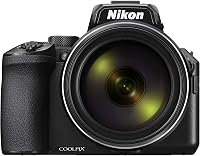
The Nikon COOLPIX P950 is the strongest fit here when distant birds are your priority and you want a single built-in lens. Its 83x optical zoom reaches a stated maximum focal length of 2000mm, and its Bird mode gives you a dedicated setting to start with.
Nikon COOLPIX P950: Best for distant birds
- 83x optical zoom
- Built-in Bird mode
- 16 MP resolution
- 4K UHD video
The P950's 83x optical zoom reaches far-off birds without swapping lenses. Its built-in Bird mode gives newcomers a dedicated starting point for bird photos.
Pros
- Very long built-in optical zoom
- Bird mode
- 4K UHD video
Cons
- 16 MP resolution
- Fixed camera and lens setup
The P950 spans from a 24mm wide view to super-telephoto framing, so you can adjust your composition without changing lenses. That range can help when a bird is far from your position or when you want to include some of its surroundings.
Its Bird mode is useful for someone new to wildlife photography who wants a bird-specific scene setting. The camera also captures 4K UHD video, so you can record behavior as well as still pictures.
A fixed-lens superzoom keeps the kit simple, but it does not let you replace the lens as your needs change. Long zoom also makes steady framing more demanding: brace your arms, use a stable support when practical, and avoid swinging the camera too quickly while zoomed in.
Choose the P950 if maximum reach without a lens purchase is your priority. Skip it if you expect to build an interchangeable-lens system or want a smaller zoom range that is easier to frame with quickly.
For other long-zoom models, see our guide to bridge cameras with a big zoom.
Which DSLR camera works for birding?
The Nikon D7500 Kit is the DSLR choice for birders who prefer an optical viewfinder and want room to use other Nikon F lenses. Its 51-point autofocus system and continuous shooting up to 8 frames per second give you useful tools for general wildlife and active birds.
Nikon D7500 Kit (18-140mm): Best for DSLR controls

- 20.9 MP sensor
- 51-point autofocus system
- Up to 8 fps continuous shooting
- 18-140mm lens included
This DSLR kit pairs a 51-point autofocus system with an included 18-140mm lens. It is a fit for birders who want a DSLR camera and room to grow into other Nikon F lenses.
Pros
- 51-point autofocus system
- Tilting touch LCD
- 4K Ultra HD video
Cons
- Shorter lens reach than the superzoom cameras
- Larger DSLR-style kit
The included 18-140mm lens covers a practical range for nearby subjects and everyday photography. For birds at a distance, plan on using a longer compatible lens; the included zoom has less reach than the dedicated superzoom cameras in this guide.
The tilting touch LCD can help when you need to frame from a low or high position. The optical viewfinder also gives you a direct way to compose without relying on the screen.
Choose the D7500 if you already prefer a DSLR-style setup or want to expand with Nikon F lenses. Skip it if a long built-in zoom is more important than lens choice, or if you want the most compact setup among these options.
If you are choosing between a DSLR and a fixed-lens zoom, our bridge camera vs DSLR comparison explains the differences in setup and flexibility.
Is the Sony RX10 V a good camera for birds in flight?
The Sony RX10 V is a strong fit for birds in flight if you want one integrated lens and a high burst rate. Its 24-600mm zoom, AI-based autofocus and shooting speed up to 30 frames per second combine reach and fast capture in one camera.
Sony RX10 V: Best for flight bursts

- 25x optical zoom
- 24-600mm lens
- AI-based autofocus
- Up to 30 fps burst shooting
The RX10 V combines a 24-600mm lens with AI-based autofocus and high-speed burst shooting. Its fixed lens keeps the kit together for backyard or field trips.
Pros
- 24-600mm lens built in
- AI-based autofocus
- Up to 30 fps burst shooting
Cons
- Fixed lens system
- Less reach than the P950 or FZ80D by stated focal length
The lens covers a wide 24mm view through 600mm telephoto framing. That lets you compose a habitat scene and then zoom toward a bird without changing lenses.
Its AI-based autofocus and high-speed burst shooting are useful when a bird crosses the sky or moves quickly around a feeder. A burst gives you several frames to choose from, but it still helps to follow the bird smoothly and keep the focus area on it.
The fixed-lens design keeps the kit self-contained. You cannot replace the lens with a longer one, and the stated 600mm reach is shorter than the P950 and FZ80D maximum focal lengths.
Choose the RX10 V if flight bursts and one-camera convenience matter more than maximum zoom. Skip it if your subjects are usually very far away or you want to choose different lenses for different situations.
What other long-zoom cameras suit birdwatching?
The Panasonic Lumix FZ80D and Kodak PIXPRO AZ528 are fixed-lens choices for birders who want substantial zoom reach without a separate lens system. The Panasonic offers a 20-1200mm range and stabilization, while the Kodak pairs 52x optical zoom with a 6 fps burst mode.
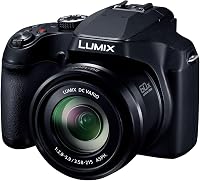
Panasonic Lumix FZ80D: Best for wide views
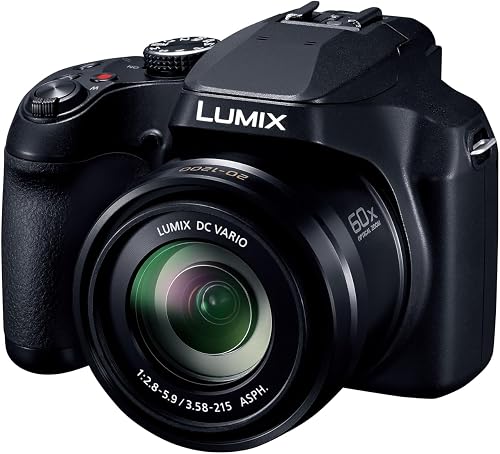
- 60x optical zoom
- 20-1200mm range
- Power Optical Image Stabilizer
- 4K Photo recording
The FZ80D covers wide scenes and distant subjects with its built-in 20-1200mm zoom. Its stabilization and 4K Photo mode are useful features for a camera aimed at wildlife and sports.
Pros
- Wide-to-super-telephoto lens range
- Optical image stabilization
- 4K Photo mode
Cons
- Fixed camera and lens setup
- Contrast-detection autofocus
The FZ80D’s 60x optical zoom covers 20-1200mm, giving you a wider starting view than the P950 and a long telephoto range. Power Optical Image Stabilizer helps counter camera movement, and its 4K Photo mode is designed to capture decisive moments.
That wide end is useful when you want to show the bird’s habitat or include a wider area around a feeder. The fixed lens makes this a one-camera setup, but you cannot switch to another lens later.
Choose the FZ80D if you want a wide-to-long zoom range and stabilization in a compact camera. Skip it if you want bird recognition autofocus, since its autofocus uses contrast detection, or if you want interchangeable lenses.
Canon EOS Rebel T7 Double Zoom Kit: Best for DSLR beginners

- 24.1 MP APS-C sensor
- Two zoom lenses included
- Optical viewfinder
- Wi-Fi and NFC
The double zoom kit gives beginners two lens options with a familiar DSLR layout. Its 9-point autofocus system and 3 fps continuous shooting are more modest for birds in flight.
Pros
- Two lenses included
- 24.1 MP APS-C sensor
- Optical viewfinder
Cons
- 9-point autofocus system
- 3 fps continuous shooting
The Canon EOS Rebel T7 Double Zoom Kit gives beginners two zoom lenses and an optical viewfinder. Its 24.1 MP APS-C sensor provides room to crop a frame, but the 9-point autofocus system and 3 fps continuous shooting are less suited to fast-moving birds.
The two lenses offer more framing choices than a single-lens starter kit. This makes the T7 a reasonable entry to DSLR photography if you also want to photograph nearby birds, family outings and other everyday subjects.
Choose it if you value the DSLR viewfinder and want two lenses from the start. Skip it if your main subjects are birds in flight or you need a strong autofocus system for unpredictable movement.
Kodak PIXPRO AZ528: Best for budget zoom

- 52x optical zoom
- Optical image stabilization
- 6 fps burst mode
- Wi-Fi
The AZ528 offers long optical zoom in a fixed-lens camera, plus optical image stabilization and a 6 fps burst mode. It is a simple route to distant bird photos without building a lens system.
Pros
- 52x optical zoom
- Optical image stabilization
- 6 fps burst mode
Cons
- 16 MP resolution
- Fixed lens system
The Kodak PIXPRO AZ528 pairs 52x optical zoom with optical image stabilization and a 6 fps burst mode. It suits a birder who wants long zoom in a fixed-lens camera and wants to avoid choosing separate lenses.
Its 16 MP sensor and built-in lens keep the setup straightforward. Wi-Fi can transfer photos to a phone, and the camera records 1080p Full HD video.
Choose the AZ528 if you want a simple, long-zoom option for distant birds and occasional bursts. Skip it if you want interchangeable lenses, more advanced bird detection or a camera that records 4K video.
How much zoom do you need for backyard bird photos?
The right zoom depends on how far away the birds are and how much of the frame you want them to fill. A 50-250mm lens may suit feeders and nearby branches, while a superzoom such as the P950 reaches much farther without a lens change.
Start with the place you photograph most. A feeder near a window calls for less reach than birds across a pond, and a clear line of sight can matter more than selecting the camera with the biggest zoom number.
Remember that zoom range does not make a distant bird easier to follow. At a tight view, a small movement can send the subject out of the frame, so practice finding the bird at a wider setting before zooming in.
For birds close to home, a two-lens kit offers flexibility for nearby subjects and everyday scenes. For distant wildlife, a fixed-lens bridge camera keeps a long zoom ready without carrying another lens.
Are mirrorless cameras or bridge cameras better for birding?
Mirrorless cameras are better for birders who want interchangeable lenses or features such as dedicated bird detection. Bridge cameras are a better match if you want one attached lens with a broad zoom range.
The Nikon Z50 II is the mirrorless pick here for bird detection and a two-lens kit. The P950, FZ80D and AZ528 keep the lens attached, which simplifies packing but limits your ability to change focal length by switching lenses.
Think about what you may photograph beyond birds, too. An interchangeable system can grow with a longer lens, while a bridge camera keeps the number of pieces in your kit down.
What features help with birds in flight?
Fast autofocus, subject detection and continuous shooting help when birds move quickly. The Sony RX10 V offers up to 30 frames per second with AI-based autofocus, while the Nikon Z50 II detects birds and the Canon R10 shoots up to 15 frames per second with its mechanical shutter.
Burst speed alone does not guarantee a sharp frame. Keep the bird in the focus area, follow its path smoothly and use a shutter speed fast enough to limit blur from motion.
If flight photography is your main goal, also consider where you can practice. A bird crossing a clear sky can be easier to follow than one moving through branches, where the background can distract autofocus.
For general guidance on exposure, our explainers on shutter speed, aperture and ISO cover the settings that affect motion, light and depth of field.
How should you set up a camera for birding?
Set up your camera before you reach the spot where you hope to photograph birds. Familiar controls leave you more time to frame the subject when it appears.
Start by selecting continuous autofocus or subject tracking if your camera offers it. On the Z50 II, try its bird detection or dedicated bird mode; on cameras without bird recognition, choose an autofocus area that you can keep over the subject.
Use continuous shooting for a short sequence when a bird takes off or changes direction. You do not need to hold the shutter continuously for every scene; save bursts for moments when several frames may help you select a sharp pose.
For moving birds, choose a faster shutter speed than you would for a stationary feeder visitor. Raise ISO if the light is low and the camera needs it, then review a few images at full size to see whether motion or focus caused any blur.
Set a wider focal length before you begin tracking a bird. Find it in the frame, then zoom in gradually; starting at maximum zoom can make a moving subject difficult to locate.
What common bird photography mistakes should you avoid?
The most common mistakes are using too much zoom too soon, relying on burst speed alone and overlooking the light. Fixing these habits can improve your results regardless of which camera you choose.
At maximum zoom, even small hand movements are more noticeable. Stabilization can help counter camera shake, but it does not freeze a bird’s motion, so use a faster shutter speed when the subject is moving.
A long burst can also create many nearly identical images without solving a focus problem. Track the bird, use a brief burst at a useful moment, and check whether the camera focused on the bird or a branch in front of it.
Avoid walking too close to a feeder or nesting area just to fill the frame. Give birds space, choose a position with a clear view and let them return to their normal behavior before raising the camera.
Finally, do not judge a camera only by its maximum zoom or frame rate. Consider reach, autofocus, the way the camera feels in your hands and whether you want a fixed lens or a system that can grow.
How do you care for a birding camera in the field?
Protect the camera from dust, moisture and bumps while moving between locations. Keep the lens cap on when you are not shooting, and avoid changing lenses in a dusty or windy spot if you can wait for better conditions.
On an interchangeable-lens camera, change lenses with the camera opening pointed down and keep the rear lens cap ready. This reduces the time the camera’s lens mount is exposed to the surroundings.
For a bridge camera, keep the zoom mechanism clear of grit and avoid touching the front glass. If the lens gets dusty, follow a careful cleaning routine; our guide to cleaning a camera lens covers safe steps.
Carry a spare battery and memory card if your outing may last a while. Check that the card has room before you leave, and transfer important images when you return so the card is ready for the next trip.
How do you choose a camera for birding?
Choose a camera according to your usual shooting distance and how much flexibility you want. Pick the Nikon Z50 II for bird detection and interchangeable lenses, the P950 for maximum built-in zoom reach, or the Sony RX10 V for fast bursts in a fixed-lens camera.
For nearby backyard birds and a camera that can handle other subjects, the Z50 II kit is the most balanced starting point. The Canon R10 is a good alternative if you value a broad one-lens range and fast shooting.
For birds across open space, choose the P950 or FZ80D for a very long integrated zoom. If a simpler fixed-lens option matters more than maximum reach, consider the Kodak AZ528; for an optical viewfinder and DSLR controls, look at the D7500.
The best camera for birding is the one whose reach fits your usual location and whose controls you can use quickly. Choose the camera around the birds you actually see, then practice tracking and exposure before a rare moment arrives.
Our top 3 picks at a glance
-
1
-
2
-
3
Frequently asked questions
What matters most in a camera for birding?
For birding, look first at lens reach, autofocus features and how quickly the camera can shoot a sequence. Long zoom helps with distant birds, while subject detection or a dedicated bird mode can simplify focus.
For birds in flight, continuous shooting can help you capture a useful moment.
Is a bridge camera good for bird photography?
Yes. A bridge camera gives you a built-in zoom lens, so you can frame distant birds without changing lenses.
The COOLPIX P950, FZ80D and AZ528 are examples here.
Compare their reach and handling with a mirrorless kit if you may want to change lenses later.
Do I need a camera with bird detection?
Bird detection can help the camera recognize and track birds, which is useful when they move through a busy background. The Nikon Z50 II has bird subject detection and a dedicated bird mode.
A camera without those features can still photograph birds, but you'll rely more on your focus area and tracking choices.
Is a long zoom enough for sharp bird photos?
Long zoom helps you frame a distant subject, but it does not guarantee a sharp photo. Camera movement, light, focus and the bird's motion all affect the result.
Optical stabilization can help counter camera shake, and a faster shutter speed can help freeze movement.
Should I choose a bridge camera or a mirrorless camera for birds?
Choose a bridge camera if you want one built-in lens with broad zoom reach. Choose mirrorless if you want interchangeable lenses and features such as bird detection on the Nikon Z50 II.
For a broader overview, see our guide to bridge cameras.