Canon EOS R10 vs EOS R100: Which to Buy? (November 2026)
Buy the Canon EOS R100 for your first mirrorless camera and easy everyday shooting; buy the EOS R10 for fast action and more control. The R10 adds speed and a stronger processor, while the R100 keeps the basics simple and costs less of your budget.
On this page (7 sections)
Buy the Canon EOS R100 for your first mirrorless camera and easy everyday shooting; buy the EOS R10 for fast action and more control. In this Canon EOS R10 vs Canon EOS R100 comparison, the two bodies share a 24.2MP APS-C sensor but split on speed, processor, controls and what comes in the box.
The R100 is the simpler camera and it arrives with a zoom lens. The R10 is the faster body for sport, wildlife and video, and it sells as a body only.
If you are still weighing starter cameras, the Canon Rebel T7 review covers the older DSLR route, and Canon Rebel T7 vs R100 spells out what changes when you move to mirrorless.
 Best for first-time mirrorless buyers
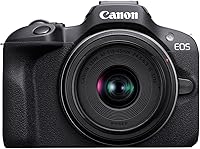
Canon EOS R100 Mirrorless Camera with RF-S
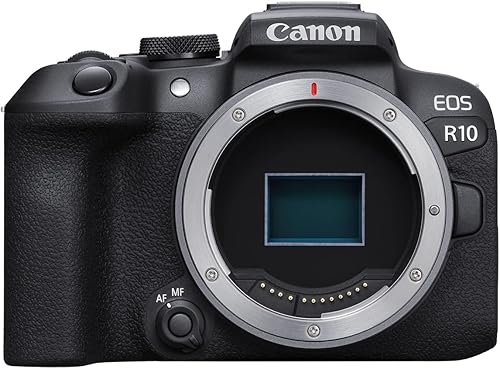
How do the R10 and R100 differ in the hand?
The R100 is the more compact camera with simpler controls; the R10 is built for quicker changes. Canon calls the R10 compact and lightweight, yet it still carries more on-body control than the entry R100.
The R100 balances quality and ease of use in a small body. Canon designed it for everyday shooters and first-time DSLR users, so the menus are simplified and auto scene modes do more of the thinking.
The R10 brings features from the wider EOS R series into a sleek, lightweight design. It fits comfortably in your hand and is easy to carry, but it is the bigger of the two.
That size gap is the first thing to notice. Pick up both if you can, because a body that feels cramped in your hands is hard to enjoy for a long shoot day.
Which viewfinder and screen suit you?
The R100 has a 2.36m-dot OLED electronic viewfinder and a 3-inch 1.04m-dot LCD. Its rear screen is fixed, so you compose from the viewfinder or look straight at the back panel.
The R10 uses a tilting rear screen. That helps when you shoot low, hold the camera overhead or record video while watching yourself in frame.
Both offer an electronic viewfinder, so bright outdoor days are workable on either. The tilting screen is the practical difference for video and awkward angles.
Flash and hot shoe
The R10 has a built-in flash and a hot shoe, so you can add light without a separate unit. The R100 has no built-in flash, which makes it the weaker pick for dim indoor snapshots straight out of the box.
A hot shoe also opens up speedlights and other accessories later. If you plan to grow into lighting, the R10 gives you a mount to build on from day one.
Which sensor and processor matter more?
Both cameras use a 24.2MP APS-C CMOS sensor, so the difference comes from the processor and the speed it enables. The R10 uses the DIGIC X, while the R100 uses the DIGIC 8.
Canon says the DIGIC X powers 4K video capture and reduces noise, so you can keep shooting without worrying about missing the shot. The DIGIC 8 in the R100 delivers vibrant, detailed images and smooth video for everyday shooting.
On paper the resolution is the same. The gap shows up in burst speed, noise handling and how long you can keep shooting before the buffer fills.
Bit depth differs too: the R10 records at 14-bit and the R100 at 12-bit. That gives the R10 more room to recover shadows and highlights when you edit raw files.
Continuous shooting speed
The R10 shoots at 15 fps with the mechanical shutter, which Canon frames as the way to catch the perfect moment in fast movement. It suits sport, animals, cars and any subject that will not sit still.
The R100 reaches 6.5 fps with its electronic shutter. That is fine for family events and travel, but it is less than half the R10's mechanical rate.
If your subjects move, the R10's speed is the reason to pay more. If you mostly shoot still scenes and people who pose, the R100's rate covers the basics.
Autofocus
The R100 lists Dual Pixel CMOS AF with 143 AF zones, and Canon describes it as fast and accurate when tracking people and faces. The wide coverage helps it hold focus across the frame.
The R10 lists Dual Pixel CMOS AF as well, but its spec sheet also names contrast detection and 651 autofocus points. Canon pairs it with subject detection and subject tracking for quicker focus in video.
Here the specs are not fully consistent. One line on the R10 calls the autofocus contrast detection while another names Dual Pixel CMOS AF, so keep that in mind if autofocus tech is your deciding factor.
Which camera holds up better for stills?
The shared 24.2MP sensor means both cameras resolve detail in much the same way for portraits, travel scenes and landscapes. The R100's DIGIC 8 is tuned for everyday shooting with auto scene modes that read the light and subject for you.
The R10's edge for stills is the 14-bit depth and the faster processor feeding it. Files keep more color and shadow detail for editing, and the burst rate helps when a moment changes between frames.
Neither camera is a low-light specialist on the data here. The R10's noise reduction and DIGIC X are the stronger claim for dim scenes, while the R100 stays the simpler camera when light is good.
Which camera is better for video?
The R10 is the stronger video camera; the R100 covers simple clips but crops its 4K. The R10 records 4K on the go, with Movie Servo AF and subject detection for quicker, steadier focus.
Canon says you can record for over 30 minutes on the R10 without it stopping. That suits interviews, events and longer takes where you do not want to restart every few minutes.
The R100 records 4K 24p with a crop and Full HD at 60p. The crop narrows your field of view in 4K, so a wide scene looks tighter than it does in stills.
For vlogs and everyday clips, the R100's Full HD 60p and Dual Pixel autofocus are enough. For anything where 4K framing and run time matter, the R10 is the better tool.
Which one should a vlogger pick?
A vlogger who records longer takes and wants clean 4K should choose the R10. Its subject tracking and tilting screen make framing yourself easier.
The R100 still works for casual vlogs. The fixed screen is the bigger limit, because you cannot angle it toward you when the camera sits on a desk or tripod.
What about frame rates and crop?
The R100's 4K 24p crop and Full HD 60p give you a choice between resolution and smooth motion. If you shoot slow motion for social clips, the Full HD 60p mode is the one you will use most.
The R10 lists 4K without a crop caveat in its feature set, and Canon pairs that with Movie Servo AF for continuous focus as subjects move. For interviews and event coverage, that combination of run time and tracking matters more than raw frame rate.
Both cameras use Dual Pixel autofocus in video per Canon's descriptions. The R10's subject detection does more of the work when you shoot people, while the R100 asks you to keep the subject inside its 143 zones.
What lenses does each camera need?
Both cameras use the Canon RF mount, so they share RF and RF-S lenses. The difference is what you get in the box and how much you spend to start shooting.
The R100 kit includes the RF-S 18-45mm f/4.5-6.3 IS STM lens. Canon describes it as a versatile standard zoom for portraits, travel, landscapes and vlogs, with built-in image stabilization to steady handheld shots.
The R10 in this comparison is body only. Its box holds the camera, strap, charger, battery and covers, with no lens.
If you own RF glass already, the body-only R10 is a clean upgrade. If you are starting from nothing, budget for a lens on top of the R10 or choose the R100 kit and grow later.
Canon says the R10 takes RF-S and RF lenses, plus EF and EF-S lenses with the optional Mount Adapter EF-EOS R. That adapter opens up older Canon glass if you already have some.
How do the kit options change the math?
The R100 kit gets you a stabilized zoom that covers wide to short telephoto. It is the simpler first buy, because one box holds everything you need to shoot.
The R10 asks you to decide on a lens first. That can be a plus if you want a specific focal length or a fast prime, and a hassle if you just want to start taking photos.
What lens should pair with the R10?
The R100's kit lens itself is a sensible first choice for the R10 if you want one general zoom. Its 18-45mm range covers wide scenes through short portrait lengths, and its image stabilization steadies handheld shots on the R10's grip.
If you shoot action or dim interiors, a lens with a wider aperture gives the R10's 14-bit files more light to work with. Canon's spec for the kit lens lists f/4.5-6.3 as a variable aperture, so it is not a low-light specialist.
Which camera should you buy?
Buy the EOS R100 if this is your first mirrorless camera and you want one box that shoots right away. Its simplified menus, auto scene modes and 143-zone autofocus make the learning curve gentle.
The included RF-S 18-45mm lens covers portraits, travel and everyday snapshots, and its stabilization helps handheld shots. Wi-Fi and Bluetooth let you send photos to your phone.
Buy the EOS R10 if you shoot fast subjects or video and already have a lens or a budget for one. Its DIGIC X processor, 15 fps mechanical shutter and tilting screen handle movement and framing better than the R100.
The built-in flash and hot shoe also give you room to grow into lighting. For most first-time buyers, though, the R100's kit and simpler controls make it the easier and better-value start.
Who should skip the R10?
Skip the R10 if you want a camera that works out of the box with no extra lens purchase. Its body-only setup means another buy before you take your first photo.
Also skip it if you mainly shoot still scenes and posed portraits. The R100's 6.5 fps covers those without paying for speed you will not use.
Who should skip the R100?
Skip the R100 if you shoot action, wildlife or sport and need a faster burst. Its electronic shutter tops out at 6.5 fps, well below the R10's mechanical rate.
Skip it too if you rely on a tilting screen for video or want a built-in flash. The R10 covers both, and the R100's fixed screen and missing flash become real limits there.
When is the upgrade to the R10 worth it?
The jump is worth it when your subjects move faster than 6.5 fps can keep up, or when you need 4K without the R100's crop. The R10's mechanical shutter and DIGIC X make those the two clearest upgrades.
It is also worth it when you plan to build a lens collection. Starting on the R10's body means every RF or RF-S lens you buy later mounts without a second thought.
How does the R10 compare with other cameras in its class?
The R10 competes with other mid-range APS-C mirrorless bodies on speed and autofocus, and the Canon R10 vs Nikon Z50 II comparison covers that matchup in detail. If you are cross-shopping brands, that piece weighs the R10's 15 fps and DIGIC X against the Nikon's approach.
Within Canon, the Canon EOS M50 vs EOS R100 comparison helps if you are also considering the older M-mount line. The M50 uses a different lens mount, so the RF mount on the R100 and R10 keeps you in Canon's current system.
Verdict: which Canon should you buy?
The EOS R100 is the better buy for most first-time mirrorless shoppers. It has the higher score here because it delivers a 24.2MP APS-C sensor, Dual Pixel autofocus and a stabilized kit lens in one simple package.
The EOS R10 is the better buy for fast action and video, thanks to its DIGIC X processor, 15 fps mechanical shutter, tilting screen and built-in flash. It just costs more once you add a lens.
Pick the R100 if you want to learn photography without menu overload. Pick the R10 if your subjects move and you already own RF glass or plan to buy it.
Our score weighs specs, features and buyer feedback against what you're shopping for, and the R100 edges ahead for the first-camera buyer this comparison serves. Either way, both cameras share the RF mount, so a lens you buy now carries over if you upgrade the body later.
Frequently asked questions
Is the Canon EOS R10 better than the EOS R100?
The R10 is better for fast action and video because it has a DIGIC X processor, a 15 fps mechanical shutter, a tilting screen and a built-in flash. The R100 is the simpler first camera, and it comes as a kit with the RF-S 18-45mm lens.
Does the EOS R100 come with a lens?
Yes. The R100 in this comparison ships as a kit with the RF-S 18-45mm f/4.5-6.3 IS STM lens.
The EOS R10 here is body only, so you'll need to add a lens before you can shoot.
Can both cameras shoot 4K video?
Both shoot 4K, but the R100 records 4K 24p with a crop and the R10 records 4K. The R10's DIGIC X processor and subject detection also make it the stronger pick for video.
Which camera is better for beginners?
The R100 is the easier start. Its simplified menus, auto scene modes and included kit lens get you shooting without extra buys.
The R10 rewards you with more speed and control, but it asks for more learning and a separate lens.
Do the EOS R10 and R100 use the same lenses?
Yes. Both use the Canon RF mount, so they share RF and RF-S lenses.
The R100 kit lens fits the R10, and the R10 can also take full-frame RF glass.