Canon EOS R10 vs EOS R50: Which to Buy? (November 2026)
Pick the Canon EOS R50 for a ready-to-shoot first camera, and the Canon EOS R10 for fast action and manual controls. In this Canon EOS R10 vs EOS R50 comparison, the R50 comes bundled with an 18-45mm lens, while the R10 body needs a lens added.
On this page (8 sections)
Pick the Canon EOS R50 for a ready-to-shoot first camera, and the Canon EOS R10 for fast action and manual controls. The Canon EOS R10 vs EOS R50 decision comes down to whether you need a lens in the box or a faster burst and a built-in flash.
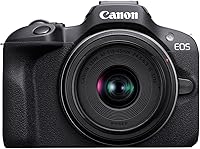
The R50 is the higher-scoring pick here at 9.7. It ships with an 18-45mm zoom, so it's usable the day it arrives.
The R10 scores 8.5 as a body only, and you'll need to budget for glass.
Both use a 24.2 MP APS-C sensor and the Canon RF mount. The gap between them is about handling and speed more than picture quality from the sensor itself.

How do the Canon EOS R10 and R50 differ in the hand?
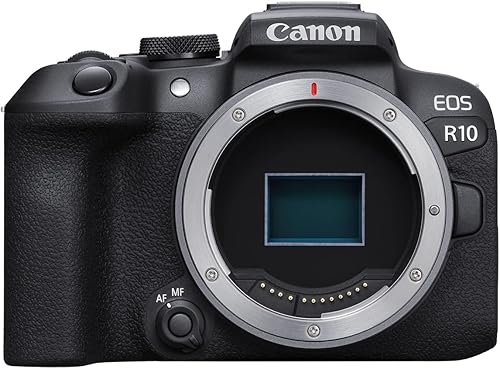
The R10 is the larger, more control-heavy camera; the R50 is the compact one for casual carry. The R50 suits bag-and-go use, while the R10 gives bigger hands more to grip.
Canon describes the R10 as compact and lightweight, and easy to carry. That's relative.
It sits above the R50 in size and weight and pairs with larger RF lenses without feeling front-heavy.
The R50 is built as a small mirrorless camera with a plastic and metal enclosure. Slip it into a small day bag with the 18-45mm attached and you barely notice it.
Neither is a pocket camera. Both take the RF mount, so a long or bright lens changes the balance as much as the body does.
The kit lens itself sets the tone. At 18-45mm it stays short and light, so the whole R50 package reads as one small unit you can grab on the way out.
The R10's heavier body only starts to earn its size once you mount a longer lens like the RF-S 18-150mm superzoom.
Which is easier for a first-time shooter?
The R50 is the friendlier one. It carries Creative Assist guides that walk you through settings in camera, which is real help when exposure modes are still new.
Its tilting screen lets you frame from low or high angles, and vertical video support means social clips don't need rotating later. Those tools suit a phone-first creator upgrading from a handset.
The R10 expects more. Its tilting screen shows 1080 x 640 resolution and its layout leans on dials and buttons rather than guided menus.
If you're moving up from a phone, start with the R50. If you've used a DSLR and want buttons for aperture, shutter and ISO, the R10 feels more familiar.
Which wins for speed and autofocus?
The Canon EOS R10 wins for speed, with 15 fps mechanical shooting and 651 autofocus points. The R50 manages 99 points and is built around simpler subject tracking.
The R10 pairs its sensor with the DIGIC X image processor. Canon says the processor cuts noise so you can keep shooting, and it's the chip behind the 15 fps mechanical burst.
That burst matters for kids' games, pets, birds and any subject that moves. It captures the moment between movements, which is where single frames usually miss.
Canon also notes the mechanical shutter reduces motion distortion, which keeps fast subjects looking straight rather than stretched across the frame.
The R10's Dual Pixel CMOS AF includes subject detection and tracking. For video, Canon's Movie Servo AF keeps focus moving with the subject instead of hunting.
Is the R50 fast enough for family and travel?
For most people, yes. The R50 uses hybrid autofocus with 99 points, plus face and eye detection and subject tracking.
That's plenty for portraits, street scenes and family days out.
The gap opens with hard targets. A sprinter, a diving dog or a bird in flight tests how many points you can put on the subject, and the R10 has far more.
Canon describes the system as tracking people, animals and vehicles, so a bird or a dog in motion gets its own detection logic rather than a generic face lock.
Burst speed is the other divider. The R10's 15 fps fills the card quickly; the R50's slower continuous rate forces you to time a shot, which is fine for stiller subjects.
Canon also warns that anti-flicker shooting, the aperture value or battery life can slow the R10's burst, so it is a fast camera, not a guaranteed 15 every time.
How does video compare between them?
Both record oversampled 4K, but the R10 goes further on recording time and the R50 goes further on creator tools. The R50 is the easier one to point at a subject and publish.
The R50's oversampled 4K with Dual Pixel AF keeps footage sharp, and face and eye detection holds focus on a person walking toward the lens. Its vertical video mode is built for sharing.
Its creative guides extend to video too, so you can adjust a look in camera rather than in an editor. For a solo creator working alone, that's a practical shortcut.
Canon also fits the R50 with 16:9 output, the native ratio for most social platforms.
The R10 records professional-grade 4K on the go with over 30 minutes of continuous shooting, with subject detection and tracking in Movie Servo AF. The limit is battery level, card capacity and internal temperature.
The R10 also offers the option of a microphone through its hot shoe or accessories, and its larger body balances a mic or a cage better. The R50 works best as a one-piece handheld video camera.
A second screen on the R10 shows 1080 x 640 resolution, which is basic but enough for framing and checking focus on the fly.
If vlogging is the whole plan, the R50 kit's self-framing screen and social tools win. If you shoot interviews or events, the R10's longer recording and lens flexibility suit better.
Which has the better lens path?
The R10 has the edge for lens growth because it's sold as a body only and expects a plan for glass. The R50 kit covers your first year; neither mount limits you later.
Both cameras use the Canon RF mount. That means RF-S lenses sized for APS-C sensors and full-frame RF lenses fit either body.
The crop factor is 1.6x on both, so an 18mm lens frames like roughly a 29mm lens on a full-frame camera, which matters when you plan a wide shot.
The R50's bundled 18-45mm lens covers wide to standard focal lengths at f/4.5-6.3 with image stabilization and an STM motor for quiet autofocus. It's a good walkaround zoom and light enough for daily carry.
The kit lens is dim at 45mm, so low light and shallow background blur are limited. That's the trade for compact size, not a flaw you can dial out.
The R10 arrives as a body only: camera, strap, charger, LP-E17 battery and covers. You choose the glass, from the same 18-45mm kit lens up to the RF-S 18-150mm f/3.5-6.3 IS STM superzoom that covers wide to telephoto.
Adding a lens to the R10 raises the total cost, so compare the two as systems. A body plus one good zoom is often the smarter long-term buy.
Do EF and EF-S lenses work on either camera?
Yes, with the Mount Adapter EF-EOS R, which Canon lists as an optional accessory. Both bodies take older EF and EF-S glass through it.
Canon names EF and EF-S compatibility for the R10 in its own lens notes, and the R50 shares the same mount.
That's useful if you already own Canon DSLR lenses, such as a bright prime or a long telephoto. Adapt them to either camera and the body decision gets cheaper.
A bright adapted prime also fixes the kit lens's weak spot at the long end, where it stops down to f/6.3.
If you're starting from nothing, the R50's included zoom keeps the first purchase simple. The R10 only pays off if you'll add lenses that use its speed.
New to the system and weighing a cheaper route? The Canon EOS Rebel T7 review covers a DSLR starter, and the Canon Rebel T7 vs R100 comparison shows how an entry-level mirrorless alternative stacks up.
Which is better in low light and for stills?
They're close on stills, since both use a 24.2 MP APS-C sensor with RAW output. The R10's processor gives it an edge in noise control at high ISO, and its built-in flash covers indoor snaps.
The R50 also shoots 24.2 MP RAW files with 10-bit depth and a 1.6x crop factor. Daylight landscapes, travel and portraits come out with room to edit.
RAW matters here because it holds the highlight and shadow detail you'd lose in a phone JPEG.
The R50 has no built-in flash. That matters indoors and in dim evening shots, where a small fill flash lifts faces.
Canon expects you to add a flash or use available light.
The R10 has a built-in flash plus a hot shoe. It also carries 14-bit depth against the R50's 10-bit figure, and the DIGIC X processor's noise reduction helps when pushing ISO.
More bit depth means more tones to stretch in an editor before banding shows.
For stills in good light, either body delivers similar files. For indoor family events and darker venues, the R10's flash is the practical difference.
What does the bit depth gap mean in practice?
The R10's 14-bit files carry more color and tonal data than the R50's 10-bit ones. That shows up when you lift shadows or rescue a bright sky.
On a well-exposed daylight frame, you'd struggle to tell the files apart. On a tough frame, the extra depth gives an editor more room before the image breaks down.
The R50 still records RAW, so both allow recovery; the R10 simply has a wider margin.
For a beginner editing on a phone, neither gap matters much. For someone who pushes files in a desktop editor, the R10's 14-bit depth is a small but real advantage.
R10 or R50 for a beginner?
For a beginner, the R50 is the clear pick. It's the higher-scoring camera, it comes with a lens and it teaches as you shoot.
The 18-45mm zoom covers the everyday range, the guides explain settings in camera and vertical video covers social sharing. Unbox it, charge the battery and take pictures.
The 24.2 MP files leave plenty of room to crop and still print large.
The R50 also keeps the spending lower, since there's no lens to buy before the first shot. That leaves room for a spare battery or a memory card.
It takes SDXC cards, so you can add a larger card as your library grows.
Buy the R10 instead if you already have a lens plan, or if you know you'll shoot sport, pets and wildlife. Its 15 fps and 651 points will do more for those subjects than any beginner mode.
R10 or R50 for video creators?
The R50 is the better pick for solo creators; the R10 is the better pick for longer shoots and paired audio. Vertical framing and built-in guides favor the R50, recording time favors the R10.
If you film yourself talking to camera, the R50's self-view screen, subject tracking and vertical mode cut the editing steps. Its compact body mounts easily on a small tripod or handle.
Its 10-bit depth is enough for everyday color work without heavy grading.
If you film events, interviews or long takes, the R10's over 30 minutes of 4K and Movie Servo AF with subject detection keep it running while the subject moves. Remember that battery level, card capacity and internal temperature can still stop a clip early.
Pairing an external mic is easier on the R10's larger body, and the built-in flash helps for stills between takes. The R10 is the production camera of the two.
Its 14-bit stills also matter if you pull frames for thumbnails.
Verdict: which Canon should you buy?
Buy the Canon EOS R50 for most people, and the Canon EOS R10 if speed and lenses are the point. The R50 scores 9.7 and the R10 scores 8.5, and that gap reflects the R50's lens, guides and social tools out of the box.
Pick the R50 if you want one purchase, a compact body and a camera that helps you learn. It handles portraits, travel, street and family video without extra gear.
Its 18-45mm zoom and Creative Assist keep the first month simple.
Pick the R10 if you shoot moving subjects, want a built-in flash and plan to add lenses. Its 15 fps burst, 651 points and DIGIC X processor earn their keep on action.
Its 14-bit files and hot shoe also reward anyone who edits or lights their shots.
If you need a third opinion, the Canon EOS R10 vs Canon EOS R100 comparison puts the R10 against Canon's cheapest mirrorless body. A rival worth weighing is covered in the Canon R10 vs Nikon Z50 II head-to-head.
Frequently asked questions
Is the Canon EOS R50 better than the Canon EOS R10?
The R50 is the better buy for most first-time mirrorless shoppers because it includes an 18-45mm lens and creator tools at a lower commitment. The R10 wins for sports, wildlife and anyone who wants 15 fps shooting and a built-in flash.
Does the Canon EOS R10 come with a lens?
This version is body only. The box holds the camera, strap, charger, LP-E17 battery and covers, with no lens.
Add a Canon RF-S or RF lens, or use EF and EF-S lenses with the Mount Adapter EF-EOS R.
Can the Canon EOS R50 shoot vertical video?
Yes. Canon builds vertical shooting and Creative Assist guides into the R50, so you can frame and share social clips without rotating files later.
That makes it the friendlier pick for phone-first creators.
Which one has better autofocus for moving subjects?
The R10 lists 651 autofocus points against 99 on the R50, which suits tracking athletes and pets. The R50 uses Dual Pixel AF with face and eye detection and is easier to hand to a beginner; the R10 gives more reach into fast action.
Is 15 fps on the R10 useful for a beginner?
Only if you shoot movement. Bursts that fast fill a card and leave more frames to sort, so a beginner photographing family, food or travel gains little.
Landscape and portrait shooters can put the R50 kit to better use.