Canon EOS R100 vs EOS 2000D: Which to Buy? (November 2026)
Buy the Canon EOS R100 for most first-time buyers. It has the higher score of the two, and its mirrorless design brings a 2.36m-dot electronic viewfinder, Dual Pixel autofocus and faster 6.5 fps bursts. The Canon EOS 2000D stays the better pick if you want a traditional optical viewfinder and a starter bundle in one box.
On this page (5 sections)
Buy the Canon EOS R100 for most first-time buyers. It scores 9.6 against 9.3 for the Canon EOS 2000D, and the gap comes from real differences in viewfinder, autofocus and speed.
The canon eos r100 vs eos 2000d choice is really mirrorless against DSLR. One gives you an electronic viewfinder and modern face tracking; the other gives you a bright optical viewfinder and a starter bundle that covers the basics.
Both cameras share an APS-C sensor around 24MP. From there they part ways in focusing, burst speed, lens mount and what comes in the box.
 Best for first-time mirrorless buyers
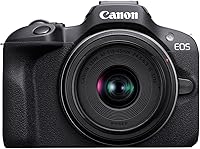
Canon EOS R100 Mirrorless Camera with RF-S

Canon EOS R100 vs EOS 2000D: which should you buy?
Buy the R100 if you want the easier camera to learn on; buy the 2000D if you want an optical viewfinder and a complete starter kit. That single question sorts most buyers faster than a spec sheet.
The R100 is the newer design. Its mirrorless body has no mirror to flip, so the viewfinder is a small screen that shows your exposure, white balance and focus point in real time.
The 2000D keeps the DSLR layout. Light travels through the lens to a mirror and up into an optical viewfinder, so you see the scene directly with your eye.
Neither layout is wrong. Each one changes how you frame, focus and carry the camera, and those habits matter more than a fraction of a megapixel.
The viewfinder decides how the camera feels
The R100's electronic viewfinder previews your photo; the 2000D's optical viewfinder shows the real scene. Try both if you can, because the difference is personal.
The R100 uses a 2.36m-dot OLED electronic viewfinder. It shows exposure changes as you turn the dials, which helps when you shoot in tricky light or review a shot without lowering the camera.
The 2000D has an optical viewfinder. It stays clear in bright sun and never lags, but it can't show you what the photo will look like before you press the shutter.
If you wear glasses or shoot in bright daylight, the optical finder may feel more natural. If you like seeing settings change in the finder, the electronic one is more helpful.
The framing itself is close to identical because both sensors are APS-C and both bodies are 3:2. What changes is what sits around the image.
The R100 can overlay autofocus zones and exposure data on its finder, while the 2000D shows a clean optical frame with the 9 AF points marked.
Autofocus separates the two cameras most
The R100's Dual Pixel CMOS AF is the stronger focusing system, especially for people and faces. The 2000D's 9-point system is simpler and slower when it leaves the optical viewfinder.
The R100 covers 143 autofocus zones with phase detection and tracks faces and subjects across a wide part of the frame. That makes it more reliable for kids, pets and anyone who won't stand still.
The 2000D uses a 9-point system with a single center cross-type point. It works fine for still subjects in good light, but Live View and video switch to contrast detection, which hunts more in low light.
For a beginner photographing family events, the R100 will produce more keepers with less fiddling. The 2000D rewards a steadier hand and a more deliberate approach.
One detail favors the 2000D for some shooters: its 9 points are visible in the optical finder, so you always know what the camera is using. The R100's zones are easier to read, but they also need a moment to learn.
Speed and burst shooting favor the R100
The R100 shoots faster bursts, at 6.5 fps with its electronic shutter against 3 fps on the 2000D. For action, that headroom helps you catch the exact moment.
Neither camera is a sports machine. Still, 6.5 fps gives you more frames to choose from when a child runs toward the camera or a pet moves suddenly.
The 2000D's 3 fps is fine for portraits and landscapes. It struggles more when timing matters, and its slower buffer means shorter bursts before it pauses.
The 2000D's delay between shots is 0.33 seconds, which works out to the same 3 fps figure. That consistency is fine, but it's not the same as headroom.
If most of your photos are still subjects, this gap won't decide anything. If you photograph movement often, the R100 has the clear advantage.
The kit lenses change what you can shoot
The R100 kit includes a stabilized 18-45mm zoom; the 2000D kit pairs an 18-55mm lens with a bag, memory card and cleaning set. The zoom ranges differ more than the numbers suggest.
The RF-S 18-45mm f/4.5-6.3 IS STM on the R100 has built-in image stabilization. It's a compact general-purpose lens for portraits, travel and vlogs, and the stabilization helps handheld video and low-light shots.
The EF-S 18-55mm f/3.5-5.6 on the 2000D reaches a little longer and starts a little brighter at the wide end. It has no stabilization, so steady hands or good light matter more.
The 2000D's starter bundle adds practical extras. A soft padded bag, a 64GB SanDisk Ultra card and a cleaning set mean you can shoot on day one without another shopping trip.
Lens mount and upgrade path
The R100 uses Canon's newer RF mount; the 2000D uses the long-established EF mount. That shapes what you can add later and how much it costs.
RF and RF-S lenses are the native fit for the R100. The RF-S 18-45mm is a crop-frame lens, and the R100 accepts full-frame RF lenses too.
The native RF-S range is smaller, so some upgrades cost more or need an adapter.
The 2000D takes EF and EF-S lenses directly. Canon made EF lenses for decades, so the used market is large and prices are often lower.
If you already own EF glass, the 2000D is the cheaper way to keep using it.
The R100 can mount EF and EF-S lenses through the EF-EOS R adapter, sold separately. Budget for it if you plan to reuse an existing lens collection.
Video: 4K against Full HD
The R100 records 4K video; the 2000D tops out at Full HD. The R100's 4K comes with a crop, so check the framing when you switch modes.
The R100 shoots 4K at 24p with a crop and Full HD at 60p. The cropped 4K narrows your field of view, which can help close in on a subject but makes wide shots harder.
The 2000D records Full HD at up to 30p. Its contrast detection focusing in video is slower and can hunt, so manual focus or patient shooting helps.
The R100 also gains smoother slow motion from its Full HD 60p mode, which doubles the frame rate of the 2000D. Cropping that footage to 24p on a timeline gives a gentle slow-motion look without a separate camera.
For casual vlogs and family clips, the R100's 4K and Dual Pixel focusing make it the smoother choice. For occasional Full HD clips, the 2000D is adequate.
Screen, cards and file sizes
Both cameras rely on SD cards, but the R100's files are larger at 4K and its screen is fixed. The 2000D uses the SDXC standard and records 24-bit files.
The R100 stores 12-bit files and offers a 3-inch 1.04m-dot LCD. It can't tilt or flip, so overhead shots and low angles need a guess or a step back.
The 2000D has a 3-inch LCD with a 920k-dot panel, plus an optical finder that saves power for framing. It accepts SDXC cards, and the bundle's 64GB card covers plenty of Full HD footage.
Either camera connects over Wi-Fi for sharing and remote shooting. The 2000D adds NFC for quick pairing with a phone, which can speed up the first connection.
Canon EOS 2000D vs EOS R100: size, handling and battery life
The R100 is the smaller, lighter body; the 2000D has a deeper grip and a built-in flash. Handling often decides which camera you actually carry.
The R100's mirrorless body is compact enough to slip into a small bag. Its fixed 3-inch screen can't flip out, so high and low angles take some guesswork.
The 2000D's DSLR body is larger and heavier, with a deeper grip that suits bigger hands. It has a built-in flash, which the R100 lacks, so indoor fill light is easier without a separate unit.
Battery life differs by how you shoot. The 2000D's optical viewfinder uses less power than the R100's electronic one, so the DSLR tends to last longer on a charge.
If you shoot all day at an event, carry a spare battery for either camera. The R100's small size is the reason to choose it for travel; the 2000D's grip and flash suit longer handheld sessions.
What the bundle includes
The 2000D bundle covers the accessories a beginner needs; the R100 kit ships body and lens only. That gap shapes the true cost of the first month.
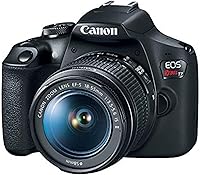
The 2000D box includes the body, the 18-55mm lens, an LP-E10 battery, an LC-E10E charger, an eyecup, a body cap, a neck strap and a battery cover. The bundle adds a padded bag, a 64GB SanDisk Ultra card and a cleaning set.
The R100 kit includes the camera and the RF-S 18-45mm lens. You'll need to add a memory card and a bag separately, so plan for those before you order.
The charger setup differs too. The 2000D's LC-E10E is a wall charger that comes in the box.
Who should buy the Canon EOS R100?
Buy the R100 if you want modern autofocus and a small body for everyday photos and video. It's the better first mirrorless camera for someone who values easy focusing over a classic DSLR feel.
Beginners who photograph family, friends and travel scenes will appreciate the face tracking and the exposure preview in the viewfinder. The stabilized kit lens also helps handheld video and dim indoor shots.
The R100 suits vloggers and casual video shooters who want 4K without a big rig. Its Dual Pixel autofocus keeps a face sharp while you move, and the compact body fits small bags.
It's also the pick for anyone who wants to grow into mirrorless. The RF mount is Canon's current system, so native lenses will keep coming.
Photographers who like to see the image as it will look, with white balance applied, will settle into the electronic finder quickly. The 143 zones also make framing a face off to one side easy without moving the camera.
Skip the R100 if you rely on an optical viewfinder or need a built-in flash. Its cropped 4K and fixed screen also limit some workflows.
If you're also weighing the R100 against Canon's older mirrorless option, our Canon EOS M50 vs Canon EOS R100 comparison covers the mount and control differences.
Who should buy the Canon EOS 2000D?
Buy the 2000D if you want an optical viewfinder, a built-in flash and a bundle that's ready to shoot. It's the better pick for buyers who prefer the classic DSLR experience and want extras included.
The optical viewfinder stays clear in bright light and gives a direct view of the scene. Photographers who learned on film or older DSLRs often prefer that feel, and the built-in flash helps indoors.
The starter bundle is a real advantage for a first camera. A bag, a 64GB memory card and a cleaning set cover the first purchases most beginners need.
The EF mount also opens a wide choice of affordable lenses. If you already own EF glass or want to buy used lenses cheaply, the 2000D stretches further.
Its ISO range runs from 100 to 51200 expanded, so it can push further in dim light than on paper it looks. Noise rises in the upper range, but the flexibility helps in a pinch when the flash isn't wanted.
Skip the 2000D if fast autofocus and action shooting matter most. Its 9-point system and 3 fps bursts trail the R100, and its video focusing is slower.
Our Canon EOS Rebel T7 review looks at the same camera under its US name. The 2000D is sold as the Rebel T7 in the US, so the review covers the same body and lens.
Canon EOS R100 vs EOS 2000D verdict
Buy the Canon EOS R100 for most readers. Its 9.6 score beats the 2000D's 9.3 because of its Dual Pixel autofocus, electronic viewfinder and faster bursts.
Those features make it easier to get sharp photos of people and movement.
The 2000D still wins for specific buyers. Pick it if you want an optical viewfinder, a built-in flash, a longer kit zoom or a ready-to-go bundle.
Pick it too if you already own EF lenses.
The deciding factors come down to four points. Autofocus favors the R100 heavily, the viewfinder favors whichever you prefer, burst speed favors the R100, and the bundle and flash favor the 2000D.
If you're new to Canon and unsure which system to start with, our guide to Nikon vs Canon cameras compares the two brands for beginners. It helps you decide before you commit to a lens mount.
If you're comparing the R100 with Canon's entry DSLR in more detail, our Canon Rebel T7 vs R100 breakdown covers the same choice from the DSLR side. For most first-time buyers, though, the R100 is the camera to get.
Frequently asked questions
Is the Canon EOS R100 better than the EOS 2000D for beginners?
The EOS R100 is the easier camera to learn on for most beginners. Its Dual Pixel autofocus and electronic viewfinder make framing and focusing more forgiving, and its faster bursts help with moving subjects.
The 2000D suits beginners who specifically want an optical viewfinder.
What is the main difference between the EOS R100 and EOS 2000D?
The R100 is a mirrorless camera with an electronic viewfinder and Dual Pixel autofocus. The 2000D is a DSLR with an optical viewfinder and a 9-point autofocus system.
The R100 also shoots faster bursts and uses the newer RF-S mount.
Which camera has better autofocus, the R100 or the 2000D?
The R100 has the stronger autofocus. Its Dual Pixel CMOS AF covers 143 zones and tracks people and faces across the frame.
The 2000D relies on a 9-point system, and its Live View and video focusing use slower contrast detection.
Can I use my old Canon lenses on the EOS R100?
Canon EF and EF-S lenses need an EF-EOS R mount adapter on the R100, which is sold separately. The EOS 2000D takes EF and EF-S lenses directly.
If you already own a shelf of EF glass, that favors the 2000D or a budget for the adapter.
Which kit lens is better, the R100's or the 2000D's?
The R100's RF-S 18-45mm f/4.5-6.3 IS STM lens includes image stabilization. The 2000D's EF-S 18-55mm f/3.5-5.6 lens has a longer zoom range but no stabilization.
For handheld video and low light, the R100 kit has the edge.