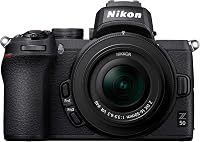
Canon EOS R50 vs Sony A6100: Which to Buy? (November 2026)
The Canon EOS R50 wins for most first-time buyers, while the Sony A6100 suits photographers who want Sony's E-mount lens range. In this Canon EOS R50 vs Sony A6100 comparison, the R50's beginner tools and oversampled 4K give it the edge for creators.
On this page (9 sections)
- What is the quick verdict in Canon EOS R50 vs Sony A6100?
- Canon EOS R50 vs Sony A6100 side by side
- Which camera has the better autofocus for beginners?
- Which camera takes better video for vlogging?
- How do the two kit lenses compare?
- Which camera is easier to learn and hold?
- Which kit gives you more out of the box?
- Who should buy which camera?
- The verdict: which camera should you buy?
The Canon EOS R50 wins this comparison for most first-time buyers. The Canon EOS R50 vs Sony A6100 decision favors Canon's newer body for beginners, vloggers and anyone who wants guided controls and oversampled 4K without a steep learning curve.
The Sony A6100 remains a strong alternative. It offers Sony's 4D FOCUS system and access to the E-mount lens range, which matters if you already own Sony glass or plan to build a Sony kit.
Both are compact APS-C mirrorless cameras with 24.2MP sensors. The differences that decide the choice sit in autofocus behavior, video tools, kit contents and how much help each camera gives a new user.
What is the quick verdict in Canon EOS R50 vs Sony A6100?
Buy the Canon EOS R50 if you want the easiest path from phone photos to a real camera. Its Creative Assist guides, oversampled 4K and vertical video tools are built around first-time creators, and the kit lens covers wide to standard shots.
The R50's 24.2MP APS-C sensor is the same headline resolution as the A6100's. Canon pairs it with hybrid autofocus that lists 99 points and tracks subjects, faces and eyes in both stills and video.
That combination makes the R50 the better all-rounder for someone shooting portraits, travel and social clips. The touchscreen flips out so you can frame yourself, and the camera weighs little enough to carry all day.
The Sony A6100 is the better choice for a specific buyer: a photographer who wants Sony's E-mount lens selection and a body that shoots silently. Its silent continuous mode reaches up to 8fps with tracking.
Neither camera is a poor buy. The R50 simply asks less of a beginner, while the A6100 rewards someone who already knows how to work a camera and wants Sony glass.
If you're still comparing brands more broadly, our Nikon vs Canon camera guide helps frame the decision before you commit to a mount.
Canon EOS R50 vs Sony A6100 side by side
The R50 and A6100 match on sensor resolution but differ in autofocus, video features and what ships in the box. Use the table to see the practical gaps at a glance.
| Product | Best for | Sensor | Autofocus | Video | Our score |
|---|---|---|---|---|---|
| Canon EOS R50 Mirrorless Camera with 18-45mm | first-time creators | 24.2MP APS-C | Hybrid, 99 points | Oversampled 4K, Dual Pixel AF | 9.7 |
| Canon EOS R50 Mirrorless Camera Kit | vloggers on a bundle | 9.6 | |||
| Sony Alpha a6100 APS-C Mirrorless Interchangeable-Lens Camera | Sony lens upgraders | 9.0 | |||
| JJC Extendable Mini Tripod & Selfie Stick | steady vlogging | 9.3 |
The R50 lists a 24.2MP APS-C sensor, hybrid autofocus with 99 points, oversampled 4K video and a 1.6x crop factor. The kit lens is a Canon RF-S 18-45mm f/4.5-6.3 IS STM zoom.
The A6100 lists a 24.2MP APS-C Exmor sensor and Sony's 4D FOCUS with 179 autofocus points. It records 4K movies and includes a 16-50mm kit lens, with an aperture range of F3.5-F5.6.
Both cameras use SD memory and offer Wi-Fi connectivity. The R50's headline advantage is its creator toolset, while the A6100's is autofocus point count and silent shooting.
Canon EOS R50 vs Sony A6100 comparison table
The comparison table pulls the shared labels from the product data. It covers sensor, autofocus and video so you can weigh the two cameras against your own priorities.
The R50's 1.6x crop factor applies to RF lenses mounted on its APS-C body. The A6100's E-mount gives you Sony's lens catalog, which is one of the deepest mirrorless ranges available.
Look past resolution when you read the table. The two sensors are close on paper, so the deciding differences are the focus systems, the video tools and the kit contents.
Which camera has the better autofocus for beginners?
Both focus well, but the R50 does more to keep a new user on target automatically. The A6100 offers more autofocus points, while the R50's hybrid system adds subject detection that works in stills and video.
The R50 lists 99 autofocus points with hybrid autofocus. It detects people and eyes and tracks subjects across the frame, so you can concentrate on framing instead of moving a focus point.
The A6100 lists 179 autofocus points through Sony's 4D FOCUS. That system uses both contrast detection and phase detection.
More points don't automatically mean easier focusing for a beginner. The R50's subject detection is the friendlier setup when you're photographing people, pets or yourself in a vlog.
How autofocus differs in video
The R50's Dual Pixel autofocus works during video and tracks faces and eyes. That matters when you record yourself or follow moving subjects for social clips.
The A6100's 4D FOCUS also tracks subjects in video. Its silent continuous shooting at up to 8fps helps in quiet settings like events or street photography.
If your priority is quiet shooting in a church or a concert, the A6100's silent mode is the reason to pick it. If your priority is reliable face tracking in 4K vlogs, the R50's video autofocus is the simpler tool.
Which camera takes better video for vlogging?
The Canon EOS R50 is the stronger vlogging camera because of its oversampled 4K and creator tools. The Sony A6100 also records 4K, but the R50 adds features built for social video.
The R50 records oversampled 4K with Dual Pixel autofocus. Canon's oversampling gathers more detail than the final 4K frame needs, which helps footage look sharper and cleaner.
The R50 also supports vertical video and Creative Assist. Vertical shooting matters for TikTok, Instagram Reels and YouTube Shorts, and Creative Assist helps new users adjust the look without deep menus.
The A6100 records 4K movies with full pixel readout. That means it uses every pixel on the sensor for the 4K frame, which also produces detailed footage.
The R50's vari-angle touchscreen is the practical edge for vlogging. You can flip it to face you for self-recording, frame from low or high angles, and see yourself while you record.
Video features in Canon EOS R50 vs Sony A6100
The R50's kit lens has image stabilization and an STM motor for smooth, quiet autofocus. The A6100's 16-50mm kit lens covers a similar wide-to-standard range with an F3.5-F5.6 aperture.
Both cameras can record 4K, so the choice comes down to workflow. The R50's guides and vertical support shorten the learning curve, while the A6100's silent shooting and 179 focus points give an experienced videographer more manual control.
How do the two kit lenses compare?
Both kit lenses cover wide to standard focal lengths, so the real difference is aperture and stabilization. The R50's 18-45mm lens adds image stabilization and a quiet STM motor; the A6100's 16-50mm lens starts slightly wider.
The R50's Canon RF-S 18-45mm f/4.5-6.3 IS STM lens covers wide-angle to standard lengths. Its image stabilization reduces blur from hand shake, and the STM motor keeps autofocus quiet.
The A6100's 16-50mm kit lens reaches a bit wider at the wide end. That 16mm starting point helps with group shots and tight interiors, though the aperture range of F3.5-F5.6 still limits low-light work.
Neither kit lens is fast enough for dim rooms without raising ISO. The stabilization on the R50's lens helps in low light when your subject holds still.
If you plan to upgrade lenses, the mount matters more than the kit lens. Canon's RF mount is newer and its RF-S lens range is still growing, while Sony's E-mount has a longer history and more third-party options.
Which camera is easier to learn and hold?
The Canon EOS R50 is easier for a beginner because its Creative Assist guides walk you through settings and looks. The Sony A6100 is compact and capable, but its controls assume you already know your way around a camera.
The R50 lists a vari-angle touchscreen for framing from any angle. Creative Assist helps beginners change the look of photos without memorizing menus, and vertical video support is built in.
The R50 kit weighs about 2 lb and measures 8 x 7 x 6 inches. That's light enough for a day of travel or vlogging without a tripod.
The A6100 uses an OLED display and offers NFC and Wi-Fi connectivity. Its compact body and E-mount design suit photographers who want a small camera with Sony's focus system.
Handling and controls in Canon EOS R50 vs Sony A6100
The R50's touchscreen makes menu changes straightforward for a new user. The A6100's controls are more traditional, which some photographers prefer when they want quick manual changes.
Either camera benefits from a steady support. A mini tripod like the JJC extendable tripod can help when you frame low-angle or self-recorded shots, though you'll want a larger one for heavy lenses.
Which kit gives you more out of the box?
The Canon EOS R50 kit with the shoulder bag and two 64GB cards is the more complete vlogging bundle. The Sony A6100 bundle also packs accessories, so compare what each one actually adds.
The Canon EOS R50 Mirrorless Camera Kit includes the R50 body, the RF-S 18-45mm lens, a shoulder bag and 2 x 64GB SDXC cards. Storage and carrying are covered from day one.
The standard Canon EOS R50 kit includes the camera and the 18-45mm lens without the bag or extra cards. It's the lighter option if you already own SD cards and a bag.
The Sony A6100 bundle includes the camera with the 16-50mm lens, a gadget bag, a 40.5mm filter kit, a 2-pack battery and dual charger, and a 64GB SDHC card. That's more accessories overall, but the extras are less focused on video creation.
Storage and extras in each bundle
The R50 kit's two 64GB cards cover a full day of 4K clips for most casual vloggers. The A6100 bundle's single 64GB card is enough to start, and its extra battery and charger help on long days.
The A6100's filter kit suits photographers who want to protect the lens and cut glare. The R50 kit's shoulder bag is the simpler extra for carrying the camera and lens.
Who should buy which camera?
Buy the Canon EOS R50 if you're new to cameras, shoot video for social platforms or want guided controls. Buy the Sony A6100 if you already own Sony E-mount lenses or want more autofocus points and silent shooting.
The R50 suits vloggers, travel shooters and anyone stepping up from a phone. Its 24.2MP sensor, oversampled 4K and Creative Assist make the first months easier, and the 18-45mm lens covers everyday scenes.
The A6100 suits photographers who plan to build a Sony lens kit. Its 179 autofocus points and silent continuous shooting at up to 8fps give more manual control and quiet operation.
Pick the R50 if you want the camera to help you. Pick the A6100 if you want Sony's lens range and don't mind learning the controls.
Canon EOS R50 vs Sony A6100 for photos and video
For stills, both sensors resolve 24.2MP. The R50's subject detection helps with people and pets, while the A6100's 179 points give fine-grained focus placement for experienced users.
For video, the R50's oversampled 4K and vertical support make it the more practical vlogging tool. The A6100's 4K and silent shooting suit documentary and event work where discretion matters.
Our Canon Rebel T7 review shows how Canon's older DSLR compares if you're considering a budget first camera. And if you're weighing the R50 against Canon's entry-level mirrorless sibling, our Canon Rebel T7 vs R100 comparison covers that choice.
The verdict: which camera should you buy?
The Canon EOS R50 is the better buy for most readers in this Canon EOS R50 vs Sony A6100 matchup. Its oversampled 4K, Dual Pixel autofocus and beginner guides make it the easier first camera to learn on.
Choose the Sony A6100 if you already have Sony E-mount lenses or want 179 autofocus points and silent shooting. It's a capable camera that rewards photographers who know what they're doing.
Choose the R50 if you want guided controls, vertical video and a kit that covers storage from day one. The kit with the shoulder bag and two 64GB cards is the smoother vlogging start.
Either camera needs a steady support for the best video. The JJC mini tripod works as a selfie stick or a small tripod for either body, and our Canon EOS R10 vs EOS R50 comparison helps if you're also weighing the step-up Canon model.
If you're comparing Canon's mirrorless options more broadly, read the Canon Rebel T7 vs R100 guide before you decide. The R50 is the camera to beat for a first mirrorless body, and the A6100 is the lens-range pick for Sony shooters.
Frequently asked questions
Which camera is better for beginners, the Canon EOS R50 or the Sony A6100?
The Canon EOS R50 is the easier first camera for most beginners because Creative Assist guides in-camera adjustments and the touchscreen flips for self-recording. The Sony A6100 is still capable, but its controls assume more camera knowledge.
Can both cameras shoot 4K video?
Yes. The R50 records oversampled 4K with Dual Pixel autofocus, and the A6100 records 4K movies with full pixel readout.
The R50 adds vertical video support and creator-focused guides that suit social posting.
Do these cameras use the same lenses?
No. The R50 uses Canon RF mount lenses, while the A6100 uses Sony E-mount lenses.
Neither lens works on the other camera, so your lens plans should follow the mount you choose.
Is the Sony A6100 autofocus better than the Canon R50?
Both focus quickly on people and moving subjects. The A6100 lists 179 autofocus points and silent continuous shooting at up to 8fps, while the R50 uses hybrid autofocus with subject, face and eye detection for stills and video.
Which camera kit is better value for vlogging?
The Canon EOS R50 kit with the shoulder bag and two 64GB cards covers storage and carrying from day one. The Sony A6100 bundle also includes a bag, filters, batteries and a card, so compare the extras you will actually use.