Canon R10 vs R7: Which Should You Buy? (November 2026)
Choose the Canon EOS R10 for most buyers because it is compact, fast and easier to carry. Choose the Canon EOS R7 instead when 32.5 MP resolution, in-body stabilization and faster electronic shooting matter more.
On this page (11 sections)
- Canon R10 vs R7: what is the quick answer?
- How do the Canon R10 and R7 compare side by side?
- Which camera gives you more image detail?
- Which camera is better for fast action?
- Does stabilization make the R7 worth choosing?
- Which camera suits video and content creation?
- Which camera is easier to carry and use?
- Which lens system should you build?
- Who should buy the Canon EOS R10?
- Who should buy the Canon EOS R7?
- Canon R10 vs R7: which should you buy?
Choose the Canon EOS R10 for most photographers because it combines 24.2 MP resolution, 15 fps mechanical shooting and a compact body. The Canon EOS R7 is the better specialist choice for wildlife, sports and low-light work because it adds 32.5 MP resolution, 5-axis stabilization and 30 fps electronic shooting.
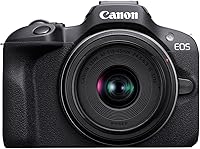
The Canon R10 vs R7 decision is less about basic speed and more about what you need around that speed. Both are Canon RF-mount mirrorless bodies with DIGIC X processing, 4K video and autofocus built for moving subjects.
Canon R10 vs R7: what is the quick answer?
The R10 wins overall for most buyers, while the R7 wins for demanding action and handheld shooting. The R10 earns the higher score because its compact design, 24.2 MP sensor and 15 fps mechanical shooting cover a wide range of everyday photography.
The R7 earns its place when you will use its extra resolution, in-body image stabilization or 30 fps electronic shutter. Those features are meaningful for distant subjects, sports sequences and scenes where camera movement makes sharp images harder to keep.
Choose the R10 for travel, family events, pets, cars and general content creation. Choose the R7 when cropping flexibility and stabilization are central to your work.
Both cameras are body-only products, so your lens choice remains part of the total system. The R10 works with Canon RF-S and RF lenses, and EF or EF-S lenses through the Mount Adapter EF-EOS R.
How do the Canon R10 and R7 compare side by side?
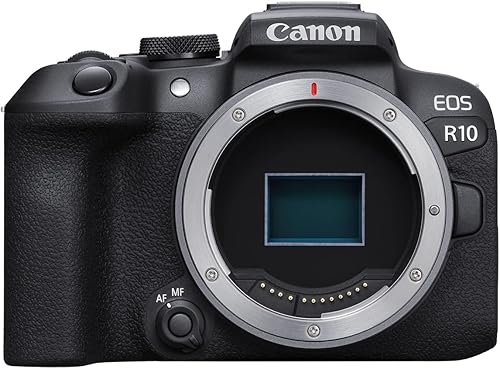
The R7 has the stronger feature set, but the R10 is the better-balanced camera for most people. The table shows where the extra R7 capability changes the decision.

| Feature | Canon EOS R10 | Canon EOS R7 |
|---|---|---|
| Overall score | 8.5 | 8.3 |
| Sensor | 24.2 MP APS-C CMOS | 32.5 MP APS-C CMOS |
| Mechanical shooting | 15 fps | 15 fps |
| Electronic shooting | Not stated in the product data | 30 fps |
| Autofocus zones | 651 | Up to 651 |
| Image stabilization | Not listed among the features | 5-axis IBIS |
| Video | 4K, Movie Servo AF, subject detection and tracking | 4K, 4K 60p, Movie Servo AF, subject detection and tracking |
| Mount | Canon RF | Canon RF |
| Included battery | LP-E17 | LP-E6NH |
| Body format | Body only | Body only |
The R10 matches the R7's mechanical burst rate, so the R7 does not automatically win every action comparison. Its advantage comes from resolution, electronic shooting and stabilization.
The R10's lower score does not make it a weak camera. It reflects the R7's specialized strengths, while the R10 remains the clearer pick for a broad group of photographers.
Which camera gives you more image detail?
The R7 wins image detail with its 32.5 MP APS-C CMOS sensor. It gives you more pixels than the R10's 24.2 MP APS-C CMOS sensor, which matters when you crop a distant animal, car or sports subject.
More resolution also gives you more room to reframe a composition after shooting. That advantage is useful when your subject occupies only part of the frame or moves unpredictably.
The R10 still produces a substantial 24.2 MP image. That is enough for many family photos, travel scenes, social content and action images where the subject already fills much of the frame.
The R7's resolution does not replace a suitable lens. A distant subject still depends on lens reach, focusing and technique, but the sensor gives you more image data to work with afterward.
Pick the R7 for wildlife and distant sports subjects. Pick the R10 when you want detailed files without making maximum resolution the main buying factor.
Which camera is better for fast action?
The R7 wins for the widest range of action options, but both cameras are fast. Each offers 15 fps mechanical shooting, giving the R10 strong action performance without moving to the higher-scored body.
The R7 adds 30 fps electronic shooting and RAW Burst Mode with half-second pre-shooting. That combination gives it more ways to capture a brief movement, such as a bird taking off or a car entering a turn.
The R10's 15 fps mechanical shutter remains useful for pets, children, vehicles and sports. Its Canon Dual Pixel CMOS AF includes subject detection and subject tracking, so the camera is built around keeping moving subjects in focus.
Electronic shooting is not the only factor in an action camera. Your timing, subject distance, lens choice and light still shape the result.
Pick the R7 when the decisive moment is extremely brief and you want 30 fps electronic capture. Pick the R10 when 15 fps mechanical shooting already matches the way you photograph.
Does stabilization make the R7 worth choosing?
The R7 wins handheld stability because it has a 5-axis in-body image stabilization system. Its coordinated control IS and auto-level technology are designed to help with camera shake in photos and video.
That feature is especially useful when you carry the camera without a tripod or work in lower light. It also adds value for video creators who want stabilization built into the camera body.
The R10 does not list 5-axis in-body stabilization among its product features. That makes lens choice and shooting technique more important when you use the R10 in situations where camera movement is easy to notice.
Stabilization does not freeze a moving subject. The R7's IBIS can help with camera movement, but action still depends on shutter speed and autofocus.
Choose the R7 for handheld low-light scenes, stabilized video and work where camera shake is a regular concern. Choose the R10 when you mostly shoot in good light, use supported positions or prefer a simpler compact kit.
Which camera suits video and content creation?
The R7 is the stronger video choice on paper because it lists 4K 60p video and 5-axis stabilization. The R10 still offers 4K video, Movie Servo AF, subject detection, subject tracking and recording beyond 30 minutes.
Both cameras use DIGIC X image processors. The R10 description connects that processor with 4K video capture and noise reduction, while the R7 description highlights 4K 60p recording.
The R10's compact and lightweight body suits creators who carry a camera through the day. Its tilting display and USB connectivity also support a straightforward content setup.
The R7 adds a 5-axis stabilization system and an included LP-E6NH battery. Its body package also includes a strap, battery charger, battery cover and shoe cover.
Choose the R7 for stabilized movement, higher-resolution files and 4K 60p. Choose the R10 for portable video work where compact handling matters more than the R7's additional video features.
Which camera is easier to carry and use?
The R10 is the better everyday carry because Canon describes it as compact and lightweight with a comfortable hand fit. The R7 also has a compact and lightweight design, but its listed body weight is 1.1 lb.
A smaller camera can change how often you bring it with you. That matters for travel, family events and casual photography, where a camera that stays in the bag cannot capture anything.
The R10 includes an LP-E17 battery, charger, strap, battery cover and shoe cover. Its body-only package gives you the core camera accessories, but you still need a compatible lens and SD, SDHC or SDXC memory card for shooting.
The R7 includes an LP-E6NH battery along with its charger, strap, battery cover and shoe cover. Its package also remains body-only, so its larger feature set does not remove the need to build a lens kit.
If you are comparing compact Canon bodies, our Canon EOS R10 vs Canon EOS R100 guide gives another way to place the R10 in the lineup. For a lighter travel mindset, body size and the lens you attach matter together.
Which lens system should you build?
Both cameras use the Canon RF mount, so your lens plan can guide the choice. The R10 pairs with Canon RF-S and RF lenses, and EF or EF-S lenses work with it through the Mount Adapter EF-EOS R.
The product data identifies the R10 as compatible with Canon RF-mount cameras and SD, SDHC and SDXC memory cards. It also names an RF-S 18-150mm f/3.5-6.3 IS STM Lens in the camera data, while the product itself is body only.
The R7 uses the Canon RF mount and supports SD, SDHC and SDXC memory cards. Its product data describes a wide-angle to telephoto zoom lens, but this camera package is also body only.
A lens determines much of your framing and reach. A telephoto setup can make the R7's higher resolution useful for distant subjects, while a compact RF-S lens can keep the R10 easy to carry.
If you already use Canon EF or EF-S lenses, the R10's compatibility path is clear through the Mount Adapter EF-EOS R. If you are comparing the R10 with another compact mirrorless body, read our Canon R10 vs Nikon Z50 II comparison before choosing a mount system.
Who should buy the Canon EOS R10?
Buy the Canon EOS R10 if you want the best balance of speed, portability and general-purpose image quality. Its 24.2 MP APS-C CMOS sensor, 15 fps mechanical shutter and Dual Pixel CMOS AF cover everyday action without requiring the R7's specialist features.
The R10 suits travel photographers who want a compact body in a small camera bag. It also fits family photography, pets, cars, beginner wildlife work and creators who need 4K video with subject tracking.
Its 651 autofocus points and Canon subject detection help keep the camera focused on moving subjects. The 15 fps mechanical rate gives you many frames during a short action sequence.
Choose the R10 when your priority list reads: easy carrying, fast shooting, 4K video and access to Canon RF-S or RF lenses. The higher 8.5 score reflects that broad fit.
The trade-off is clear. The R10 has less resolution than the R7 and does not list the R7's 5-axis in-body image stabilization or 30 fps electronic shooting.
Who should buy the Canon EOS R7?
Buy the Canon EOS R7 if you regularly crop distant subjects, shoot handheld in changing light or need the fastest electronic burst rate. Its 32.5 MP APS-C CMOS sensor, 5-axis IBIS and 30 fps electronic shutter are the reasons to pay attention to this body.
The R7 suits wildlife photographers, sports shooters and creators who want more stabilization built into the camera. Its up to 651 AF zones, subject detection and subject tracking support moving subjects, while 15 fps mechanical shooting remains available.
The R7 also makes sense for video work where 4K 60p and in-body stabilization matter. Its listed 1.1 lb body weight is still compact enough for a camera bag, though the R10 is the easier general carry.
Choose the R7 when your needs are specific and demanding rather than broad and casual. Its 8.3 score reflects excellent specialist tools, but the R10 remains the overall winner for more buyers.
Canon R10 vs R7: which should you buy?
Choose the Canon EOS R10 overall. Its 8.5 score beats the R7's 8.3 because it gives most photographers the right mix of 24.2 MP image quality, 15 fps mechanical shooting, autofocus, 4K video and compact handling.
Choose the Canon EOS R7 instead for a clear reason: you need 32.5 MP files, 5-axis IBIS, 30 fps electronic shooting or 4K 60p. Those features make it the better tool for wildlife, sports, stabilized handheld work and advanced video.
The R10 is the easier recommendation for a first serious Canon mirrorless body. If you are starting from an older entry-level camera, our Canon EOS Rebel T7 Review explains what to consider before moving into the RF system.
For a lower-cost Canon comparison, see Canon Rebel T7 vs R100. For this matchup, the final rule is simple: buy the R10 for the broadest fit, or pay attention to the R7 only when its extra resolution, stabilization or electronic speed will change how you shoot.
Frequently asked questions
Do the Canon R10 and R7 use the same lens mount?
Yes. Both cameras use the Canon RF mount.
The R10 also works with Canon RF-S and RF lenses, while EF and EF-S lenses work with the R10 through the Mount Adapter EF-EOS R.
Which camera has better autofocus?
Both cameras use Canon Dual Pixel CMOS AF and provide up to 651 autofocus zones. The R7 lists phase detection, while the R10 lists contrast detection in its product data, so the R7 has the more advanced autofocus specification here.
Can the Canon R10 and R7 record 4K video?
Yes. Both cameras support 4K video and Movie Servo AF with subject detection and subject tracking.
The R7 description also identifies 4K 60p video, while both cameras support recording beyond 30 minutes.
Do these cameras include a lens?
No. Both products are body-only cameras.
The R10 package includes the camera body, strap, charger, battery, battery cover and shoe cover, while the R7 package includes the body, strap, charger, LP-E6NH battery, battery cover and shoe cover.