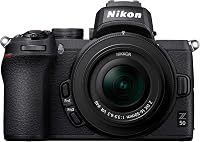
Nikon Z5 II vs Z5: Full-Frame Comparison (November 2026)
Choose the Nikon Z5 II for the stronger overall mix of speed, autofocus, low-light work and video. Choose the Nikon Z5 when compact full-frame shooting and a simpler pace matter more than advanced performance.
On this page (10 sections)
- Nikon Z5 II vs Z5: which camera wins overall?
- How do the Nikon Z5 II and Z5 compare side by side?
- Which camera is better for fast action?
- Does the Z5 II perform better in low light?
- Which camera is better for portraits and people?
- Which camera is better for video?
- Which camera is easier to use for phone transfers?
- What does each camera suit in daily photography?
- How should you choose between these Nikon Z cameras?
- Nikon Z5 II vs Z5: final verdict
Choose the Nikon Z5 II for the stronger overall mix of speed, autofocus, low-light work and video. The Nikon Z5 II vs Z5 choice changes if your priority is a compact full-frame body for measured still photography rather than fast subjects or advanced recording.
Both cameras use Nikon Z mount lenses and full-frame sensors. The Z5 II has 24.5MP resolution, while the Z5 has 24.3MP, so the main difference is not a large jump in still-image resolution.
The bigger gap comes from processing, continuous shooting, autofocus, stabilization, display design and video tools. We compared those points to show where each camera fits in daily use.


Nikon Z5 II vs Z5: which camera wins overall?
The Nikon Z5 II wins overall because it combines 24.5MP resolution with up to 30fps shooting, stronger subject detection, darker autofocus performance and more advanced video options. The Nikon Z5 remains the better fit when compact full-frame photography and a slower shooting style come first.
The Z5 II uses a 24.5MP BSI-CMOS FX-format sensor and an EXPEED 7 processing engine. That combination supports continuous shooting up to 30 frames per second, 4K/60p recording and 12-bit N-RAW recording in-camera.
The Nikon Z5 uses a 24.3MP full-frame sensor and shoots at 4.5 frames per second. It records 4K/30p and 1080/60p video, which covers standard video work but gives you less room for fast action and higher-end production.
The Z5 II also has built-in image stabilization rated at up to 7.5 stops. The Z5 has 5-axis in-body image stabilization, giving both cameras a strong reason to consider handheld shooting in lower light.
Pick the Z5 II if you want one body that can handle stills, fast subjects and serious video growth. Pick the Z5 if your work centers on full-frame image quality, eye detection and steady general-purpose shooting.
How do the Nikon Z5 II and Z5 compare side by side?
The Z5 II leads on speed, autofocus reach, stabilization and video, while the Z5 keeps its appeal through a compact full-frame design and a straightforward feature set. Their close sensor resolutions mean your buying decision should focus on how you shoot.
| Product | Best for | Sensor | Continuous shooting | Video | Our score |
|---|---|---|---|---|---|
| Nikon Z5 II | speed and video | 24.5MP BSI-CMOS FX-format | Up to 30 frames_per_second | 4K/60p and 12-bit N-RAW in-camera | 8.0 |
| Nikon Z5 | compact full-frame value | 24.3MP full-frame | 4.5 frames_per_second | 4K/30p and 1080/60p | 7.4 |
Both cameras support SD memory cards. The Z5 II lists SD compatibility, while the Z5 lists SD, SDHC and SDXC compatibility.
The Z5 II uses Bluetooth, HDMI and Wi-Fi connectivity. The Z5 lists built-in Wi-Fi and Bluetooth, so both can connect to compatible devices for sharing and remote control.
Their screens differ in movement. The Z5 II has an articulating LCD, while the Z5 has a tilting LCD.
An articulating design gives you more flexibility when framing from unusual angles or working on video where the screen needs to face you.
The cameras also differ in what is included. The Z5 is listed with an AN-DC19 strap, EN-EL15c rechargeable Li-ion battery, MH-25a battery charger and UC-E24 USB cable.
The Z5 II is camera body only, so your setup planning is different from the start.
Which camera is better for fast action?
The Nikon Z5 II is the clear choice for fast action. Its continuous shooting rate reaches 30 frames per second, compared with 4.5 frames per second for the Nikon Z5.
That difference affects how many moments you can record during a short burst. It matters for birds, children in motion, sports, vehicles and any subject that changes position quickly.
The Z5 II also detects 9 subject types: people, birds, dogs, cats, cars, bicycles, motorcycles, trains and airplanes. This gives the camera a broader set of named subjects to recognize during autofocus work.
The Z5 has eye-detection autofocus for people, dogs and cats. That is useful for portraits, family photography and pets, but it does not match the Z5 II's listed subject detection range.
The Z5's 4.5fps rate still suits calm portraits, landscapes, architecture, travel scenes and ordinary daily photography. It simply asks you to time the shutter more carefully when the subject moves quickly.
For action, the Z5 II's combination of 30fps shooting and 9-subject detection earns the higher score. For still scenes, the Z5's slower pace is less of a concern.
Does the Z5 II perform better in low light?
The Nikon Z5 II has the stronger low-light specification. Its autofocus detection reaches down to -10EV, and its built-in image stabilization is rated at up to 7.5 stops.
That combination targets two different parts of dark shooting. Autofocus performance helps the camera find a subject, while image stabilization helps reduce camera movement during handheld stills.
The Z5 has 5-axis in-body image stabilization and is described as providing good low-light performance. That makes it a practical full-frame option for evening scenes, indoor photography and other situations where you want stabilization in the body.
The difference is most useful when darkness and movement appear together. The Z5 II has the stated advantage for focusing in near-total darkness, while its stabilization rating also sits higher than the Z5's 5-axis system.
Neither camera changes the need to choose a suitable lens and exposure. A stabilized body helps with camera movement, but moving subjects still need an appropriate shutter speed.
If night scenes, indoor events or dim locations are central to your work, choose the Z5 II. If you mainly shoot still subjects in moderate low light, the Z5 provides the core full-frame and stabilization features at a slower pace.
Which camera is better for portraits and people?
The Nikon Z5 II is the stronger people camera because it combines eye detection with broader automatic subject detection and a brighter electronic viewfinder. The Z5 remains capable for portraits and family scenes through its eye-detection autofocus for people.
The Z5 II has automatic detection for people, birds, dogs, cats, cars, bicycles, motorcycles, trains and airplanes. People are one part of a wider system that can follow different types of subjects.
Its autofocus technology includes contrast detection, eye detection, hybrid and phase detection, with 299 autofocus points. That gives the Z5 II a more advanced autofocus description than the Z5's contrast detection and phase detection system with 273 points.
The Z5's eye-detection autofocus automatically locks onto the eyes of people, dogs and cats and tracks them as they move around the frame. That covers common portrait and pet needs without the Z5 II's broader subject list.
The Z5 II also has a 3000-nit maximum-brightness electronic viewfinder. Its viewfinder is designed to provide a bright, detailed view, which helps when you prefer composing through the camera rather than using the rear screen.
Choose the Z5 for straightforward people photography with eye detection. Choose the Z5 II when portraits share space with pets, vehicles, birds or other moving subjects.
Which camera is better for video?
The Nikon Z5 II is the better video camera by a wide margin. It records 4K/60p and supports 12-bit N-RAW recording in-camera, while the Nikon Z5 records 4K/30p and 1080/60p.
The Z5 II's 4K/60p option gives you a higher frame-rate choice at 4K resolution. That supports smoother motion and more flexibility when your project calls for movement or a different visual pace.
Its 12-bit N-RAW recording adds an advanced in-camera option for video work. The data also lists tools for content creation, product reviews and high-quality streaming.
The Nikon Z5's 4K/30p and 1080/60p modes suit everyday video, family clips, travel footage and basic creator work. USB power delivery and HDMI output add useful connections for a video setup.
The screen design also matters. The Z5 II's articulating LCD gives more freedom for self-facing angles and unusual camera positions.
The Z5's tilting LCD is useful for framing from above or below, but its movement is more limited.
For video-first work, choose the Z5 II. For occasional 4K clips alongside still photography, the Z5 can cover the basics without making video the center of your buying decision.
Which camera is easier to use for phone transfers?
Both cameras support wireless phone connectivity, but the Z5 II offers the more developed connected workflow. It supports Bluetooth, HDMI and Wi-Fi, plus Nikon Imaging Cloud and Nikon SnapBridge.
SnapBridge transfers photos and short video clips to a compatible phone or tablet. It also lets a smart device act as a wireless remote release with live view, which helps when you need to position the camera away from your hands.
The Z5 includes built-in Wi-Fi and Bluetooth and works with compatible Wi-Fi and Bluetooth devices. Its SnapBridge support gives you a practical route for sharing and remote control with a compatible smartphone or tablet.
The Z5 II adds Nikon Imaging Cloud support. Its listed functions include downloadable Picture Controls, automatic image transfer to preferred storage sites and automatic firmware updates.
That makes the Z5 II more suitable for a connected workflow that continues after the shot. The Z5 covers the basic need to share photos and control the camera from a compatible device.
Choose the Z5 II if automatic transfers and cloud-connected tools matter to your process. Choose the Z5 if wireless sharing and remote control are enough.
For a related look at Nikon's smaller-format system, read our Nikon Z50 II review before deciding how much camera you need.
What does each camera suit in daily photography?
The Nikon Z5 II suits photographers who want speed and room to grow, while the Nikon Z5 suits photographers who value a compact full-frame body and a simpler shooting rhythm. The best fit depends on how often you need the newer camera's extra performance.
Choose the Nikon Z5 II for speed and video
The Z5 II is the better match for action, wildlife, vehicles, pets and people who move through the frame. Its 30fps continuous shooting and detection for 9 subject types give you more support when timing is difficult.
It also suits low-light photographers who want autofocus detection down to -10EV and up to 7.5 stops of built-in image stabilization. Those features matter more in dark scenes than the small 0.2MP resolution difference.
Content creators have another reason to choose it. The articulating LCD, 4K/60p recording and in-camera 12-bit N-RAW support make the Z5 II the more flexible choice for video.
The Z5 II is listed as camera body only. Plan the rest of the kit around the Nikon Z mount, compatible SD media and the accessories your shooting setup needs.
Choose the Nikon Z5 for compact full-frame stills
The Z5 is a good fit for landscapes, portraits, travel, architecture and family photography when 4.5fps is enough. Its 24.3MP full-frame sensor gives you the resolution expected from a full-frame interchangeable-lens camera.
Its compact, lightweight design suits photographers who want to move into full-frame without choosing a more performance-focused body. The 5-axis in-body image stabilization supports handheld stills and steady video.
The Z5 also includes an AN-DC19 strap, EN-EL15c rechargeable Li-ion battery, MH-25a battery charger and UC-E24 USB cable. Those included items make the initial setup more direct.
The trade-off is clear. The Z5 does not match the Z5 II for continuous shooting, subject detection range, low-light autofocus, display movement or video resolution at higher frame rates.
Our Canon R10 vs Nikon Z50 II comparison can help if you're also comparing smaller-format cameras for travel, family work or learning photography.
How should you choose between these Nikon Z cameras?
Start with the subject you photograph most, then give speed, video and screen movement the weight they deserve. The 24.5MP versus 24.3MP difference is too small to decide the purchase by itself.
Choose the Z5 II when at least one of these is central to your work: fast action, birds, vehicles, darker autofocus conditions, 4K/60p video, N-RAW recording or a fully articulating screen.
Choose the Z5 when your main work is still photography, your subjects move at a measured pace and you value a compact full-frame body with stabilization and common wireless features.
Lens choice remains part of the system decision. Both cameras use Nikon Z mount lenses, so the lenses you already own or plan to use can affect the long-term fit more than a small sensor-resolution difference.
The camera body also shapes your accessory plan. The Z5 includes a strap, battery, charger and USB cable, while the Z5 II is camera body only.
Account for the setup you need when comparing the complete kit.
If you're considering Nikon's crop-sensor options, our Nikon Z30 vs Z50 comparison gives useful context before you move to full frame.
Nikon Z5 II vs Z5: final verdict
The Nikon Z5 II is the overall winner for most readers because it offers much faster shooting, broader autofocus detection, stronger stated low-light performance and more capable video. Its 8 score reflects the wider range of work it can cover.
Choose the Nikon Z5 for compact full-frame stills, portraits, travel and family photography when 4.5fps is enough and 4K/30p meets your video needs. Its 7.4 score reflects a capable full-frame camera with useful stabilization, eye detection and wireless features.
Choose the Nikon Z5 II for action, darker scenes, advanced video, moving subjects and a connected workflow that includes Nikon Imaging Cloud. The newer body earns its higher score through performance that changes what you can photograph and record.
The final decision is not about choosing between full frame and a smaller sensor. Both cameras give you Nikon Z mount compatibility and full-frame imaging.
The Nikon Z5 II vs Z5 decision is about how much speed, autofocus range, low-light reach and video flexibility you want from that full-frame system.
Frequently asked questions
Do the Nikon Z5 II and Z5 use the same lens mount?
Yes. Both cameras use the Nikon Z mount, so Nikon Z mount lenses are the starting point for building either system.
Choose lenses based on the subjects you shoot, the focal lengths you need and the aperture range you want.
Does the Nikon Z5 II have a flash?
The Nikon Z5 II has no built-in flash. It includes a hotshoe, so the camera can form part of a flash setup, while the Nikon Z5 lists a hotshoe as its flash connection.
Can the Nikon Z5 II transfer photos to a phone?
Yes. The Nikon Z5 II supports Nikon SnapBridge for wireless transfers of photos and short video clips to a compatible phone or tablet.
It can also use a compatible smart device as a wireless remote release with live view.
Which camera has the larger viewfinder brightness?
The Nikon Z5 II has an electronic viewfinder with a maximum brightness of 3000 nits. That gives it the clearer stated brightness advantage in this comparison, especially for photographers moving from a DSLR.
What comes with the Nikon Z5?
The Nikon Z5 includes the camera body, an AN-DC19 strap, an EN-EL15c rechargeable Li-ion battery, an MH-25a battery charger and a UC-E24 USB cable. The Nikon Z5 II is listed as camera body only.