Canon EOS R100 vs Nikon Z50: Which to Buy? (November 2026)
Pick the Canon EOS R100 for the easier start and the higher-resolution 24.2MP sensor; pick the Nikon Z50 for the tilting screen and faster 11 fps bursts. The Canon EOS R100 vs Nikon Z50 choice comes down to whether you want simplicity or a more flexible screen.
On this page (5 sections)
Pick the Canon EOS R100 for the easier start and the higher-resolution 24.2MP sensor; pick the Nikon Z50 for the tilting screen and faster 11 fps bursts. This Canon EOS R100 vs Nikon Z50 comparison looks at what each camera gives a first-time buyer and where the two genuinely differ.
Both are compact APS-C mirrorless cameras with electronic viewfinders and kit zoom lenses. The R100 scores higher in our comparison because its higher-resolution sensor and simple menus make everyday photography easier to learn.
The Nikon Z50 answers back with a flip-down screen, a built-in flash and quicker continuous shooting. That mix suits a buyer who wants to vlog or capture moving subjects.
Neither camera needs deep technical knowledge to use. The decision rests on the screen, the sensor, the autofocus system and how you plan to shoot.

 Best for vlogging and bursts
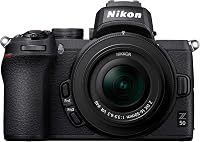
Nikon Z50 DX-Format Mirrorless Camera Body
Canon EOS R100 vs Nikon Z50: which camera wins?
The Canon EOS R100 wins for most first-time buyers, while the Nikon Z50 is the better pick for vlogging and fast action. The R100's 24.2MP sensor and straightforward menus tip the balance for everyday photos.
The Canon EOS R100 carries a 24.2MP APS-C CMOS sensor and a DIGIC 8 image processor. Canon pairs that with auto scene modes and simplified menu navigation, so a new shooter can start taking pictures without working through a dense settings tree.
The Nikon Z50 uses a 20.9MP DX-format CMOS sensor with EXPEED 6 processing. Its resolution is lower, but 20.9MP still gives plenty of detail for prints and sharing.
The bigger split is in how the cameras handle. The R100 leans toward set-and-shoot simplicity, while the Z50 leans toward flexibility for video and bursts.
That is why the R100 takes the overall win for most readers.
Sensor and image quality
The R100's 24.2MP sensor out-resolves the Z50's 20.9MP chip, but both deliver detailed everyday photos. Resolution matters most when you crop or print large.
The Canon EOS R100's larger pixel count leaves more room to crop a frame and still keep detail. Canon's DIGIC 8 processor drives vibrant color and smooth video alongside that sensor.
The Nikon Z50's 20.9MP DX sensor is a proven size for the format. Nikon points to its wide Z mount, which the brand says captures more light for sharpness and low-light performance.
That mount claim matters more when you add faster lenses later.
For a beginner, the megapixel gap is small in practice. You'll notice the R100's extra resolution when cropping tight or printing big, and the Z50's light-gathering mount when shooting in dim rooms with brighter glass.
Autofocus and speed
The Nikon Z50 shoots faster at 11 fps, while the Canon EOS R100 relies on Dual Pixel autofocus across 143 zones. Pick by whether you chase motion or shoot mostly stills.
Canon's Dual Pixel CMOS AF covers a wide portion of the frame and tracks faces and people. It switches cleanly between stills and video, and 143 autofocus zones give it room to find subjects across the image.
The Nikon Z50 lists 209 hybrid autofocus points and 11 fps continuous shooting. More points and a faster burst help when you follow a moving subject or shoot a sequence.
The R100's electronic shutter tops out at 6.5 fps. That's fine for portraits and everyday scenes but slower than the Z50 for sports, pets and kids on the move.
Viewfinder and screen
The Canon EOS R100 gives you a 2.36m-dot OLED viewfinder and a fixed rear screen; the Nikon Z50 pairs its viewfinder with a flip-down LCD. The screen is the clearer difference.
The R100's 2.36m-dot OLED electronic viewfinder shows how the photo will look in real time. Its 3-inch 1.04m-dot LCD is fixed, so you compose from behind the camera.
The Nikon Z50's screen flips down and activates Self Portrait Mode. That makes framing yourself easy for vlogs, selfies and overhead shots.
Its viewfinder is also high resolution for checking exposure before you shoot.
If you shoot mostly from eye level, the fixed screen is no problem. If you talk to camera or record yourself often, the Z50's flip-down design is the more practical tool.
Lenses and flash
Both kits include a stabilized zoom, but the Nikon Z50 also has a built-in pop-up flash. The Canon RF-S kit lens covers wide to short telephoto for everyday shooting.
The R100 ships with the RF-S 18-45mm f/4.5-6.3 IS STM lens. Its built-in image stabilization helps steady handheld shots, and the zoom range covers family portraits, travel scenes and vlogs.
The Nikon Z50 kit pairs the body with the NIKKOR Z DX 16-50mm f/3.5-6.3 VR lens. The wider 16mm start helps in tight rooms and group shots, and VR stabilization steadies hand-held video.
The Z50 also includes a built-in pop-up flash for dim scenes, while the R100 has no flash. Canon's Dual Pixel autofocus works well in low light, but the Z50's flash adds a light source the R100 lacks.
Our Canon R10 vs Nikon Z50 II comparison shows how the newer Z50 II changes this picture. If you're weighing the Z50 against its sibling, the Nikon Z30 vs Z50 breakdown covers the vlogging angle.
Video
The Nikon Z50 records 4K UHD with a flip-down screen, while the Canon EOS R100 records 4K 24p with a crop and Full HD 60p. The screen shapes which one you'll actually enjoy for video.
The R100's 4K 24p footage gets a crop, which tightens the field of view. Its Full HD 60p mode is useful for smooth slow motion.
Dual Pixel autofocus keeps subjects sharp as they move.
The Nikon Z50 records 4K UHD and 1080p slow motion up to 120 fps. The brand highlights time-lapse and in-camera trimming for quick sharing through the SnapBridge app.
The Z50's flip-down screen makes self-filming much easier. The R100's fixed screen means you'll frame video from behind the camera or use a tripod and check playback.
For a beginner who plans to vlog, the Z50's screen alone can decide it.
Handling and build
The Nikon Z50 has a deeper grip and a magnesium alloy body, while the Canon EOS R100 stays light and compact. Comfort matters when you carry a camera all day.
Nikon describes the Z50 as well balanced with a deep grip and magnesium alloy construction. That build gives it a planted feel in the hand, especially with a longer lens mounted.
The Canon EOS R100 is a compact, lightweight body designed for creators on the move. Its smaller size slips into a bag easily, and its simple controls suit a shooter who wants less to think about.
Weight and grip are personal. Try to hold both if you can.
A deep grip helps steady long lenses, while a lighter body is easier to carry on trips.
Connectivity, storage and files
Both cameras send photos to your phone over Wi-Fi and Bluetooth, but they take different memory cards and differ in file handling. Those details decide how easy it is to get shots off the camera and edit them.
The Canon EOS R100 uses a standard SD card slot and pairs wirelessly with Wi-Fi and Bluetooth. Canon also lists Bluetooth-connected smartphones, tablets and computers among the devices the camera works with, so moving files to a phone or laptop is part of the normal flow.
The Nikon Z50 transfers photos and videos through Wi-Fi or Bluetooth and the SnapBridge app on Apple or Android phones. Nikon also lets you use the phone as a remote monitor to see what the camera sees, adjust settings, take pictures and record video.
The storage format is the quieter difference. The Z50 takes microSDXC cards, which are the small cards used in phones and action cameras, while the R100 takes full-size SD.
If you already own a pile of SD cards, that favors the Canon.
On files, both list 12-bit depth, so neither has an edge for editing latitude in the specs. The Z50 also lists HDMI and USB connectivity, which helps when you want to record or review footage on a larger screen.
Who should buy the Canon EOS R100?
Buy the Canon EOS R100 if you want a simple first camera with a bigger sensor and a viewfinder for everyday photos. It's the easier camera to learn on.
Its 24.2MP sensor and DIGIC 8 processor handle family portraits, travel scenes and street shots with detail to spare. Dual Pixel autofocus with 143 zones tracks faces and people reliably, so you spend less time fixing missed focus.
The stabilized RF-S 18-45mm kit lens covers the wide-to-short-telephoto range most beginners use. Auto scene modes and simplified menus cut the setup work, which is why it's the friendlier entry point.
Choose the R100 if you mostly shoot stills, prefer composing through a viewfinder and want the larger sensor. Its RF mount and full-size SD slot also make it a tidy path into Canon's system for a first-time buyer.
Who should buy the Nikon Z50?
Buy the Nikon Z50 if you plan to vlog, shoot selfies or capture fast action. Its flip-down screen and 11 fps bursts are the reasons to pick it.
The tilting LCD flips down into Self Portrait Mode, so you can see yourself while recording. That makes the Z50 the better tool for talking-head videos, travel vlogs and family moments where you're in the frame.
Its 11 fps continuous shooting and 209 hybrid autofocus points help when you follow kids, pets or sports. The built-in pop-up flash adds light in dim scenes, and the 16-50mm VR kit lens starts wider for group shots and tight rooms.
The Z50 also carries features aimed at video and quick sharing that the R100 lacks. Its 1080p slow motion up to 120 fps bends time for creative clips, and the brand lists 4K Ultra HD time-lapse plus in-camera trimming before you send a clip to your phone.
Silent Photography Mode lets you shoot quietly in places where shutter noise draws attention. Pick the Z50 if video and bursts come first and you don't mind the lower 20.9MP resolution.
If you want a fuller picture of this camera line, the Nikon Z50 II review covers the newer model's changes.
How we compared these cameras
We compared the two cameras on specs, features and what each one suits. Our score weighs sensor, autofocus, screen, video and kit lens against what a first-time mirrorless buyer wants.
The Canon EOS R100 earns a 9.6 for its higher-resolution sensor, simple menus and viewfinder. The Nikon Z50 scores 9.4 for its flip-down screen, faster bursts and built-in flash.
Neither score reflects personal testing; we worked from the published specs and features. We also looked at the buyer patterns each camera fits.
The R100 suits stills-first beginners, and the Z50 suits vloggers and action shooters. That split drives the verdict.
Verdict: which should you buy?
Most first-time buyers should get the Canon EOS R100; vloggers and action shooters should get the Nikon Z50. The R100's 24.2MP sensor and simple menus make it the stronger all-round first camera.
The Nikon Z50 is not the lesser camera in every way. Its flip-down screen, 11 fps bursts, pop-up flash and slow-motion video give it real advantages for video and motion.
If those matter to you, the Z50 is the right buy.
If you want the easiest path into mirrorless photography with a bigger sensor and an electronic viewfinder, take the Canon EOS R100. If you want to film yourself and chase fast subjects, the Nikon Z50 earns its place.
Still deciding between Canon models? The Canon EOS M50 vs EOS R100 comparison helps you see how the R100 stacks up against an older favorite.
Frequently asked questions
Which is better for beginners, the Canon EOS R100 or the Nikon Z50?
The Canon EOS R100 is the easier start for most beginners because of its auto scene modes, simple menus and 24.2MP sensor. The Nikon Z50 suits beginners who plan to vlog or shoot fast action, since its flip-down screen and 11 fps bursts help there.
Does the Nikon Z50 have a better screen than the Canon EOS R100?
The Nikon Z50's screen tilts and flips down, while the Canon EOS R100's screen is fixed. That makes the Z50 more useful for self-portraits and vlogging, but neither screen matches a fully articulating design.
Which camera takes higher-resolution photos, the R100 or the Z50?
The Canon EOS R100 has a 24.2MP APS-C sensor, and the Nikon Z50 has a 20.9MP DX-format sensor. Both are capable for everyday photos, but the R100's larger pixel count gives slightly more room to crop.
Can both cameras shoot 4K video?
Yes. The Canon EOS R100 records 4K 24p with a crop and Full HD 60p, while the Nikon Z50 records 4K UHD plus 1080p slow motion up to 120 fps.
The Z50's flip-down screen makes framing yourself easier for video.
Which camera is better for low light, the R100 or the Z50?
The Nikon Z50 lists a native ISO range up to 51,200 and the widest lens mount in its class, which the brand says helps low light. The Canon EOS R100's DIGIC 8 processor and Dual Pixel autofocus keep focus reliable, but neither is a dedicated low-light camera.
Should I buy the Canon EOS R100 or the Nikon Z50 as my first mirrorless camera?
Buy the Canon EOS R100 if you want simple menus, a 24.2MP sensor and an electronic viewfinder for everyday photos. Buy the Nikon Z50 if vlogging, a flip-down screen or faster bursts matter more to you.