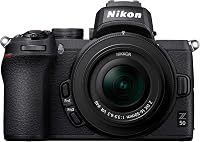
Canon EOS R50 vs Nikon Z50: Which to Buy? (November 2026)
Buy the Canon EOS R50 for its 24.2MP sensor, 99 hybrid autofocus points and oversampled 4K. Pick the Nikon Z50 instead if you want a built-in pop-up flash and a 209-point system in a magnesium alloy body.
On this page (6 sections)
Buy the Canon EOS R50 for its 24.2MP sensor, 99 hybrid autofocus points and oversampled 4K video. It is the higher-scoring camera here and the better fit for most first-time mirrorless buyers.
Pick the Nikon Z50 instead if a built-in pop-up flash and a wider 16mm kit lens matter more to you.
The Canon EOS R50 vs Nikon Z50 choice comes down to what you shoot. Video creators and people chasing moving subjects get more from the R50.
Still photographers who shoot in dim rooms and want flash on hand lean toward the Z50.
Both cameras are crop-sensor mirrorless bodies sold with a compact zoom lens. They are close in size and purpose, so the useful differences sit in resolution, autofocus, video tools and small extras.
 Best for video and autofocus
Canon EOS R50 Mirrorless Camera with 18-45mm

Canon EOS R50 vs Nikon Z50: which sensor wins?
The Canon EOS R50 wins on resolution. Its sensor records 24.2MP stills against 20.9MP in the Nikon Z50.
That gap gives you more room to crop and enlarge without losing detail.
Both are crop-sensor cameras, so neither gives you the shallow depth of field of a full-frame body. The R50 uses a 1.6x crop factor on its RF mount.
The Z50 uses a 3:2 DX sensor in the wider Nikon Z mount.
The R50 writes 10-bit RAW files. The Z50 writes 12-bit files.
Bit depth affects how much color and brightness information a file holds, which matters when you push shadows or recover highlights in editing. Here the Z50's 12-bit files carry more depth than the R50's 10-bit ones.
What 24.2MP gives you over 20.9MP
More megapixels mean more pixels across the frame. In practice, the R50 leaves a little more margin for tight crops and large prints.
For social sharing, both sensors are more than enough. The difference shows up when you photograph distant subjects and crop in, or when you print bigger than a poster.
The R50 also lists a 16:9 aspect ratio for its files. The Z50's sensor crops to 3:2 natively.
If you frame for wide screens and video, the R50's ratio lines up more directly.
Does the Z50's DX sensor have an edge anywhere?
The Z50's wider mount is a design advantage Nikon leans on for light gathering. Its 20.9MP sensor still delivers clean, detailed files for everyday photography.
The bigger practical factor is file size and editing speed. Fewer megapixels means smaller files, which is easier on older laptops and smaller memory cards.
The Z50 uses microSDXC cards. The R50 takes SDXC.
Check which cards you already own before you buy, since the format changes what you need to add.
How the crop factor changes what you frame
The R50's 1.6x crop factor multiplies every focal length you mount. Its 18-45mm kit lens frames like a 29-72mm lens in full-frame terms, so the wide end starts close to a normal view.
That matters most when you shoot indoors or in tight streets. The Canon kit reaches wide, but not as wide as the numbers on the barrel suggest.
The Z50's DX sensor uses a 3:2 crop, and its 16-50mm kit starts 2mm wider than the Canon lens. At the short end that extra width helps with group shots and small rooms.
If you already own lenses for another system, neither mount adapts for free. Budget for an adapter or plan to stay within Canon RF or Nikon Z glass from day one.
Which autofocus system is better?
The Canon EOS R50 is the more capable autofocus camera for tracking people and motion. It pairs 99 hybrid autofocus points with subject detection that follows faces, eyes and bodies across the frame.
The Nikon Z50 lists 209 autofocus points and uses contrast-detection autofocus. That is more points on paper, and it helps with fine placement across the frame.
Point count is not the whole story. The R50's system is built around tracking a chosen subject as it moves, which is what you want for kids, pets and street scenes.
The Z50's contrast detection base is an older approach to the same job.
Tracking and subject detection on the R50
The R50 detects and follows people and animals, including faces and eyes. It can keep focus locked as your subject moves through the frame.
For video, this matters even more. Smooth, continuous focus on a talking head or a running dog is the difference between usable clips and missed moments.
The camera picks the subject automatically in many situations. That takes pressure off you when you're learning the controls.
What 209 points do for the Z50
More autofocus points give the Z50 finer coverage for still subjects. It's a sensible choice for portraits, landscapes and product shots where you place a single focus point yourself.
The Z50's autofocus leans on contrast detection. It works well when light is good and your subject holds still.
For fast action in low light, the R50's hybrid system is the more modern tool. If your subjects move and light is uneven, that's the one to pick.
Which camera is better for video?
The Canon EOS R50 is the better video camera for creators. It records oversampled 4K with Dual Pixel autofocus, so footage is sharp and focus stays on your subject.
Oversampling means the camera captures more detail than the final 4K frame and scales down. The result is cleaner edges and finer texture than a straight 4K readout.
The R50 also adds vertical video tools and in-camera creative guides. If you shoot for social platforms, those shortcuts save time in editing.
4K and frame rates on both cameras
The R50 records oversampled 4K at up to 3840 x 2160 resolution.
The Nikon Z50 records 4K Ultra HD and time-lapse, plus 1080p slow motion at up to 120 fps. That slow-motion option is useful for action and creative sequences.
Neither camera is a cinema body. For vlogs and short-form content, both get the job done.
Autofocus during video
This is where the R50 pulls ahead. Dual Pixel autofocus tracks faces and eyes smoothly while recording, with less hunting than a contrast-detection system.
The Z50's contrast detection can hunt when subjects move quickly or light drops. You can manage it with careful framing, but it takes more attention.
For talking-head videos and vlogs where you stay in frame, the R50 is more forgiving. For slow, deliberate footage on a tripod, the Z50 holds up.
Time-lapse, trimming and phone transfer on the Z50
The Z50's video tools go beyond 4K. It records 4K Ultra HD time-lapse sequences straight to an in-camera movie, and it can trim a clip before sending it to your phone.
That last part is the practical one for travel. You shoot, trim, then post without opening a computer or a separate editing app.
The Z50 also supports silent photography mode, which carries over to quiet scenes where you do not want a shutter click to interrupt.
Wi-Fi and Bluetooth with the SnapBridge app let you move photos and video to a phone. The same app can turn your phone into a remote monitor while you shoot.
The R50 counters with its creative assist guides and vertical video tools, which are aimed at creators rather than shooters who edit on a phone.
How do the two cameras handle and feel?
The Nikon Z50 has the sturdier body, while the Canon EOS R50 is the lighter everyday carry. The Z50 uses magnesium alloy construction.
The R50 uses a plastic and metal shell.
The Z50 also has a deeper grip. That helps when you hold the camera one-handed or shoot for long stretches.
The R50 is smaller and lighter in the hand. For travel and casual walks, that lower weight adds up over a day.
Viewfinder and screen
Both cameras give you an electronic viewfinder and a flip-down LCD for self-portraits and vlogging. The Z50's screen flips down to activate self-portrait mode.
The Z50's viewfinder shows how your photo will look in real time. That helps when you're learning exposure.
The R50's viewfinder and screen work the same way for framing and review. Neither has an edge big enough to decide the purchase alone.
Lenses and mounts
The R50 uses the Canon RF mount and ships with the RF-S 18-45mm f/4.5-6.3 IS STM lens. That zoom covers wide to standard shots and includes image stabilization for steadier handheld photos.
The Z50 uses the Nikon Z mount and ships with the NIKKOR Z DX 16-50mm f/3.5-6.3 VR lens. It starts at 16mm, 2mm wider than the Canon kit, which helps with group shots and tight rooms.
Both kit lenses are compact zooms with modest maximum apertures. They're fine for daylight and everyday use.
For dim rooms or blurred backgrounds, you'll want a faster lens later.
The Nikon Z mount is physically wider than Canon's RF-S mount. That gives Nikon more room to design future lenses.
Canon's RF mount is also wide and has a growing crop-sensor lineup.
Flash and extras
The Z50 has a built-in pop-up flash. That's handy for fill light in daylight or a quick shot in a dim room without carrying a separate unit.
The R50 has no built-in flash. You'd need an external unit for the same job.
The Z50 also includes silent photography mode for quiet settings. The R50 adds in-camera creative assist and social-ready vertical shooting tools.
Which set matters depends on what you shoot.
Which camera should you buy?
Buy the Canon EOS R50 if you shoot video, chase moving subjects or want the most resolution for the money. Its 24.2MP sensor, Dual Pixel autofocus and oversampled 4K make it the stronger all-rounder for creators.
The R50 fits vloggers, families photographing kids and pets, and anyone who wants sharp footage straight out of the camera. Its kit lens covers the everyday focal range and includes stabilization.
If you want to compare it against Canon's step-up model, our Canon R10 vs Nikon Z50 II breakdown covers the next tier up. And if the Z50's design appeals but you shoot video only, the Nikon Z30 vs Z50 comparison looks at the vlogging-focused body.
Who should buy the Nikon Z50?
Buy the Nikon Z50 if a built-in flash, a sturdier body and a wider kit lens top your list. Its 20.9MP sensor and 209-point system are solid for stills.
The Z50 suits still photographers who work in controlled light and want fill flash on hand. Its magnesium alloy body and deep grip feel more substantial, which helps with larger hands and longer lenses.
The 16mm wide end of its kit lens gives you more room in tight spaces. For interiors, group portraits and travel scenes, that extra width helps.
It's also the pick if you already own Nikon gear or plan to build around the Z mount. The Nikon Z50 II review covers the newer version if you want the latest model in that line.
If budget is the deciding factor, our Canon EOS R100 vs Nikon Z50 comparison weighs the cheaper Canon option against this Nikon.
Who should skip both?
Skip both if you need full-frame depth of field or professional video features like log profiles and high frame rates. These are crop-sensor starter cameras.
Skip the R50 if you rely on a built-in flash. Skip the Z50 if smooth autofocus during video is your main need.
Both kits are also limited by their dim zoom lenses. If most of your shooting happens indoors without flash, plan for a faster lens later, whichever body you choose.
Verdict: which camera wins?
The Canon EOS R50 wins this comparison for most buyers. It scores 9.7 against 9.4 for the Nikon Z50, and the gap comes from real advantages: 24.2MP against 20.9MP, hybrid autofocus built for tracking and oversampled 4K video.
The Z50 remains the better pick for one clear group. If you shoot stills in controlled light, want fill flash built in and prefer a magnesium alloy body with a wider 16mm kit lens, buy the Z50.
Neither camera will hold you back as a first mirrorless body. The R50 simply covers more ground for video and moving subjects, while the Z50 rewards careful still photography with its flash and sturdier build.
Set a firm rule before you order. Pick the R50 if more than half your shooting is video or action.
Pick the Z50 if you mostly shoot stills in good light and want flash without extra gear. Then spend the difference on a faster lens rather than a second kit zoom.
Frequently asked questions
Is the Canon EOS R50 better than the Nikon Z50?
The Canon EOS R50 wins on paper for most buyers, with a 24.2MP sensor against 20.9MP, 99 hybrid autofocus points and oversampled 4K video. The Nikon Z50 is the better pick when a built-in flash and a wider 16mm kit lens matter more than resolution.
What is the main difference between the Canon EOS R50 and Nikon Z50?
Resolution and autofocus are the two big splits. The R50 has a 24.2MP sensor with 99 hybrid points and 10-bit files, while the Z50 has a 20.9MP DX sensor, 209 points and 12-bit files.
The Z50 also adds a pop-up flash.
Which camera is better for video, the Canon EOS R50 or Nikon Z50?
The Canon EOS R50 is the stronger video pick here. It records oversampled 4K with Dual Pixel subject tracking and adds vertical video tools.
The Nikon Z50 does shoot 4K Ultra HD and 1080p slow motion, but its autofocus tech is contrast detection.
Do both cameras include a lens?
Yes. The Canon EOS R50 kit includes the RF-S 18-45mm f/4.5-6.3 IS STM lens.
The Nikon Z50 kit includes the NIKKOR Z DX 16-50mm f/3.5-6.3 VR lens, which starts 2mm wider at the short end.
Which has more autofocus points, the Canon R50 or Nikon Z50?
The Nikon Z50 lists 209 autofocus points against 99 on the Canon EOS R50. More points doesn't decide it alone, though: the R50 uses hybrid autofocus with face and eye detection built for tracking moving subjects.