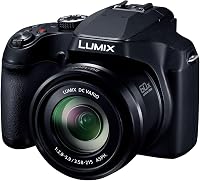
Kodak PIXPRO AZ405 vs AZ425: Which to Buy? (November 2026)
Pick the Kodak PIXPRO AZ425 for the longer 42x zoom and BSI sensor; pick the AZ405 for AA batteries you can buy anywhere. The AZ425 scores higher overall, but the battery choice decides it for many travelers.
On this page (8 sections)
- Kodak PIXPRO AZ405 vs AZ425: what actually separates them?
- Who should buy the Kodak PIXPRO AZ425?
- Who should buy the Kodak PIXPRO AZ405?
- How do the two compare for wildlife and sports?
- How do they compare for travel and everyday use?
- How do they compare for beginners?
- How do the memory and storage compare?
- Which should you buy?
Pick the Kodak PIXPRO AZ425 for the longer 42x zoom and BSI sensor; pick the AZ405 for AA batteries you can buy anywhere. The AZ425 scores higher overall, but the battery choice decides it for many travelers.
Both are compact bridge cameras with a 24mm wide-angle lens and optical image stabilization. The gap between them is smaller than the price tier might suggest.
Zoom reach, sensor type and how you power the camera are the real differences.
This comparison works through each one, then tells you who should buy which.


Kodak PIXPRO AZ405 vs AZ425: what actually separates them?
The AZ425 wins on reach and light gathering; the AZ405 wins on battery convenience. Everything else is close enough that those three points carry the decision.
The AZ425 has a 42x optical zoom and a 20MP BSI CMOS sensor. The AZ405 has a 40x optical zoom and a 20MP CMOS sensor.
Both use the same 24mm wide-angle starting point.
The other split is power. The AZ425 runs on a rechargeable Li-ion battery rated at about 240 shots per charge.
The AZ405 takes four AA batteries.
Optical zoom reach
At 42x, the AZ425 pulls distant subjects closer than the AZ405's 40x. In practice both reach birds in flight, athletes across a stadium and stage performers, and the difference is modest rather than dramatic.
The longer reach matters more when your subject sits at the edge of what a 40x lens can fill. For a bird on a far branch, that extra reach can be the difference between a small subject and a frame-filling one.
Both lenses start at 24mm wide, so group shots and landscapes work the same on either camera. The wide end is where most of your everyday photos will live.
Both cameras also list a 4x digital zoom on top of the optical reach. Digital zoom crops and enlarges the image rather than adding true optical detail, so the optical figure is the one to weigh.
A longer optical lens means less reliance on digital cropping.
Sensor type and low light
The AZ425's backside-illuminated sensor is the bigger technical split. A BSI design gathers light more efficiently than a standard CMOS sensor, which helps color and detail in difficult light.
That shows up in golden-hour landscapes, indoor gatherings and overcast days. The AZ405's 20MP CMOS sensor still captures high-resolution images, but it doesn't have the same light-gathering advantage.
Neither is a low-light specialist. Both are small-sensor bridge cameras, so dim rooms and night scenes remain hard for either one.
Battery system
The AZ425's rechargeable Li-ion battery gives you roughly 240 shots per charge. You charge it at home and carry the spare if you have one.
The kit includes the battery, an AC adapter and a USB cable, so you can charge and transfer from the same cable.
The AZ405 runs on four AA cells. That's the practical win for a safari, a cross-country drive or any trip where an outlet isn't guaranteed.
You can buy AA batteries almost anywhere in the world. Four AA alkalines come in the box, so the camera works out of the box without a separate charger.
The trade-off is running cost. Alkaline AA cells add up over time compared with a rechargeable pack you charge at home.
Shared features worth knowing
Both cameras have optical image stabilization. At full zoom, hand shake turns into blur quickly, and OIS is what lets you hold a sharp frame without a tripod.
Both shoot 1080p Full HD video. That covers travel clips, school events and family moments on either model.
Both accept Class 10 SD, SDHC or SDXC cards up to 512GB. That's enough for thousands of photos on a single card.
Neither ships with a card, so budget for one either way.
Both have a built-in flash for fill light when the scene needs it. Both list a 9-point sensor-based autofocus system.
The AZ405 adds a tripod socket to its spec sheet, useful for steady long-exposure or full-zoom shots.
The AZ425 adds panorama and custom modes on top of its scene modes. The AZ405 leans on automatic scene detection, which handles the technical choices so you can point and shoot.
Who should buy the Kodak PIXPRO AZ425?
Buy the AZ425 if reach and light gathering matter more to you than battery convenience. It's the stronger camera on paper and the one most buyers should start with.
Its 42x optical zoom is the longest reach here. Combine that with OIS and you can photograph wildlife, sports and stage performers handheld without a tripod.
The BSI sensor is the other reason to choose it. Richer color and finer detail in difficult light make it the better pick for golden-hour landscapes, indoor gatherings and overcast adventures.
It also gives you more room to grow. Panorama and custom modes sit alongside the scene modes, so you aren't locked into fully automatic shooting.
The panorama crop mode suits sweeping landscapes, and the custom mode lets you set up shots the way you want them.
Skip it if you'll be far from reliable power for days at a time. A proprietary battery means you charge at an outlet or carry a spare pack, and neither is guaranteed on a long trek.
The AZ425 suits someone who plans to recharge each evening and wants the best image quality and reach in the pair. It's also the natural step up if you're moving from a phone.
The kit includes the neck strap, lens cover and quick start guide, so you're ready to shoot once you add a card.
Who should buy the Kodak PIXPRO AZ405?
Buy the AZ405 if you want a bridge camera that runs on batteries sold anywhere. Its 40x zoom still covers the subjects people buy these cameras for.
Four AA cells mean no charger to pack and no outlet to hunt down. On a safari, a road trip or a camping weekend, that's a real advantage over a proprietary pack.
The included AA alkalines get you shooting straight away.
The 40x optical zoom with OIS brings distant subjects into sharp focus. Birds in flight, athletes and stage performers all land within its reach, just slightly less close than on the AZ425.
Its 20MP CMOS sensor captures rich, detailed images with vibrant color across changing environments. Photos stay sharp enough to print large and enlarge.
It supports 16:9, 3:2 and 4:3 aspect ratios, so you can frame for widescreen viewing or for standard prints.
Automatic scene detection does the technical thinking for you. That makes it the friendlier camera for a beginner who wants good photos without learning settings first.
Its tripod socket also helps when you want a locked-down shot at full zoom.
Skip it if you shoot a lot and don't want to keep buying AA cells. Over months of regular use, the running cost adds up against a rechargeable battery.
The AZ405 suits travelers, campers and anyone who values a camera that never depends on an outlet. It's also a sensible pick for a household where several people share the camera and forget to charge things.
Rechargeable AA cells are an option if you want to cut the long-run cost while keeping the worldwide availability.
How do the two compare for wildlife and sports?
The AZ425 has the edge for distant wildlife and sports thanks to its 42x zoom and BSI sensor. The AZ405 still handles both subjects well.
Wildlife and sports reward reach and light. The AZ425's extra reach (42x vs 40x) gets you closer to a bird on a far branch or an athlete at the far end of a stadium.
Its BSI sensor helps in the flat light of an overcast game or the fading light of dusk. The AZ405's standard CMOS sensor does fine in good daylight but has less headroom when light drops.
Both rely on optical image stabilization to keep full-zoom frames sharp. Handheld shooting at 40x or 42x is where OIS earns its keep.
If most of your shooting is daylight sports and backyard wildlife, the AZ405 covers it. If you push toward the edges of reach and light, the AZ425 is the better tool.
The AZ405 lists continuous shooting at 30 frames per second. That's worth checking against the AZ425's 7 frames per second if you shoot fast-moving subjects and want a burst to pick the best frame from.
For most buyers, the longer reach and light handling still count for more.
How do they compare for travel and everyday use?
The AZ405 is the easier travel companion because AA batteries are sold worldwide. The AZ425 is the better everyday camera when you can charge it at home.
Travel often means long days away from an outlet. With the AZ405, a pack of AA cells keeps you shooting through a full day and beyond.
The AZ425 needs its Li-ion pack charged, ideally with a spare. At about 240 shots per charge, a spare battery doubles that count on a long day out.
Both are compact enough for a day bag. The shared 24mm wide end covers group shots, street scenes and landscapes without changing lenses.
Neither camera changes lenses at all, so there's no extra glass to pack or swap in the field.
Video is identical at 1080p Full HD. Either camera records travel clips and family moments in clear detail.
The AZ425's panorama mode is handy for wide vistas. The AZ405's scene detection is handy when you hand the camera to someone who doesn't shoot often.
Both transfer photos over USB to a computer, so you can clear the card and back up your trip each evening.
How do they compare for beginners?
The AZ405 is the easier first camera because automatic scene detection handles the settings. The AZ425 rewards a little more willingness to explore its modes.
On the AZ405, smart scene modes make the technical decisions. You point, shoot and get a usable photo without thinking about shutter speed or ISO.
Its multiple automatic shooting modes are built for exactly this kind of handing-over.
The AZ425 still has simple controls and scene modes for beginners. It adds panorama and custom modes so you can grow into more creative control as you learn.
The AZ405's AA batteries also remove one beginner worry: remembering to charge. You swap in fresh cells and keep shooting.
That's a small relief if the camera lives in a drawer between trips.
The AZ425's rechargeable pack is simpler day to day once you build the charging habit. That's a small routine, not a barrier.
Either camera works as a first bridge camera. Pick the AZ405 if you want the simplest path, and the AZ425 if you want more reach and room to grow.
How do the memory and storage compare?
Both cameras take the same cards, so storage isn't a reason to choose between them. Each accepts Class 10 SD, SDHC or SDXC cards up to 512GB.
That's a large ceiling. A 512GB card holds thousands of 20MP photos and plenty of 1080p video, so one card can cover a long trip.
20MP files are large enough that the space fills faster than you might expect on a long shoot, so the high ceiling is welcome.
Class 10 is the speed rating to buy. A slower card can bottleneck video recording and burst shooting on either camera.
The AZ425 lists continuous shooting at 7 frames per second. The AZ405 lists 30 frames per second.
If fast bursts matter for sports, that's a point in the AZ405's favor.
Both transfer photos over USB to a computer for sharing and archiving. That's the simplest way to clear a card at the end of a trip.
The AZ425 also works with SD card readers, so a reader is the quickest way to offload its card.
Which should you buy?
Buy the Kodak PIXPRO AZ425 if you want the best image quality and reach in this pair. Buy the Kodak PIXPRO AZ405 if AA batteries and the lower price tier matter more to you.
The AZ425 earns the higher score for most readers. Its 42x optical zoom, BSI sensor and OIS combine to give you more reach and better light handling in one compact body.
If you can charge it each evening, it's the stronger all-round bridge camera.
The AZ405 is the right call when you'll be away from outlets. Its 40x zoom still reaches distant subjects, its 20MP sensor holds up in good light, and AA batteries keep it running wherever you are.
It's also the simpler camera for a beginner.
If neither fits, our Kodak PIXPRO AZ528 review covers a step up in the same family. For the bigger picture on camera types, read bridge camera vs DSLR.
Whichever you choose, budget for a Class 10 card up to 512GB. If you're weighing mirrorless options later, Canon R10 vs Nikon Z50 II and Canon EOS M50 vs Canon EOS R100 compare two popular pairs.
Our score weighs specs, features and buyer feedback against what you're shopping for.
Frequently asked questions
Is the Kodak PIXPRO AZ425 better than the AZ405?
The AZ425 is better for most buyers because it has a longer 42x optical zoom and a 20MP BSI CMOS sensor that gathers light more efficiently. The AZ405 is the better pick if you want AA batteries and no proprietary charger to carry.
What is the main difference between the AZ405 and AZ425?
The zoom reach and the battery system are the two big splits. The AZ425 reaches 42x optical with a BSI sensor and a rechargeable Li-ion battery, while the AZ405 reaches 40x optical with a standard CMOS sensor and runs on four AA batteries.
Does the AZ405 have image stabilization?
Yes. Both cameras have optical image stabilization built in.
That matters most at full zoom, where hand shake turns into blur, so you can hold a sharp frame without a tripod on either model.
Do both cameras record Full HD video?
Both record 1080p Full HD video and accept Class 10 SD, SDHC or SDXC cards up to 512GB. The AZ425 adds panorama and custom modes on top of its scene modes for more creative control.
Which camera is better for a long trip?
The AZ405 is easier to keep powered on a long trip because AA batteries are sold worldwide. The AZ425 wins on reach and light gathering, so pick it if you can carry and recharge its Li-ion battery each evening.