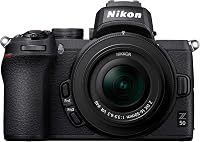
Nikon Z50 II vs Nikon Z50: Which Should You Buy? (November 2026)
Choose the Nikon Z50 II if you want smarter autofocus and 4K/60p video; choose the original Z50 if a simpler 4K/30p camera and a lighter kit fit your budget. The Z50 II is the better camera overall, but the older Z50 still takes good photos for less.
On this page (7 sections)
Choose the Nikon Z50 II for smarter autofocus, faster video and more color presets; choose the original Z50 if a simpler 4K/30p camera at a lower price tier fits your budget. In this Nikon Z50 II vs Nikon Z50 comparison, the newer body wins on features, but the older one still delivers the same 20.9MP DX-format image size.
Both cameras share the Nikon Z mount and a 16-50mm kit lens. The gap between them sits in autofocus, burst speed, video frame rates and how much control you get over color.
The Z50 II is the better camera overall for most people who shoot action or video. The original Z50 is the smarter spend for stills-first shooters who rarely push the autofocus.

 Best for simpler 4K stills on a budget
Nikon Z50 DX-Format Mirrorless Camera Body
Nikon Z50 II vs Z50: which has the better autofocus?
The Z50 II wins clearly. It uses 231 autofocus points with hybrid phase and contrast detection, and it detects nine distinct subject types automatically.
The Z50 relies on 209 contrast-detection points. That system works for slow, deliberate photos, but it lacks the subject recognition the newer camera adds.
The Z50 II tracks people, dogs, cats, birds and vehicles on its own. Dedicated bird and airplane modes push accuracy further for wildlife and aviation shooters.
For a parent chasing a toddler or a photographer catching a pet mid-run, that difference matters more than any other spec here. The Z50 asks you to keep the point on the subject; the Z50 II finds it for you.
Our Nikon Z50 II review goes deeper on how the subject detection behaves in real use.
When does the Z50 autofocus still work?
The original Z50 autofocus holds up for portraits, landscapes, still life and travel photos. When your subject stays put, contrast detection finds focus without drama.
The trouble starts with movement. A dog running toward you or a bird lifting off gives the Z50 less to work with than the Z50 II's subject tracking.
If most of your photos are stationary and you focus on one point at a time, the Z50's system won't hold you back. If you shoot moving subjects often, the upgrade earns its keep.
How do the two autofocus systems differ in use?
The gap is not just point count. The Z50 II's 231 points work in a hybrid system that blends phase detection with contrast detection, while the Z50's 209 points rely on contrast detection alone.
That hybrid setup helps the newer camera lock focus quickly and then keep it there. The nine subject types are the practical payoff, and the dedicated bird and airplane modes narrow the detection further for those subjects.
The Z50 still gives you a broad 209-point field to place focus manually. Nothing stops you from getting sharp frames with it.
You simply do more of the tracking yourself, frame after frame.
How do burst speeds and continuous shooting compare?
The Z50 shoots faster in bursts. It reaches 11 frames per second, while the Z50 II lists 5 frames per second in its continuous shooting spec.
That sounds like an easy win for the older camera. In practice, the Z50 II pairs its slower burst with better subject tracking, so more of its frames land in focus.
Burst speed alone doesn't decide an action camera. A faster sequence of out-of-focus frames helps no one, while a slower sequence with steady tracking gives you usable shots.
Think about your subject. For a sprinter crossing a finish line, the Z50's 11 frames per second may catch the exact stride.
For a bird in flight, the Z50 II's tracking is the more useful advantage.
Which is better for sports and wildlife?
Wildlife and field sports lean toward the Z50 II because subject detection does the aiming. Its dedicated bird and airplane modes target exactly those subjects.
The Z50's faster burst suits predictable motion you can pre-focus on, such as a runner on a known path. It also works well for street scenes where you time a single frame.
Neither camera is a dedicated sports body. If fast action is your main subject, compare against the Canon R10 vs Nikon Z50 II before you commit.
Which camera is better for video?
The Z50 II is the stronger video camera. It records 4K UHD at 60p and Full HD at 120p for in-camera slow motion.
The original Z50 records 4K Ultra HD at 30p, with 1080p slow motion at up to 120 fps. That covers vlogs and everyday clips, but it limits smooth 4K motion.
The Z50 II also adds built-in electronic VR for steadier handheld footage and a product review mode for creators who film items. Both features help without extra gear.
Both cameras have a flip-down LCD that activates Self Portrait Mode. For vlogging, the Z50's screen still does the job; the Z50 II simply adds better motion and stabilization.
If you shoot talking-head videos or travel clips at 30p, the Z50 is enough. If you want 60p 4K for smoother movement or 120p for slow motion, the Z50 II is the one to buy.
What do the video features add for creators?
Start with motion. A 60p 4K clip plays back smoother than a 30p one, which matters for pans, walking shots and anything that moves across the frame.
Then there is slow motion. The Z50 II's Full HD 120p lets you bend time in camera, and the original Z50 offers 1080p slow motion too.
The newer camera's extra 4K frame rate is the bigger practical step up.
Built-in electronic VR steadies handheld clips without a gimbal. Product review mode is aimed at people who film items to sell or show off.
For everyday vlogging, both cameras' flip-down screens let you frame yourself.
The Z50 also offers in-camera trimming. You shoot a clip, cut it down in the camera and send it to your phone through SnapBridge, which keeps casual video sharing simple.
How do the color presets compare?
The Z50 II gives you far more creative control over color. Its Picture Control button opens 31 built-in presets you can apply as you shoot.
You can also build and save your own Picture Control presets. With a Nikon Imaging Cloud account, you can download bespoke Cloud Picture Controls straight to the Z50 II.
The original Z50 includes picture controls too, but it doesn't offer the same 31-preset library or the Cloud download route. For shooters who want a film-inspired look straight out of camera, the newer body is more flexible.
This matters most if you post photos without editing. If you process RAW files in software anyway, the preset library is a nice extra rather than a reason to upgrade.
Can you preview a look before you shoot?
On the Z50 II, the Picture Control button puts the presets within one press. You can play with results in real time as you shoot, so you see the color change before you press the shutter.
The library covers 31 looks, and saving your own presets means a favorite recipe is always one press away. Cloud Picture Controls add looks from outside the camera's built-in set.
The Z50 does offer picture controls, but not this preset count or the Cloud route. If matching a specific look matters to you, that flexibility sits with the newer body.
What do the two kits include?
Both kits pair the camera body with the NIKKOR Z DX 16-50mm f/3.5-6.3 VR lens. That zoom covers a versatile range and adds image stabilization.
The Z50 II kit includes the camera body, the 16-50mm lens, a built-in flash and wireless photo sharing through SnapBridge. It is sold as a Nikon USA model.
The original Z50 kit arrives as a refurbished package with the body, the 16-50mm lens, an EN-EL25 battery, a charger, a USB cable, a strap, body and lens caps and a rubber eyecup. It carries a 90-day manufacturer refurbished warranty.
Both cameras have a built-in flash. The Z50 II pairs its flash with Night Portrait mode for natural-looking slow-shutter portraits indoors and at night.
If buying new matters to you, the Z50 II kit is the straightforward choice. If a refurbished kit with a short warranty fits your budget, the original Z50 delivers the same lens and sensor size for less.
How do the bodies and controls compare?
The two cameras share the same black body style and the same Z mount, so lenses move freely between them. Both have a tilting LCD around 1,040,000 dots for framing and reviewing shots.
The original Z50 pairs that screen with a high-resolution electronic viewfinder and a deep grip in a magnesium alloy body. It also has Silent Photography Mode for quiet shooting.
The Z50 II kit is compact enough to fit in a small bag and pairs its 20.9MP sensor with the same stabilized zoom. If you value a sturdy, well-balanced grip and quiet shooting, the Z50's build still holds up.
Can you share photos from either camera?
Both cameras send photos and video to a phone through the free Nikon SnapBridge app. They connect over Wi-Fi or Bluetooth.
The Z50 II adds Nikon Imaging Cloud support for downloading Picture Controls. For everyday sharing, the two cameras do the same basic job.
The Z50's sharing setup covers Wi-Fi and Bluetooth transfers plus the remote monitor feature, so you can see what the camera sees and adjust settings from your phone. That is handy for group shots and vlogs.
Our guide to Nikon vs Canon cameras for beginners covers how the Z mount and kit lenses compare with Canon's entry-level options.
Nikon Z50 II vs Z50: which should you buy?
Buy the Nikon Z50 II if you shoot moving subjects or video and want the most capable DX camera of the two. Buy the original Z50 if you mostly shoot stills and want the same sensor size for a lower price tier.
The Z50 II earns the overall win. Its subject detection, 4K/60p video and 31 Picture Controls are real upgrades that change what you can capture.
The Z50 remains a sensible camera. It shares the 20.9MP DX sensor and the 16-50mm kit lens, and its 11 frames per second suit predictable action.
Who should buy the Nikon Z50 II?
Pick the Z50 II if your photos include children, pets, birds or vehicles. The nine-subject detection and dedicated bird and airplane modes do the focusing work for you.
Pick it if you film video and want 4K at 60p, 120p slow motion or steadier handheld clips. The built-in electronic VR and product review mode add practical value for creators.
Pick it if you want film-inspired color straight out of camera without editing. The 31 presets and Cloud Picture Controls give you more ways to shape a look.
Who should buy the original Nikon Z50?
Pick the Z50 if you shoot landscapes, portraits, travel and still life where focus stays put. Its contrast-detection system handles those subjects without trouble.
Pick it if your video needs stop at 4K/30p for vlogs and everyday clips. The flip-down screen still works for self-portraits and framing yourself.
Pick it if a refurbished kit at a lower price tier stretches your budget further. You still get the 16-50mm VR lens and the same 20.9MP DX sensor size.
Which is the better value?
The Z50 II is the better camera, and its extra autofocus and video tools justify the higher price tier for anyone who shoots action. The original Z50 is the better value for stills-first buyers who won't use those features.
Decide by your subject. If your photos move, spend on the Z50 II.
If they don't, the Z50 saves money without giving up image size or the kit lens.
If you are also weighing Nikon's vlogging-focused body, the Nikon Z30 vs Z50 comparison shows where the Z30 fits for creators.
The verdict
The Nikon Z50 II is the better camera for most people, and the original Z50 is the better budget pick for stills. The Z50 II's autofocus, 4K/60p video and color presets are the upgrades that matter.
Choose the Z50 II for action, wildlife and video. Choose the original Z50 for landscapes, portraits and travel where its 20.9MP DX sensor and 16-50mm lens do the same core job for less.
Frequently asked questions
Is the Nikon Z50 II worth the upgrade over the Z50?
Yes for action, animal and video shooters. The Z50 II adds subject detection for nine subject types, 4K/60p video and 31 Picture Controls.
The original Z50 still takes the same 20.9MP DX-format photos for less money.
What is the biggest difference between the Z50 II and the Z50?
Autofocus. The Z50 II has 231 points with subject tracking for people, dogs, cats, birds and vehicles.
The Z50 uses 209 contrast-detection points without that subject detection.
Do the Z50 II and Z50 use the same lenses?
Yes. Both use the Nikon Z mount, so any NIKKOR Z DX lens works on either body.
Both kits here include the 16-50mm f/3.5-6.3 VR zoom lens.
Which one is better for video?
The Z50 II. It records 4K UHD at 60p and Full HD at 120p for slow motion, with built-in electronic VR and a product review mode.
The Z50 tops out at 4K/30p with 1080p slow motion.
Can the Z50 II share photos to a phone?
Yes. Both cameras send photos and video to a smart device through the free Nikon SnapBridge app over Wi-Fi or Bluetooth.
The Z50 II also supports Nikon Imaging Cloud for downloading Picture Controls.