Nikon Z50 II vs Z50: What's New? (November 2026)
The Nikon Z50 II is the stronger overall choice for autofocus, video and creative presets, while the Z50 kit is better for buyers who need a lens in the box. The Nikon Z50 II vs Z50 decision comes down to whether you want newer shooting tools or a ready-to-use camera-and-lens package.
On this page (11 sections)
- Nikon Z50 II vs Z50: what changed?
- How do the Nikon Z50 II and Z50 compare side by side?
- Which camera has the better autofocus?
- Is the Z50 II better for video?
- Which camera gives you more creative control?
- Which one is easier to start with?
- Does the lens change the choice?
- Which camera is better for sharing photos?
- Who should buy the Nikon Z50 II?
- Who should buy the Nikon Z50 kit?
- Nikon Z50 II vs Z50: which should you choose?
The Nikon Z50 II wins overall for newer autofocus, video and creative controls, but the Nikon Z50 kit is the better buy when you need a lens included. In this Nikon Z50 II vs Z50 comparison, the most important difference is not the shared 20.9-megapixel DX-format sensor.
It is how each camera handles focus, video and setup.
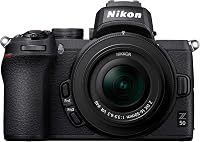
The Z50 II is a body-only compact mirrorless stills and video camera. The original Z50 option here is a camera body bundled with a NIKKOR Z DX 16-50mm f/3.5-6.3 VR lens, so it gives you a complete starting kit.
The Z50 kit has the higher score because it combines a camera, lens and useful everyday features in one package. The Z50 II is the better camera for specific needs, especially subject recognition and 4K UHD/60p recording.
Nikon Z50 II vs Z50: what changed?
The Z50 II adds newer subject detection, more autofocus points, Picture Control presets and 4K UHD/60p video. The original Z50 still offers a 20.9-megapixel DX-format sensor, 4K Ultra HD recording and a practical lens bundle.
The Z50 II has 231 autofocus points, compared with 209-point hybrid autofocus on the Z50. Its autofocus can detect and track people, dogs, cats, birds and vehicles across 9 distinct subject types.
Dedicated bird and airplane modes add more specific options.
The Z50 has built-in Wi-Fi and Bluetooth, a flip-down LCD viewing screen, a built-in flash and an electronic viewfinder. It also records 4K Ultra HD video, 1080p slow-motion video and in-camera 4K time-lapse sequences.
The Z50 II has 31 built-in Picture Control presets. You can create and save your own presets or download custom Picture Controls directly to the camera through Nikon Imaging Cloud.
That gives it a clearer advantage for photographers who want a selected look while shooting.
For a closer look at the newer camera, read our Nikon Z50 II review.
How do the Nikon Z50 II and Z50 compare side by side?
The Z50 II is newer in its focus and video tools, while the Z50 kit includes more of what you need to begin shooting. The shared 20.9-megapixel DX format keeps image resolution close between them.

 Best for a ready-to-shoot kit
Nikon Z50 DX-Format Mirrorless Camera Body
| Feature | Nikon Z50 II | Nikon Z50 kit |
|---|---|---|
| Camera format | Compact mirrorless stills/video camera | DX-format mirrorless camera body |
| Sensor | 20.9-megapixel DX format | 20.9 Megapixel DX-Format CMOS |
| Autofocus | 231 points, hybrid and phase detection | 209-point hybrid autofocus |
| Subject detection | 9 subject types, plus bird and airplane modes | 209-point autofocus system |
| Video | 4K UHD/60p, Full HD 120p slow-motion | 4K Ultra HD, 1080p slow-motion |
| Creative controls | 31 Picture Control presets | Filters, effects and time-lapse tools |
| Lens | Body only | NIKKOR Z DX 16-50mm f/3.5-6.3 VR lens |
| Storage | SD memory card | microSDXC memory card |
| Wireless features | Bluetooth, HDMI, USB and Wi-Fi | Built-in Wi-Fi and Bluetooth |
| Screen | Tilting LCD, 1,040,000 dots | Tilting LCD, approx. 1040k-dot |
| Flash | Built-in | Built-in |
Both cameras use the Nikon Z mount. That shared mount matters because your lens choice can shape the camera's daily usefulness as much as the body does.
The Z50 package includes the camera body, lens, EN-EL25 rechargeable battery, MH-32 battery charger, UC-E21 USB cable, AN-DC20 strap, BF-N1 body cap and DK-30 rubber eyecup. It also includes the lens caps listed for the NIKKOR Z DX 16-50mm lens.
Which camera has the better autofocus?
The Nikon Z50 II has the stronger autofocus system for subjects that move or need automatic recognition. Its 231 autofocus points and 9 subject types give it a wider set of named tracking choices than the Z50 data provides.
The Z50 II can automatically detect and track people, dogs, cats, birds and vehicles. The dedicated bird and airplane modes make its focus system more targeted for those subjects.
That matters when your subject changes position across the frame. A person walking toward the camera, a bird in flight or an aircraft against the sky benefits from subject-specific focus behavior.
The original Z50 uses a 209-point hybrid autofocus system. That still gives you a substantial autofocus area for everyday portraits, travel photos, family scenes and general shooting.
Choose the Z50 II if autofocus recognition is a main reason for upgrading. Choose the Z50 if your subjects are mostly still or if the included lens matters more than the newer tracking tools.
Is the Z50 II better for video?
The Z50 II is the better video choice because it records 4K UHD/60p and includes in-camera 120p slow-motion in Full HD. The original Z50 records 4K Ultra HD and offers 1080p slow-motion video, but the available data does not give it the same 4K/60p specification.
The Z50 II also includes built-in electronic VR and a product review mode. Product review mode is designed for creators who need the camera to respond to an item shown close to the lens.
Its 4K UHD/60p option gives video creators a higher frame-rate choice in 4K. The in-camera 120p Full HD option supports slow-motion work when the final video does not need 4K resolution.
The original Z50 supports 4K Ultra HD, 1080p slow motion and 4K time-lapse sequences. It can also trim a clip in the camera before sending it to a phone through the SnapBridge app.
The Z50 kit remains suitable for casual video, travel clips and short-form content. Pick the Z50 II when 4K frame rate, subject detection or product demonstrations are central to your work.
Which camera gives you more creative control?
The Nikon Z50 II gives you more direct creative control through its 31 Picture Control presets. You can choose a look with the Picture Control button, see the result while shooting and save your own presets.
The presets suit photographers who want a repeatable style without depending on a separate editing step for every image. You can also download bespoke Cloud Picture Controls directly to the Z50 II from Nikon Imaging Cloud.
The Z50 offers filters, effects and a self-portrait mode through its flip-down LCD. Its electronic viewfinder shows how photos and videos will look in real time, and its silent photography mode supports quiet shooting.
These are different strengths. The Z50 II focuses on a library of selectable looks and subject-aware tools.
The Z50 combines an accessible screen, built-in flash, silent photography and in-camera effects.
If you want to shape the look before pressing the shutter, choose the Z50 II. If you want a simple camera with a lens, screen and everyday shooting tools included, the Z50 kit is easier to understand as a complete starting point.
Which one is easier to start with?
The Nikon Z50 kit is easier to start with because it includes the NIKKOR Z DX 16-50mm f/3.5-6.3 VR lens. The Z50 II is body only, so the first setup decision is which Nikon Z lens to add.
The included lens gives the original Z50 package a clear advantage for a first interchangeable-lens camera. You can charge the EN-EL25 battery, attach the NIKKOR Z DX 16-50mm f/3.5-6.3 VR lens and begin learning the camera without building a separate lens order.
The Z50 II makes more sense when you already own a Nikon Z lens or have a specific lens plan. Its body-only format lets you choose the lens around your subject, but that flexibility adds another buying decision.
The Z50 package also includes the MH-32 battery charger, UC-E21 USB cable, strap, body cap and rubber eyecup. The Z50 II data identifies it as camera body only.
For a first kit, the original Z50 is the simpler path. For a planned system or an existing Nikon Z setup, the Z50 II gives you the newer body features without duplicating a lens you already have.
Does the lens change the choice?
Yes. The included NIKKOR Z DX 16-50mm f/3.5-6.3 VR lens makes the Z50 kit more ready for everyday photography.
The Z50 II's body-only format makes the lens choice a separate part of the budget and setup.
The lens in the Z50 package has an aperture range of f/3.5-6.3. Its 16-50mm range covers a useful span for general scenes, travel, family photos and basic video framing.
Because the Z50 II also uses the Nikon Z mount, it can be paired with Nikon Z lenses chosen for your own subjects. That is useful if you want to start with a different focal length or already have compatible glass.
The trade-off is simple. The Z50 gives you a defined camera-and-lens combination, while the Z50 II gives you a body that expects you to decide the lens separately.
Read our Nikon Z50 II vs Nikon Z50 upgrade guide if your main question is whether the newer body justifies replacing an original Z50 setup.
Which camera is better for sharing photos?
Both cameras support wireless sharing, but they use different storage formats. The Z50 has built-in Wi-Fi and Bluetooth and works with Wi-Fi and Bluetooth-enabled devices, while the Z50 II supports Bluetooth, HDMI, USB and Wi-Fi with computers and smartphones.
The Z50 can send photos and videos to a phone through Nikon SnapBridge. You can also use a phone as a remote monitor to see what the Z50 sees, adjust camera settings, take pictures and record video.
The Z50 II also sends photos and video to a smart device through the free Nikon SnapBridge app. That suits a workflow where you shoot, transfer and share without moving files through a separate computer first.
The storage difference matters when you prepare cards. The Z50 data identifies microSDXC as its compatible flash memory type.
The Z50 II uses SD memory.
Choose the camera that matches the card format you already plan to use. Wireless sharing is available on both, so the stronger deciding factors remain autofocus, video settings and whether a lens is included.
Who should buy the Nikon Z50 II?
Buy the Nikon Z50 II if you want the stronger autofocus and video feature set in a compact body. It suits creators who value 4K UHD/60p, 31 Picture Control presets, subject tracking and a body that can grow around a chosen Nikon Z lens.
It is the better match for bird and airplane shooting because those modes are named in its autofocus features. It also suits product video because product review mode is included.
The camera's 20.9-megapixel DX format keeps resolution aligned with the original Z50, so the main reason to choose it is the shooting experience rather than a jump in megapixels.
The Z50 II is also a sensible choice for photographers who want to create and save their own Picture Control presets. Those presets help keep a chosen look consistent across a series of images or clips.
Remember that this is a body-only camera. Plan the Nikon Z lens before you buy, especially if this will be your first interchangeable-lens camera.
Who should buy the Nikon Z50 kit?
Buy the Nikon Z50 kit if you want the highest-scoring package with a lens and core accessories included. It suits first-time mirrorless buyers, travel photographers and anyone who wants a ready-to-shoot Nikon Z setup.
The NIKKOR Z DX 16-50mm f/3.5-6.3 VR lens gives the kit a defined everyday range. The package also includes the rechargeable battery, charger, USB cable, strap, body cap, rubber eyecup and lens caps.
Its 20.9-megapixel DX-format CMOS sensor, 209-point hybrid autofocus and 4K Ultra HD video cover general photography and video. Built-in Wi-Fi and Bluetooth support wireless transfers and remote shooting through SnapBridge.
The Z50 kit gives up the newer Z50 II autofocus and 4K UHD/60p features. That trade-off is reasonable when your priority is getting a usable camera and lens together rather than buying the newest body tools.
For another Nikon comparison, our Nikon Z30 vs Z50 guide helps place the original Z50 among Nikon's compact DX cameras.
Nikon Z50 II vs Z50: which should you choose?
Choose the Nikon Z50 kit for the best complete starting package, and choose the Nikon Z50 II for the better autofocus and video body. The Z50 kit wins overall here because its 9.4 score reflects the included NIKKOR Z DX 16-50mm f/3.5-6.3 VR lens and useful accessories.
Choose the Z50 II when you need 231 autofocus points, detection for 9 subject types, dedicated bird and airplane modes, 31 Picture Control presets or 4K UHD/60p recording.
Choose the Z50 when you want to start shooting immediately with a lens, battery, charger and cable included. Its 20.9-megapixel DX sensor, 4K Ultra HD video, Wi-Fi and Bluetooth keep it capable for everyday stills and clips.
The Nikon Z50 II vs Z50 decision is therefore clear: the Z50 kit is the stronger value for a complete first setup, while the Z50 II is the better upgrade path for autofocus, video and creative control.
Frequently asked questions
Does the Nikon Z50 II use the same lens mount as the Z50?
Yes. Both cameras use the Nikon Z mount.
The Z50 kit includes a NIKKOR Z DX 16-50mm f/3.5-6.3 VR lens, while the Z50 II is body only.
Is the Nikon Z50 II better for beginners?
The Z50 II offers useful beginner-friendly tools, including 31 Picture Control presets, intelligent auto modes and wireless sharing. The original Z50 kit is easier to start with because its NIKKOR Z DX 16-50mm lens is included.
Which camera has more autofocus points?
The Nikon Z50 II has 231 autofocus points, compared with 209 on the Nikon Z50 kit. The Z50 II also detects and tracks people, animals and vehicles, with dedicated bird and airplane modes.
Can both cameras record 4K video?
Yes. Both cameras record 4K video.
The Z50 II supports 4K UHD/60p, while the Z50 data lists 4K Ultra HD recording and 1080p slow-motion video.
Does the Nikon Z50 II include a lens?
No. The Nikon Z50 II is listed as camera body only.
The Nikon Z50 package includes the NIKKOR Z DX 16-50mm f/3.5-6.3 VR lens, along with the camera body and listed accessories.